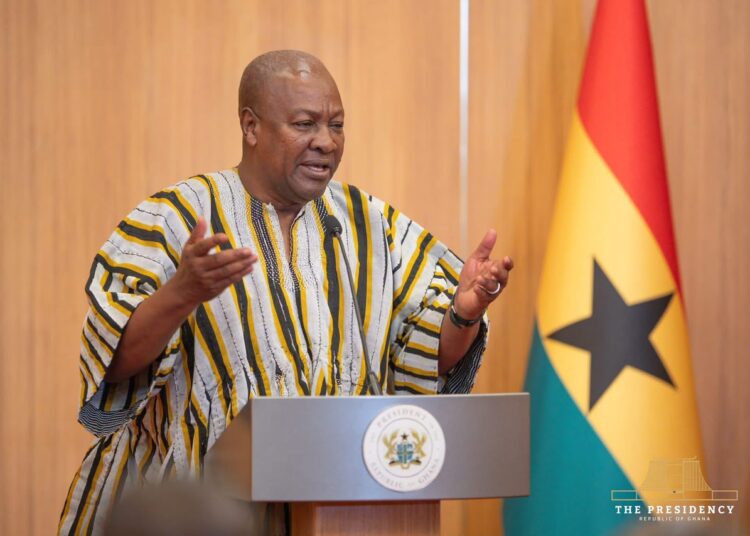
The IMANI Centre for Policy and Education’s October Pulse report shows President John Dramani Mahama drawing 54 percent of the 5,595 figure-tagged online readings collected between October 1 and 31, 2026, with his sentiment turning positive.
The report analysed 24,761 public posts and articles from news sites, X, Facebook and TikTok. IMANI scores each post with a sentiment model adjusted for Ghanaian political language and adds a Substance Index that separates policy talk from personality.
The results show attention and approval moving apart: President Mahama leads on visibility, Dr Mahamudu Bawumia leads on positivity among high-volume figures, and Dr Julius Debrah tops the policy ranking.
“The findings suggest that political visibility did not necessarily translate into uniformly positive public reception.”
IMANI Pulse October Sentiment Report
Mahama Dominates the Conversation
President Mahama recorded 3,037 readings, more than the 2,558 recorded by the other six tracked figures combined. Of those, 1,837 were positive and 891 negative, a mean score of +0.11.
By my arithmetic, that is about 60 percent positive and 29 percent negative, with the other 309 readings classed as neither. The month marks a shift from September, when IMANI found his sentiment almost perfectly balanced.
Policy drove the talk. Eighty percent of his classified mentions concerned policy, programmes, budgets and governance, which put him second on the Substance Index.
The weekly summaries trace what kept him in view. His Resetting Ghana tour led October 4–10, with discussion of infrastructure pledges, the Bechem poultry factory, Ningo-Prampram housing, the Accra Convention Centre and the renegotiation of a US health compact.
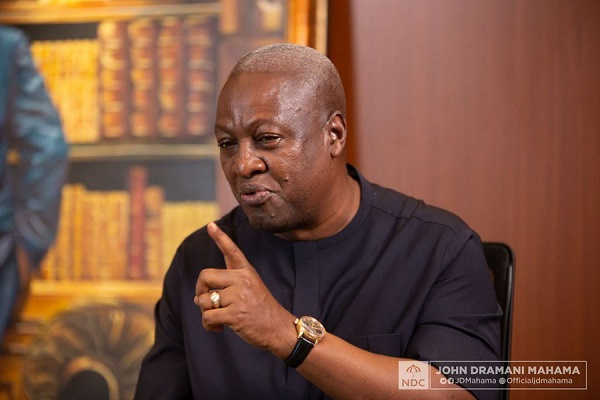
The next week turned to a $10 billion New Economy agenda, a proposed $2 billion annual investment in eight key areas including commercial agriculture, textiles and garments, etc., a ₵400 million anti-galamsey allocation and infrastructure commissioning.
From October 18 to 24, Russia-Africa summit diplomacy, the Pwalugu Dam, airstrips, military retooling and calls for Pan-African financing at the Tana Forum filled the conversation.
In the last week, his Moscow trip, where he secured commitments on nuclear energy and agriculture, took centre stage. Domestic debates on a possible third term, allegations involving associates and the government’s economic reform record ran alongside it.
Bawumia Leads High-Volume Positivity
Former Vice President Dr Bawumia drew 930 mentions, 63 percent of them positive, for a mean score of +0.21, the strongest among the high-volume figures. His volume is far below President Mahama’s, but his reception was warmer. His Substance Index was 46 percent, so fewer than half of his classified mentions concerned policy.
His October followed the rhythm of opposition politics. During October 4–10, regional visits, diaspora engagement on candidate vetting, and internal loyalty disputes featured prominently, while TikTok mixed political criticism with memes about both leading figures.
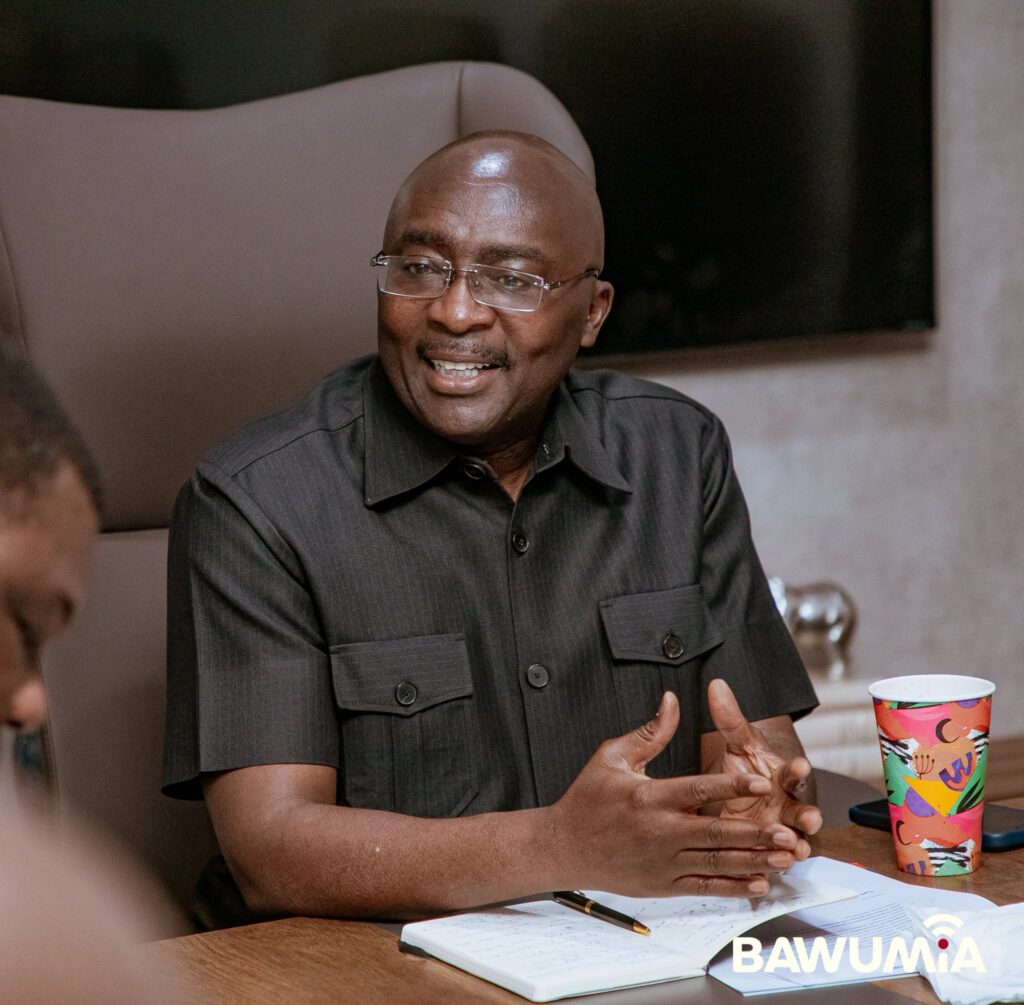
The following week turned to NPP outreach and regional engagements, with visible #bawumia2028 campaigning on TikTok. Later weeks brought a pharmaceutical hub proposal and the phrase “NDC akyi gu hɔ,” which generated debate.
In the final week, his reported manoeuvring to remove Minority Leader Alexander Kwamena Afenyo-Markin became a significant part of the NPP’s internal narrative. His campaign activity included a viral “tuozaafi” pledge to northern voters, which drew mockery and prophetic commentary alike.
Ato Forson Stays Policy-Focused
Finance Minister Dr Cassiel Ato Forson recorded 630 mentions, third behind President Mahama and Dr Bawumia, with a mean score of +0.03, slightly positive. Seventy-four percent of his classified mentions concerned policy, programmes, budgets and governance, behind only Julius Debrah and President Mahama.
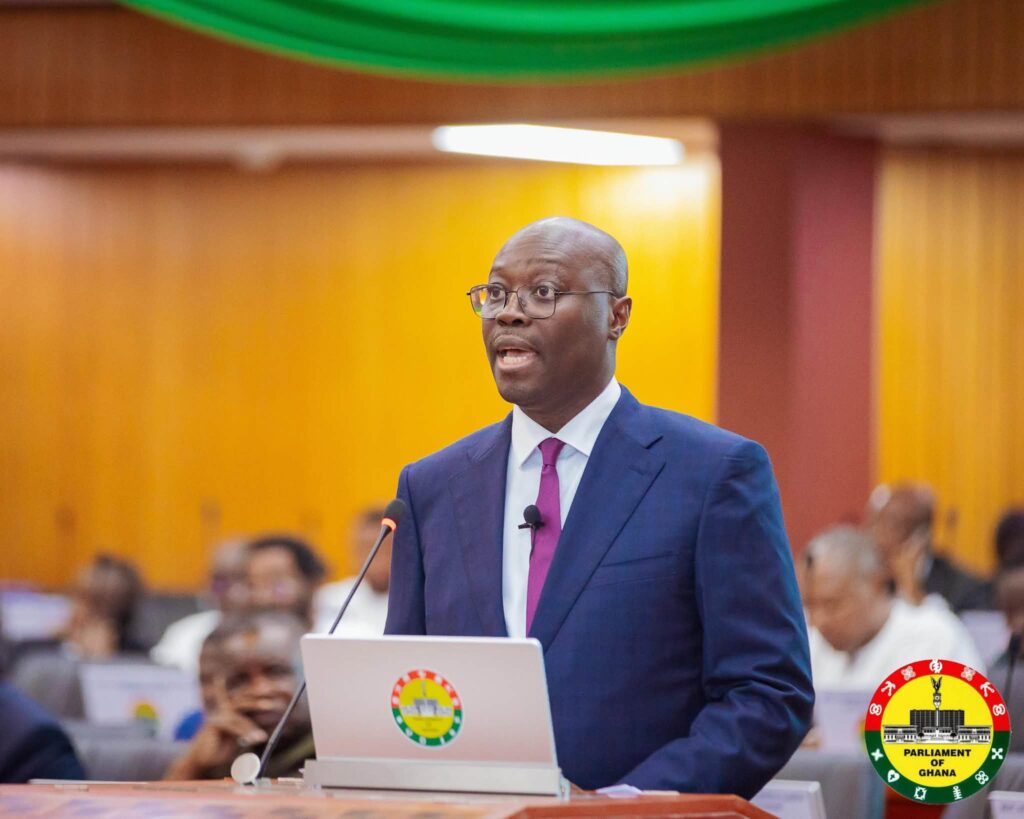
He stayed in the top three in every weekly summary. The summaries put his mentions at 149 in the first reported week, 182 in the second, 133 in the third and 92 in the final week.
Julius Debrah Tops Sentiment and Substance
Julius Debrah recorded the highest mean sentiment among the seven figures, +0.28, and the highest Substance Index, 81 percent. His profile was the most policy-oriented in the report.
The volume behind it is small. He drew 103 mentions, roughly one thirty-fifth of President Mahama’s total by my calculation, so IMANI’s own caution applies: the score deserves less weight than the results for higher-volume figures.
Asiedu Nketia Has a Slightly Negative Month
Johnson Asiedu Nketia recorded 182 mentions, a mean score of -0.04 and a Substance Index of 32 percent, which suggests that personality-related talk took a larger share of his classified mentions.
His visibility rose late in the month. The weekly summaries link his decision to step aside from the NDC chairmanship race, contests for the party’s youth organiser post and succession speculation to the October 18–24 conversation.

His weekly counts ran 13, 24, 32, 77 and 29. Three of those five weeks fell below the 30-mention threshold for a stable score, so his weekly sentiment readings rest on thin data.
Afenyo-Markin and Agyapong Trail on Substance
Two figures complete the list of seven. Effutu MP and Minority Leader Hon. Afenyo-Markin’s Substance Index was 40 percent, and Kennedy Agyapong’s was 20 percent, the lowest of all seven. The Pulse excerpt available to The Vaultz News gives no mention counts or sentiment scores for either man.
By my arithmetic, the two together account for 713 readings, the difference between the other six figures’ 2,558 and the 1,845 recorded by Dr Bawumia, Dr Forson, Dr Julius Debrah and Asiedu Nketia. Hon. Afenyo-Markin’s October storyline came largely through Dr Bawumia’s weekly narrative, which described the reported effort to remove him as Minority Leader.
IMANI’s earlier ranking called him the most negative political figure online. Kennedy Agyapong’s 20 percent shows that most of his classified mentions concerned personality, history or allegations.
Policy Versus Personality
Dr Julius Debrah led the Substance Index at 81 percent, followed by President Mahama at 80 and Dr Ato Forson at 74. Dr Bawumia scored 46, Afenyo-Markin 40, Asiedu Nketia 32 and Kennedy Agyapong 20. The index divides policy mentions by policy plus personality mentions and leaves out posts too thin to classify.

The split echoes September, when IMANI found online politics growing more policy-driven while personalities still ruled. It also found 2028 election talk personality-driven and built around Bawumia.
Visibility and policy engagement therefore need separate readings, since President Mahama’s volume dwarfs Julius Debrah’s while the latter’s policy share edges higher. IMANI cautions that this is a targeted sample, and the cautions are central to reading the figures. “Keyword volumes therefore reflect what was searched for as well as what people said.”
October is the first report to include Ghanaian news sites, which supply 13,608 of the 24,761 posts, so volumes do not compare directly with September. “News tone on the tracked figures (+0.07) was slightly below X (+0.10), so the more positive month is not an effect of adding news.”
Facebook coverage spans 18 public pages, and TikTok contributes only 151 posts. The report flagged no coordinated posts, and its weekly narratives are model-written from samples covering October 4–31.
“Compare issues with each other inside this report; do not read a volume as a measure of national attention.” Readers should treat the figures as a guide to October’s online conversation and not as a poll of voters.
READ ALSO: Brexit’s Economic Costs Push UK Towards Closer EU Ties — Analyst