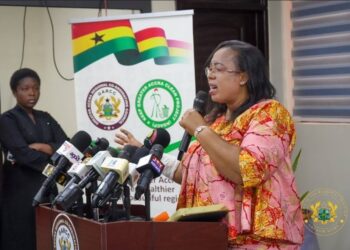
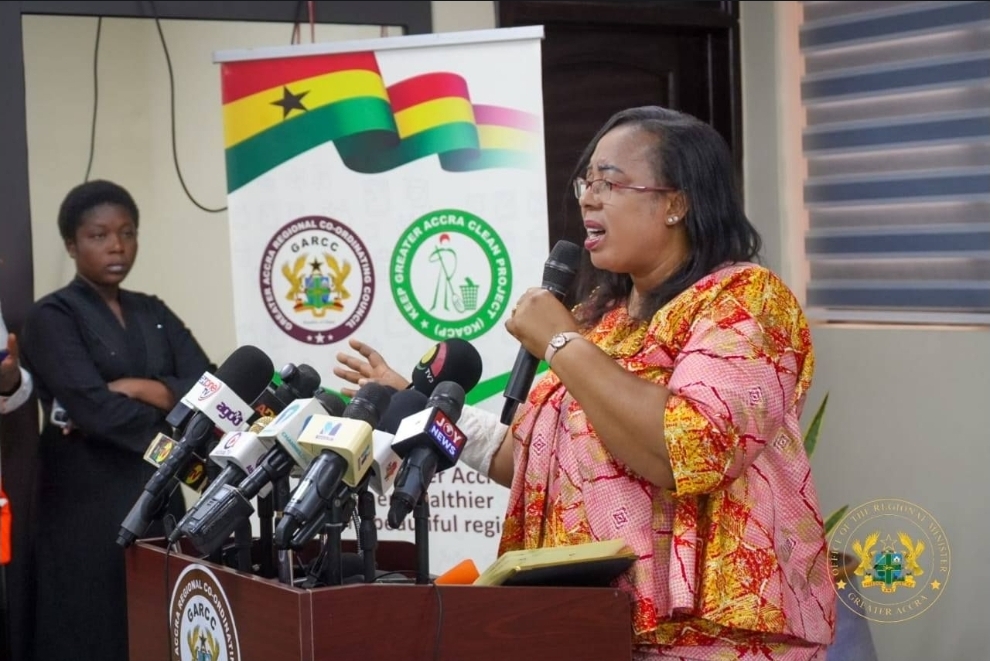
Greater Accra Regional Minister Linda Obenewaa Akweley Ocloo has called on Metropolitan, Municipal and District Assemblies (MMDAs) to intensify sanitation enforcement and improve waste management, warning that regional recognition must not distract them from their responsibility to maintain clean communities.
She disclosed that plans were far advanced for a regional sanitation and waste management programme to recognise and reward assemblies demonstrating outstanding commitment and innovative approaches to environmental cleanliness.
Addressing the second meeting of the Greater Accra Regional Coordinating Council (RCC) for 2026, Mrs Ocloo described sanitation and waste management as persistent challenges requiring sustained attention from local authorities and other stakeholders.
“Sanitation cannot be treated as an occasional exercise or a responsibility to be discharged only when there is an impending national event.”
Honourable Linda Ocloo
She urged assembly officials to make environmental cleanliness a daily administrative priority rather than an activity undertaken only in preparation for national celebrations or other major public events.
Greater Accra Assemblies Face Renewed Pressure On Sanitation
The minister acknowledged that some assemblies had demonstrated encouraging efforts towards improving sanitation within their jurisdictions, commending them for their interventions. However, she maintained that more consistent efforts were required to address waste management challenges across the region.
According to her, the RCC’s planned sanitation programme would provide an opportunity to identify and reward assemblies that had demonstrated outstanding commitment and innovation in managing their environments. She explained that the initiative was intended to encourage healthy competition among assemblies while strengthening their commitment to environmental cleanliness.

Mrs Ocloo, however, cautioned against allowing the prospect of regional awards to create complacency among local authorities. She stressed that the ultimate measure of sanitation performance would be the actual condition of communities, markets, streets, drains and public spaces rather than recognition received at regional level.
The minister further noted that assessments by the Presidency and the Ministry responsible for local government, with input from the RCC, would remain important in determining the effectiveness of sanitation interventions.
Minister Demands Stronger Enforcement Of Sanitation By-laws
To address persistent sanitation concerns, Mrs Ocloo urged MMDAs to intensify enforcement of sanitation by-laws and improve the supervision of waste management activities. She identified waste collection, drainage maintenance and public education as areas requiring greater attention from assembly authorities.
She emphasised that local authorities must ensure that sanitation interventions were properly implemented and sustained rather than relying on occasional clean-up exercises. The minister also called for stronger collaboration among assemblies and relevant stakeholders, noting that maintaining a clean environment required collective responsibility.
Under the Local Governance Act, 2016 (Act 936), District Assemblies are responsible for the development, improvement and management of human settlements and the environment within their respective jurisdictions. This mandate places local authorities at the centre of efforts to improve environmental conditions through effective local administration, public education and enforcement of relevant regulations.
RCC To Assess Functionality Of Sub-district Governance Structures
Beyond sanitation, Mrs Ocloo announced plans for the RCC to assess the functionality and operational effectiveness of sub-district governance structures across Greater Accra.The assessment will cover sub-metropolitan district councils, urban, zonal and town councils, as well as unit committees.
She explained that these structures were essential to decentralisation because they brought local governance closer to residents and provided opportunities for community participation in development activities.However, she expressed concern that some of the structures were not functioning effectively, potentially weakening grassroots participation and accountability.
The planned exercise, she noted, would identify existing gaps and provide recommendations for strengthening their operations. Mrs Ocloo therefore urged MMDCEs and coordinating directors to cooperate with the assessment teams by providing the necessary information and institutional support. She maintained that decentralisation could only achieve its intended objectives when governance structures at every level were functional, responsive and accountable to the people.
Minister Calls For Consistent Action Across All Assemblies
The minister reiterated that sanitation improvement and effective local governance required sustained commitment from all assemblies rather than isolated interventions. She also highlighted the RCC’s responsibility to coordinate, monitor and provide technical support to assemblies in addressing development challenges across the region.
Underlining the importance of collective responsibility, she called on assembly officials to approach their duties with renewed commitment and urgency. Mrs Ocloo maintained that the region’s development objectives depended on effective cooperation among MMDAs, regional departments and other institutions represented on the RCC.
She urged local authorities to prioritise practical results, stressing that residents ultimately judged their leaders by the conditions of the communities in which they lived. The minister concluded by reaffirming the RCC’s commitment to building a Greater Accra Region that is clean, healthy, inclusive and responsive to the needs of its people.
READ ALSO: Greater Accra Minister Warns Assemblies Over Poor Performance