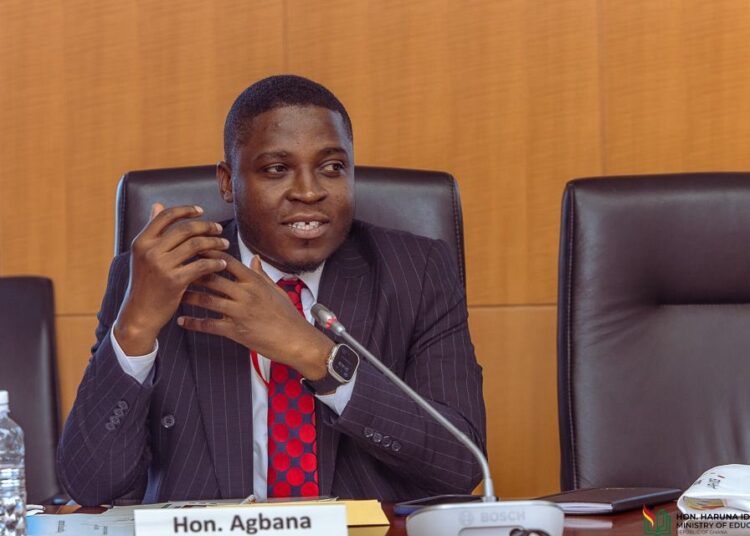
The Member of Parliament for Ketu North and Member of Parliament’s Education Committee, Honourable Eric Edem Agbana, has called on the Ghana Tertiary Education Commission (GTEC) to strengthen stakeholder consultation when introducing major regulatory decisions, particularly its directive freezing applications for new PhD programmes.
He acknowledged the Commission’s statutory authority to audit doctoral programmes but cautioned that inadequate consultation contributed to public confusion over the scope and implications of the directive.
Speaking about the directive, the Member of Parliament explained that the initial public understanding was that the Commission has suspended new admissions into doctoral programmes. He welcomed Prof Jinapor’s clarification that the restriction applied specifically to new programme applications, not admissions into existing accredited programmes, but insisted that the communication process could have been more inclusive.

“The platform where Prof. made the announcement should not have been the first place where maybe some of these announcements are made, because these are key policy decisions. And I think that it is always better to involve every stakeholder within the education system.”
Honourable Eric Edem Agbana
Honourable Agbana emphasised that his criticism does not challenge Ghana Tertiary Education Commission’s legal mandate to regulate tertiary education and safeguard academic standards. Instead, he identified stakeholder engagement as “an essential component of implementing reforms” particularly when decisions have implications for universities, students and the wider academic community.
Calls For Extensive Engagement
He explained that, as a member of Parliament’s Education Committee and an active participant in education-related discussions, he considers himself among the stakeholders who should have been adequately informed before the announcement. In his view, broader engagement would have enabled institutions and other interested parties to understand the directive before disagreements emerged over its meaning.
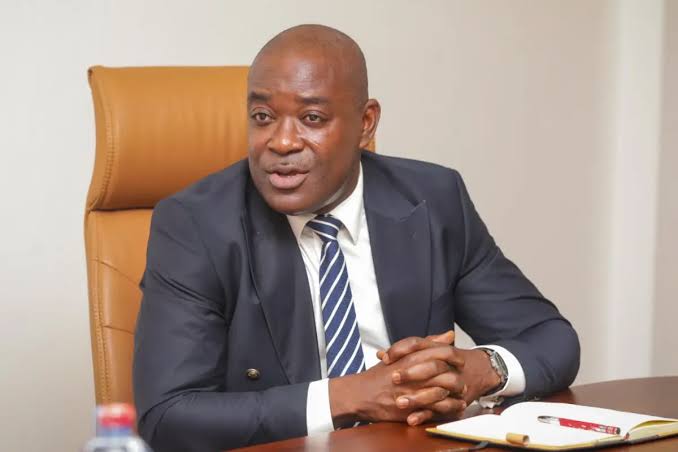
Furthermore, the Member of Parliament for Ketu North cautioned that the confusion surrounding the announcement could have been avoided “if consultations had been sufficiently exhaustive.” He contended that involving stakeholders from the outset would have reduced the uncertainty over whether GTEC intended to suspend admissions or restrict applications for entirely new programmes.
“The philosophy behind it must be that for anyone who obtains or graduates from any of our universities having undertaken an accredited course or program, the quality that a person exudes must be reflective of the aspirations of GTEC.”
Honourable Eric Edem Agbana
He therefore urged the Commission to carry education stakeholders along as it pursues the nationwide PhD audit, arguing that inclusive engagement would strengthen support for its regulatory interventions.
GTEC Audit Must Run Alongside Applications
On the other hand, the Member of Parliament for Ketu North, Honourable Eric Edem Agbana urged the Ghana Tertiary Education Commission (GTEC) to reconsider its temporary freeze on applications for new PhD programmes.
He cautioned that “a blanket restriction could disrupt university planning and affect academic progression, particularly for institutions preparing to introduce programmes in the 2026–2027 academic year.”
“The audit is important, yes; it is necessary, yes but it can be carried out concurrently at the same time that universities are allowed to again run some of these programs.”
Honourable Eric Edem Agbana
Honourable Agbana explained that some universities might already have secured approval for proposed programmes at their respective university council levels, with plans to commence delivery at the beginning of the next academic year. Consequently, he warned that freezing all new applications could interfere with institutional preparations, including those of universities that had fulfilled the necessary internal processes.
The Member of Parliament reiterated that “the need to safeguard academic standards should not automatically translate into an interruption of legitimate academic activities.” He therefore proposed a parallel approach under which GTEC could scrutinise existing programmes, assess new applications and determine which institutions met the required standards without bringing the entire application process to a halt.

Additionally, he identified the implication of the directive. “I don’t think that the two are mutually exclusive where one must come to an end before the other proceeds. It can be done together,” he underscored his position that quality assurance and academic continuity could be pursued simultaneously.
In his concluding remarks, Honourable Agbana cautioned that reforms intended to improve the credibility of Ghanaian qualifications should not inadvertently undermine the reputation of the country’s tertiary education system. He called for an approach that would enable the Commission to address deficiencies while preserving the uninterrupted administration and progression of legitimate academic programmes.
READ ALSO: GTEC: Ghanaian PhD Degrees Must Meet International Academic Standards