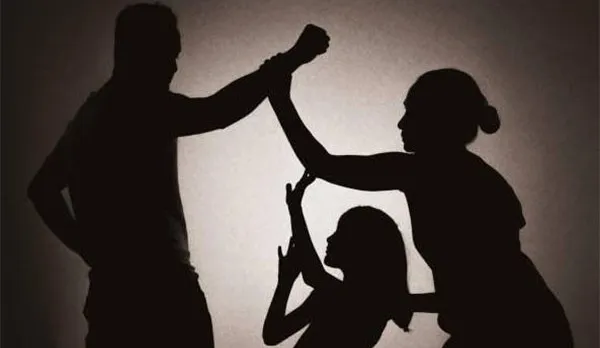
United Nations report has revealed that the home remains the most dangerous place for women and girls, with approximately 47,000 killed by intimate partners or family members in 2025.
The latest Femicide Brief, published by the United Nations Office on Drugs and Crime (UNODC) and UN Women, found that 60% of the approximately 78,000 women and girls intentionally killed worldwide during the year were murdered by an intimate partner or close family member.
Of the approximately 78,000 women and girls killed intentionally worldwide in 2025, 60% were murdered by an intimate partner or close family member.
This translates into an average of 129 deaths every day, or five women and girls every hour.
According to UNODC Executive Director Monica Juma, “for far too long, we have seen alarming statistics.”
“Frightening attitudes, social norms, and the failure of institutional safeguards create an environment in which killing a wife, daughter, mother, or sister becomes ‘tolerable’. Changing this reality calls for sustained action across all levels of society.”
Monica Juma
She added, “we must redouble our efforts to deploy prevention strategies targeted at changing societal behaviour and harmful attitudes, as well as invest in specialized programmes and interventions to deal with perpetrators of domestic violence, protect women, and secure their human rights and dignity.”
Africa Records Highest Femicide Rate
The findings show that no region has been spared from femicide, as women and girls continue to be killed by intimate partners or family members across the world. Africa recorded the highest rate in 2025, at 2.9 victims per 100,000 women.
The Americas followed with 1.4 victims per 100,000 women and girls, while Oceania recorded 1.1. Asia and Europe had comparatively lower rates of 0.6 and 0.5 victims, respectively.
The data reveal significant regional disparities in intimate partner and family-related killings, underscoring the importance of strengthening prevention and protection efforts in settings where women and girls face the highest risks.
Despite the reduction from 50,000 victims in 2024 to an estimated 47,000 in 2025, the UN agencies cautioned that the figures do not necessarily indicate a decline in femicide.
The report attributed the difference largely to improved access to country-level data rather than an actual reduction in the number of women and girls killed.
Warning Signs Often Go Unaddressed
The UN agencies emphasised that femicide is rarely an isolated incident, noting that many killings follow prolonged periods of violence, threats and abuse that could have been identified and prevented.
However, significant barriers prevent many women experiencing physical or sexual violence from seeking assistance from relatives, community members or relevant authorities. As a result, survivors are frequently left without adequate protection, while perpetrators evade accountability.
UN Women Executive Director Sima Bahous stated, “we must ensure women and girls can report violence safely, access protection, and receive support before it is too late.”
“When warning signs go unreported, cases are not properly investigated, women and girls are not protected and perpetrators are not brought to justice, the consequences can be fatal. Every missed opportunity to uphold the rights of women and girls to safety is a failure of justice and of the law’s most fundamental duty: to safeguard women’s and girls’ lives.”
Sima Bahous
She added, “we must act urgently to ensure no warning sign is ignored, no survivor is left without protection, and no perpetrator escapes accountability.”
The findings also expose a persistent gap in global efforts to combat violence against women. While homicide rates have generally declined, femicide rates have decreased much more slowly, indicating that women and girls remain exposed to significant risks despite wider improvements in public safety
In the Americas, for instance, the general homicide rate declined by 23% between 2010 and 2025, while the femicide rate fell by only 12% over the same period.
Europe recorded a similar disparity, with its homicide rate dropping by 43% compared with a 28% reduction in femicide.
UN Agencies Call for Justice and Accountability
The latest findings have revived calls for governments and other stakeholders to step up efforts to prevent violence against women and girls, improve survivor safety, and hold criminals accountable.
Through the 2026 edition of its 16 Days of Activism campaign, running from November 25 to December 10, UN Women and UNODC are mobilising governments, private-sector organisations, the United Nations system, the media, women’s organisations and survivors to intensify collective action.
The campaign, themed “UNiTE to End Violence Against Women and Girls: Ensure Justice, Protect Survivors, End Impunity,” focuses on obtaining justice for survivors, victims, and their families while increasing accountability for perpetrators.
To mark the International Day for the Elimination of Violence against Women, UN Women organised a commemorative installation at the United Nations Headquarters in New York, featuring 129 orange flags representing the average number of women and girls killed each day by intimate partners or family members.
The installation was accompanied by 129 women from different backgrounds and generations, who gathered in solidarity and remembrance of those whose lives were lost.
UN Women and UNODC are urging the international community to treat every warning sign seriously, ensure survivors receive the support they need and strengthen justice systems so that perpetrators are no longer able to evade responsibility.
READ ALSO: Sheikh Hasina Plans Bangladesh Return On December 16