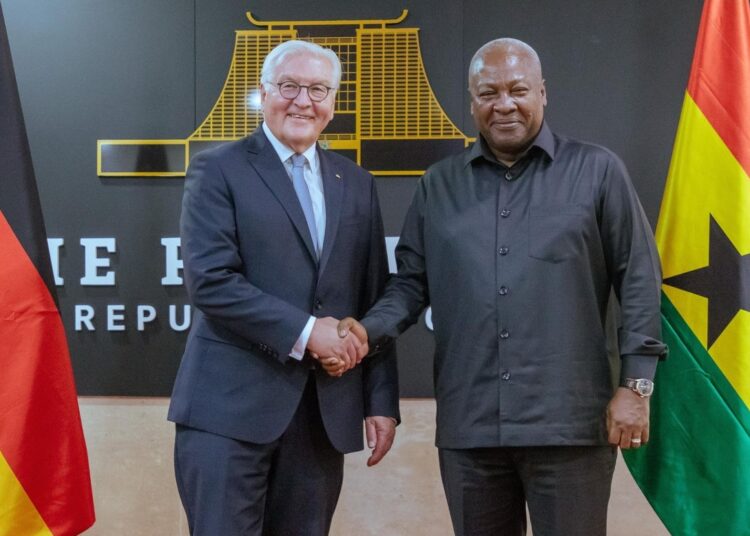
President John Dramani Mahama has pitched Ghana to German businesses as the gateway to a 1.4 billion-person African market, as he hosted German President Frank-Walter Steinmeier at Jubilee House in Accra on Tuesday, November 24, 2026. He also asked Germany to stay engaged on security in West Africa and the Sahel.
President Mahama explained that the continent’s free trade area lets firms export across borders tariff-free, and that Ghana wants trade, investment and technology transfer to replace aid dependency. He disclosed that bilateral trade is growing in Ghana’s favour and that the New Economy programme will push exporters to add value at home.
“Ghana is positioning itself as the gateway to Africa, reaching 1.4 billion people on the continent.”
President John Dramani Mahama
Ghana Pitches Itself as a Hub for German Brands
President Mahama told his guest that German companies have room to grow in Ghana. He named Mercedes-Benz among the well-known German brands and noted that the continent’s free trade area allows countries to export into each other’s markets tariff-free.
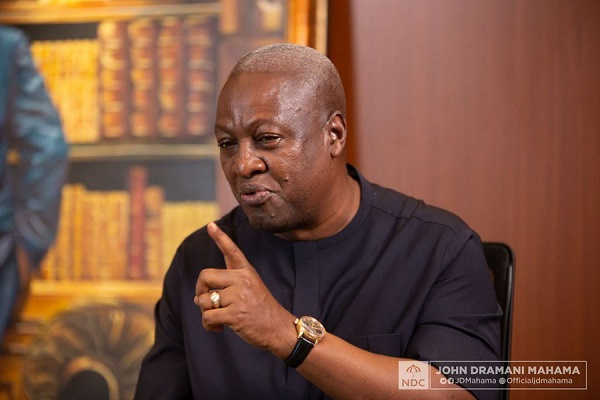
West Africa alone holds about 400 million people, he stated, and Africa’s combined gross domestic product exceeds $3 trillion.
“There are many opportunities for German brands to establish themselves in Ghana and use Ghana as a hub for entering the rest of Africa. Africa is open for business.”
President John Dramani Mahama
Trade Grows With a Surplus for Ghana
President Mahama noted that “bilateral trade is doing well.” Ghana’s exports to Germany have increased, he stated, so the trade surplus favours Ghana. He added that the two governments are working on a declaration of intent for regular political consultations between their foreign ministers.
President Steinmeier, for his part, put the rise in bilateral trade at around 20 percent last year. President Mahama welcomed him as a returning guest, and the two leaders had met in Accra the year before to deepen ties. They will jointly open the German-African Business Summit in Accra.
From Aid to Trade and Technology
The President framed the visit as part of a wider shift. Ghana wants to leave behind its “former dependency and donor syndrome” and move toward trade, investment and the transfer of technology, he explained.
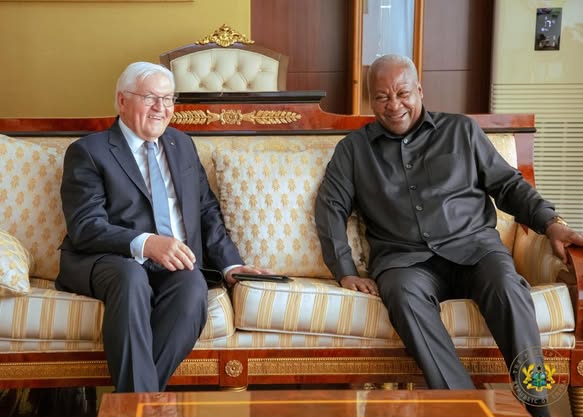
He linked that goal to the New Economy programme, which aims to add value to exports instead of shipping them in raw form. In his view, the government should “add more value to our exports in order to create more jobs locally for our people.”
Sahel Neighbours Remain Part of the Household
President Mahama spent much of his remarks on regional security. Ghana lives in a subregion affected by violent extremism, he noted, and it is positioning itself as a bridge between the Economic Community of West African States (ECOWAS) and the Sahelian states. A special envoy has worked on communication with those neighbours.
He described a recent high-level meeting between the two sides as a good start. “The talks were very fruitful,” he stated, and he credited a change in ECOWAS’s own attitude toward the Sahelian states.
“We may have moved into separate bedrooms, but it doesn’t mean that we are no longer members of the same household.”
President John Dramani Mahama
Ghana is keeping its side of the relationship open. All its protocols remain active, President Mahama disclosed, and people and goods still move freely between the countries. Sahelian traders can take their goods through Ghana without obstruction, he added, which gives both sides a solid base to continue working.
Peacekeeping Centre Draws on German Support
President Mahama thanked Germany for backing the Kofi Annan International Peacekeeping Training Centre. It has become “a center for training across all of West Africa,” he stated, and it accepts students from several countries. He called its training an important module for the continent.
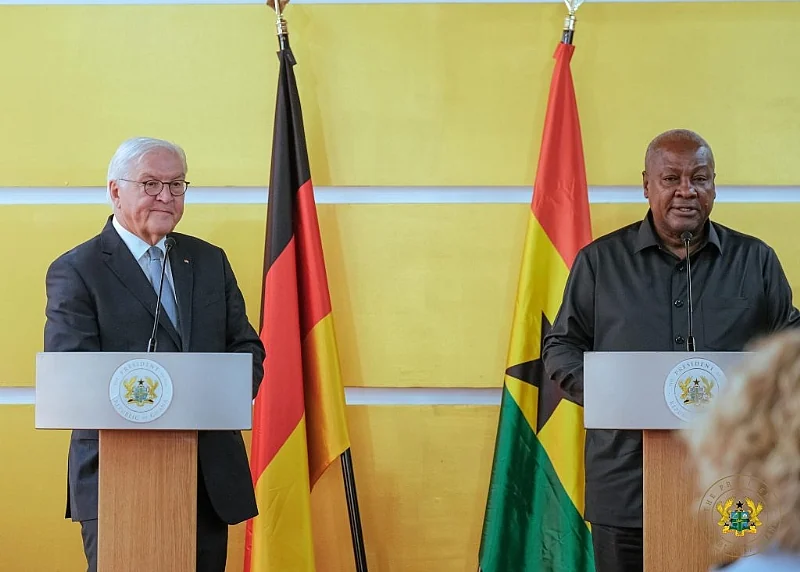
President Mahama closed by turning to Berlin and Brussels. Germany and the European Union want stability in the region, he noted, and he asked President Steinmeier not to give up on Sahelian states that are ready to work with them. Those states still need assistance, he argued, to overcome the violent extremism they face.
President Steinmeier’s own remarks at the event focused on trade and the coming business summit. The two governments have yet to announce any agreement or investment from the talks, and the foreign ministers’ declaration of intent remains in preparation.