
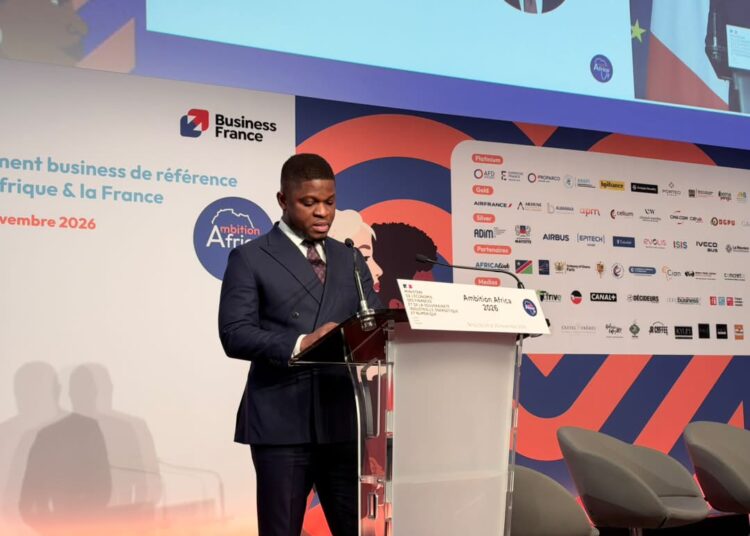
Chief Executive Officer of the Ghana Gold Board (GoldBod), Sammy Gyamfi Esq., has announced that Ghana’s formal artisanal and small-scale gold exports reached 85.4 tonnes valued at US$11.6 billion between January and October 20, 2026.
Speaking at the Ambition Africa forum in Paris, Mr. Gyamfi explained that this milestone demonstrates how targeted regulatory interventions can rapidly channel informal mineral output into official national revenue streams.
The latest earnings mark a sharp acceleration in GoldBod’s operational trajectory since its establishment under the administration of President John Dramani Mahama.
Prior to this ten-month performance, official artisanal and small-scale gold shipments climbed from 63 tonnes in 2024 to 104 tonnes in 2025, generating roughly US$10.8 billion and serving as a critical fiscal anchor for Ghana’s macroeconomic stabilization over the past 23 months.
“The GoldBod did not manufacture gold that did not exist. What we have achieved so far is a production clawback: bringing into the formal economy gold that was already being produced, but was being lost to smuggling.”
Sammy Gyamfi Esq., h
Addressing Illicit Flows and Revenue Leakage
The creation of the Ghana Gold Board was necessitated by systemic leakages that deprived the state of billions of dollars in foreign exchange and royalty inflows.
For decades, porous borders, weak assaying oversight, and informal financing networks enabled illicit syndicates to siphon vast quantities of unrefined bullion out of the country without central bank documentation.
Empirical trade discrepancies underscored the urgency of structural reform. A comprehensive SWISSAID assessment uncovered a staggering 229-tonne gap worth approximately US$11.4 billion between Ghana’s officially declared gold exports and corresponding partner-country import records from 2019 to 2023.

By centralizing buying, grading, assaying, and export mandates under Act 1140, GoldBod closed regulatory loopholes and disrupted entrenched smuggling corridors.
Mr. Gyamfi emphasized that resolving this deficit required treating mineral governance as an economic production challenge rather than a mere policing exercise.
Instead of relying solely on security crackdowns, the Board instituted competitive pricing and streamlined domestic purchasing mechanisms that incentivized small-scale miners to sell directly through state-approved channels.
Confronting Africa’s Youth Employment Paradox
Beyond plugging fiscal leaks, the GoldBod chief framed Ghana’s extractive reforms as a blueprint for resolving a broader continental dilemma.
Across Africa, more than 400 million young people aged between 15 and 35 face an acute structural mismatch, where 10 to 12 million youth enter the workforce annually against the creation of only about three million formal jobs.
Addressing delegates in Paris on the theme, “Africa’s Minerals, Africa’s Future: A New Pact for Investment, Economic Transformation and Shared Prosperity,” Mr. Gyamfi argued that raw resource abundance has historically failed to translate into broad-based human development.
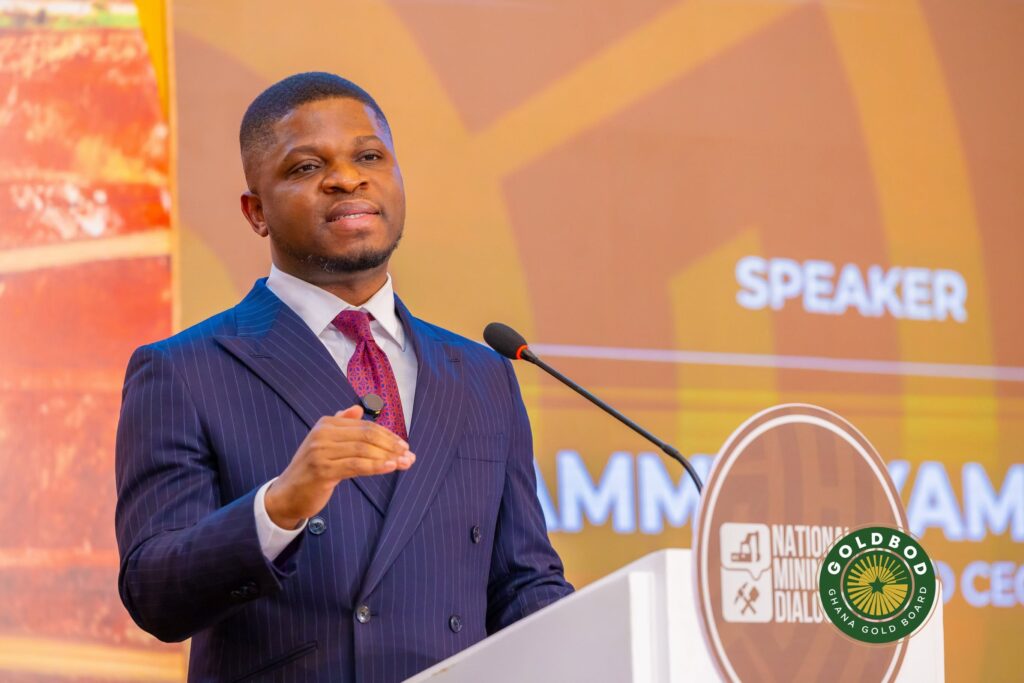
He noted that youth joblessness stems from shallow industrial bases, a scarcity of scalable domestic enterprises, and a lack of patient long-term capital.
To reverse this trend, he proposed a new investment framework anchored on mutual equity. “So I come to Paris not simply to speak about gold, but to propose a new pact between Africa, its mineral wealth and global capital. I call it Fair Return for Fair Value: fair returns for investors and fair value for Africa,” Mr. Gyamfi stated, urging international financiers to align capital deployment with domestic industrial priorities.
Imperative of Domestic Value Addition
Looking ahead, Mr. Gyamfi cautioned that capturing raw export volumes is only the initial phase of resource-led transformation.
Because producing nations remain price-takers on international bullion exchanges, reliance on unprocessed ore leaves national budgets exposed to external commodity shocks and cyclical downturns.
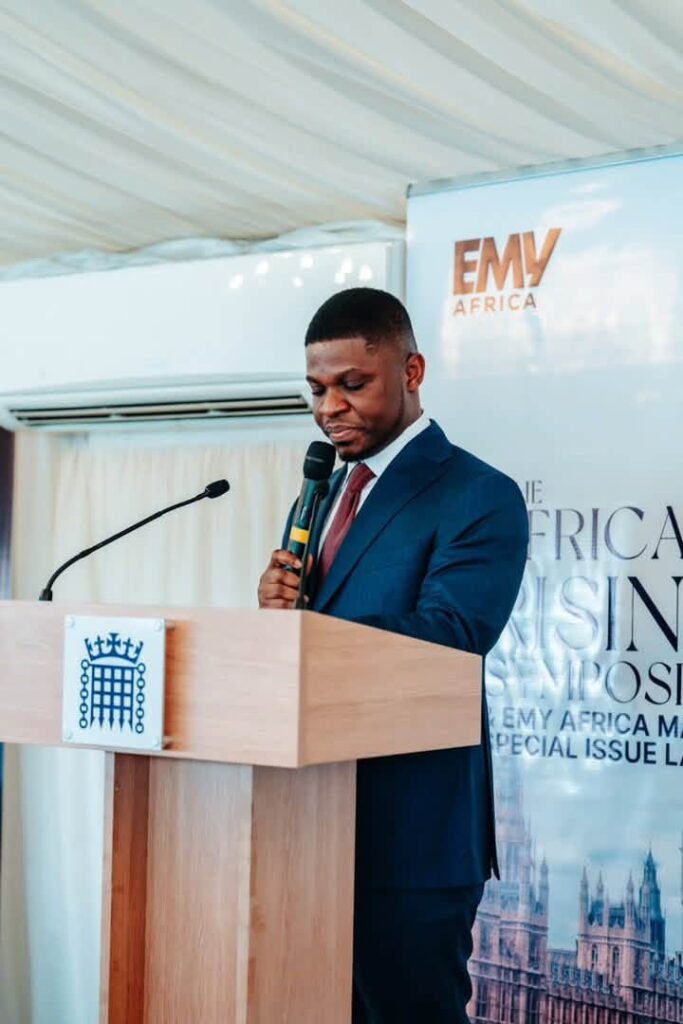
Highlighting recent downward pressures on global gold prices, he stressed that domestic beneficiation offers the most durable shield against market volatility.
Expanding local refining capacity, supporting downstream jewellery manufacturing, and building ancillary mining services ensure that economic value remains rooted within producer economies regardless of spot price fluctuations.
“Prices rise and fall, but capacity built at home endures. That is why value addition is not an option for Africa. It is an urgent imperative and our best protection against this cycle,” Mr. Gyamfi concluded, calling on global partners to back enduring productive infrastructure across the continent’s extractive value chain.
READ ALSO: CDD-Ghana: Corruption Steals Classrooms, Jobs and Opportunities From Ghanaian Youth