Ghana’s booming mobile money industry could hold the key to unlocking financing for millions of small businesses struggling to secure bank loans, as the International Finance Corporation (IFC) pushes for a major transformation of the country’s credit assessment system.
With mobile money transactions exceeding GH¢3 trillion in 2024, involving approximately eight billion transactions, the IFC believes financial institutions are sitting on a potentially valuable source of information that could help identify creditworthy businesses currently excluded from conventional lending.
The intervention comes as Ghana’s approximately 1.9 million enterprises continue to face significant financing barriers, partly because many lack the formal financial statements, borrowing records and credit histories traditionally required by banks.
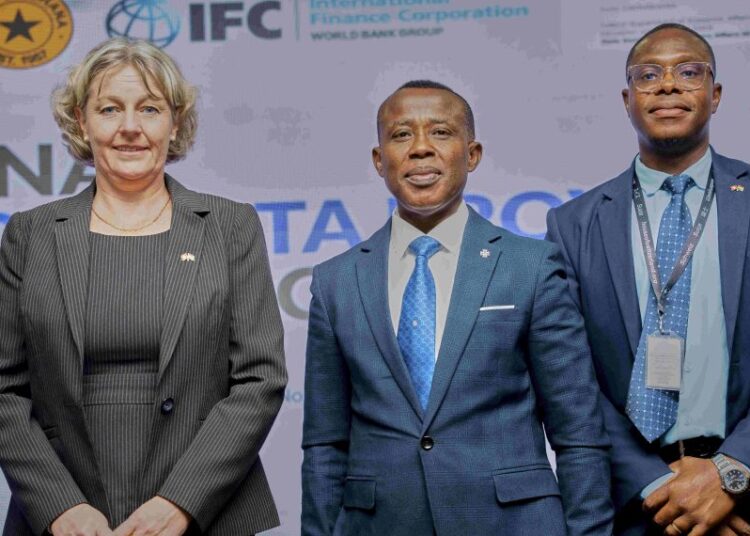
Deo Onyango, Principal Country Officer of IFC Ghana, is urging lenders to rethink how they evaluate borrowers by incorporating alternative data generated through everyday commercial activities, including mobile money transactions and business payment histories.
GH¢3 Trillion Digital Transactions Hold Untapped Lending Potential
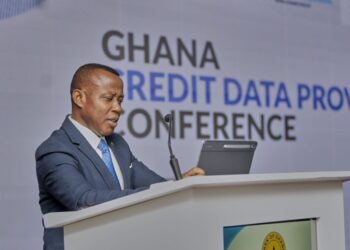
Speaking at a stakeholder conference on enhancing MSME access to finance through alternative data and collaboration, Mr Onyango argued that Ghana’s financial system must move beyond traditional credit assessment models that overlook businesses operating outside established banking relationships.
He highlighted the fundamental weakness confronting lenders and smaller enterprises. “Every credit decision starts with a very simple question: How well do I understand this business?”
The concern is that thousands of businesses may demonstrate consistent commercial activity without possessing the documentation required to convince banks of their repayment capacity.
A retailer receiving regular mobile money payments, for instance, could have years of transaction records demonstrating sales activity and revenue patterns. Agricultural traders making repeated payments to suppliers could similarly establish a history of meeting financial obligations.
Such records could provide lenders with additional evidence when assessing loan applications, potentially opening financing opportunities to enterprises previously considered difficult to evaluate.
However, the IFC cautions that transaction volumes alone cannot establish creditworthiness. Large payments passing through an account do not necessarily represent profits, disposable income or the capacity to repay borrowed funds.
The real opportunity lies in interpreting transaction information accurately to determine the financial strength and repayment behaviour of individual businesses.
IFC Raises Concerns Over MSME Loan Defaults
While expanding access to financing remains important, the IFC acknowledges that lending to smaller enterprises also presents significant risks for financial institutions.
Mr Onyango drew attention to the contribution of MSMEs to banks’ non-performing loans, highlighting the difficulties lenders encounter when extending credit to businesses with limited financial information. “A lot of their non-performing loans actually come from that micro, small, medium-sized enterprises.”
He nevertheless described the sector as an engine of growth, underscoring the economic consequences of restricting financing to smaller businesses.
The challenge facing Ghana’s banking industry is balancing increased private-sector lending with the need to protect asset quality and maintain prudent credit standards.
Better borrower information could help banks distinguish viable enterprises from businesses presenting higher default risks, improve loan pricing and identify potential repayment problems earlier.
The IFC’s approach therefore focuses on improving lending decisions rather than encouraging indiscriminate credit expansion.
Credit Bureau Coverage Reaches 60%
The proposed reforms complement efforts by the Bank of Ghana to strengthen the country’s credit reporting infrastructure.
At the conference, Dr Settor Kwabla Amediku, Special Aide to the Governor on Financial Stability, speaking on behalf of Second Deputy Governor Matilda Asante-Asiedu, disclosed that credit bureau coverage had increased from 33.20% in 2019 to approximately 60.00% by December 2025.
Although this represents significant progress, substantial gaps remain in the quality and completeness of borrower information available to financial institutions.
Being included in a credit database does not automatically mean lenders have sufficient information to understand a business’s operations, cash flows and repayment capacity.
The IFC is consequently supporting a broader programme involving the Bank of Ghana, financial institutions, credit bureaus, fintech companies and other data providers.
The initiative is supported by the Government of Switzerland through its State Secretariat for Economic Affairs (SECO).
Movable Assets Could Provide Another Financing Lifeline
Beyond alternative transaction data, the IFC is pursuing reforms across the credit cycle, including stronger lending arrangements secured by movable assets.
This could benefit businesses that own machinery, equipment, inventories and receivables but lack land and buildings traditionally demanded as collateral.
The programme also includes improving credit assessment and developing more effective frameworks for managing non-performing loans and financially distressed businesses.
An alternative data diagnostic study is expected to examine available information sources, barriers to their use and practical mechanisms for integrating them into Ghana’s credit reporting ecosystem.
Mr Onyango has also called for practical implementation commitments, including identifying relevant data sources, defining institutional responsibilities and establishing sustainable cooperation.
A proposed Credit Data Providers Association could provide a platform for coordinating institutions involved in collecting and supplying credit information.
Can Ghana Turn Digital Payments Into Business Financing?
Despite the enormous potential, implementation will depend on addressing data privacy, incompatible information systems, inaccurate records and restrictions on information sharing.
Banks, telecommunications companies, fintech operators and credit bureaus will need effective governance arrangements and common technical standards to make alternative information reliable.
If successfully implemented, the reforms could change how Ghanaian businesses access working capital and investment financing.
The opportunity is particularly significant given the scale of digital financial activity and the approximately 1.9 million enterprises seeking to participate in the country’s economic growth.
READ ALSO: Kenyan Government Violated Constitution Over US-Backed Ebola Facility, Court Rules