
Ghana’s economy is showing signs of stability after years of turbulence, but the IMANI Centre for Policy and Education has warned that the gains could easily fade without sustained reforms and stronger governance.
In its Criticality Analysis of Governance and Economic Issues for September 2025, the think tank drew attention to the World Bank’s recent Policy Notes 2025: Transforming Ghana in a Generation, highlighting both the opportunities and risks that lie ahead for the country.
According to IMANI, the macroeconomic indicators suggest some progress. Inflation has begun to ease, the cedi has found some relative stability, and debt-to-GDP ratios have fallen faster than expected.
These developments have restored a degree of confidence in the Ghanaian economy, but they are not enough to guarantee lasting progress. “Without deeper reforms, the gains of today could quickly fade tomorrow,” the analysis cautioned.
At the launch of the World Bank’s policy notes, the institution reminded Ghana that while global shocks such as the COVID-19 pandemic and the Russia–Ukraine conflict intensified the country’s financial strain, they were not the underlying cause of its crisis.
Rather, the shocks merely exposed deep-seated structural weaknesses—among them, an overreliance on expensive domestic borrowing, poor revenue mobilization, persistent inefficiencies in key sectors such as energy and cocoa, and governance failures that have consistently undermined accountability.

Four Strategic Foundations
According to the policy think-tank, the World Bank outlines four strategic foundations that Ghana must pursue to achieve transformation within a generation. The first is restoring macroeconomic and financial stability.
“For Ghana, this means not just consolidating fiscally but doing so in a way that is sustainable and transparent. It requires broadening the tax base, reducing leakages, and tackling the mountain of arrears that continues to undermine confidence in the public purse”.
IMANI Centre for Policy and Education
More importantly, IMANI demanded that reforms in Ghana’s energy and cocoa sectors are identified as unavoidable, noting that the Electricity Company of Ghana (ECG) continues to struggle with inefficiencies. At the same time, Cocobod’s recurring financial woes weigh heavily on the budget.
“Injecting private sector participation in ECG’s operations and governance reforms in Cocobod are not just technical fixes; they are political tests of whether Ghana is willing to address problems at their root”.
IMANI Centre for Policy and Education
The second foundation, according to IMANI, concerns productivity and competitiveness. Ghana has long depended on extractive industries, but to transform, the country must diversify into manufacturing, agribusiness, and services.
This involves reducing regulatory bottlenecks, encouraging technology adoption, and aligning education and skills training with the demands of a modern economy. Crucially, the think tank emphasized that growth must be inclusive.
A strong social contract that protects vulnerable populations should not be treated as an afterthought but integrated into economic policy. “A competitive economy is not just about firms; it is about people, and ensuring that growth does not widen inequality but broadens opportunity,” the think-tank argued.

Sustainable Management of Natural Resources
The third foundation is the sustainable management of natural resources alongside the building of resilient infrastructure. According to IMANI, Ghana’s economic fortunes have long been tied to natural wealth, but unsustainable exploitation has steadily eroded value.
For the policy think-tank, climate-smart agriculture, sustainable forestry, and accountable resource management are therefore not only environmental concerns but also economic imperatives.
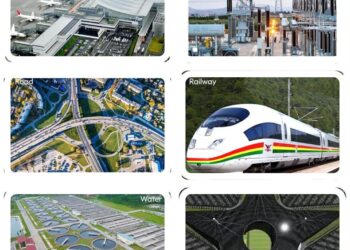
Boosting agricultural productivity, for instance, could significantly improve rural livelihoods while reducing overdependence on volatile commodity markets. At the same time, infrastructure gaps in transportation, water, and digital connectivity remain a critical barrier.
Addressing these gaps, IMANI argued, will demand both more efficient public spending and creative financing models such as public-private partnerships. Without reliable infrastructure, productivity gains will remain limited.
Strengthening Governance and Public Institutions
The fourth foundation is strengthening governance and public institutions. IMANI described this as the most difficult yet most essential reform area. Weak institutions, political interference in the civil service, corruption, and the lack of accountability have long undermined policy implementation in Ghana.
The think tank underscored the need to reduce political capture of state institutions, empower local governments with the necessary capacity and resources, and reform state-owned enterprises that have consistently drained the public purse.
“Governance is the thread that ties all the other foundations together; without it, fiscal reforms, productivity measures, and resource management will fail to gain traction”.
IMANI Centre for Policy and Education
The overarching message of both the World Bank’s policy notes and IMANI’s analysis is clear: Ghana cannot afford to slip into complacency. While macroeconomic conditions have improved, the structural weaknesses that caused the last crisis remain largely intact. Success, therefore, hinges not on temporary relief but on long-term discipline, consistency, and political courage.

“Ghana has never lacked well-written policy frameworks; what it has often lacked is the sustainability of those policies and the institutional will to see them through”.
IMANI Centre for Policy and Education
The think tank further warned that short-term improvements have often been reversed in the past by mismanagement and political expediency. To avoid repeating this cycle, Ghana must commit to reforms that extend beyond election cycles and withstand political transitions.
As the report concluded, the real task for policymakers is not to celebrate temporary relief but to confront the structural barriers that keep Ghana vulnerable to future shocks.
“If this moment of relative stability is used wisely, the country can truly transform in a generation,” IMANI concluded, capturing both the urgency and the promise of Ghana’s current economic crossroads.
READ ALSO: Beyond US Visa Restriction Reversal: Ghana Moves to Renegotiate 15% Tariff and Secure AGOA Renewal