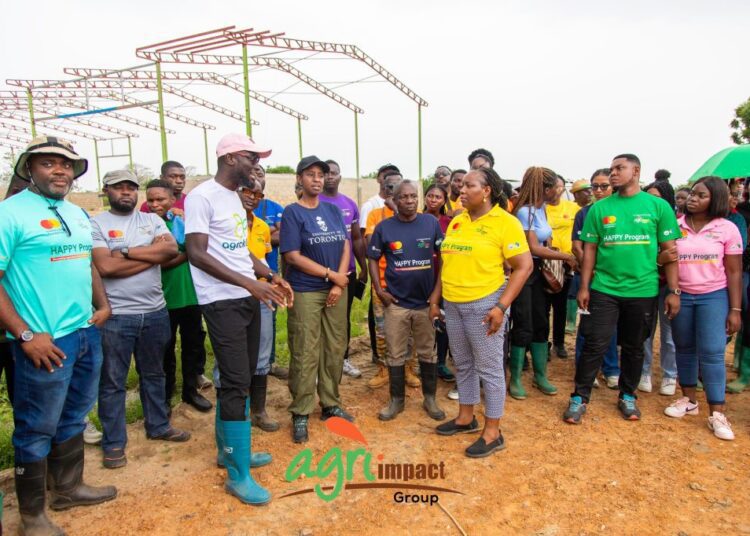
In a bold step toward transforming Ghana’s agricultural sector and empowering the nation’s youth, a total of 106 micro-businesses trained under the Harnessing Agricultural Productivity and Prosperity for Youth (HAPPY) Programme have received $236,460.83 in start-up capital.
The financial support, disbursed at a colourful graduation ceremony in Kumasi, marks a major milestone in the country’s drive to nurture young agripreneurs and promote sustainable job creation within the agricultural value chain.
The HAPPY Programme, a four-year initiative led by Agri-Impact in partnership with the Mastercard Foundation, TechnoServe, and several governmental agencies, is designed to create 326,000 dignified and fulfilling job opportunities for young people across Ghana. The programme’s focus on the poultry, rice, soybean, and tomato value chains is reshaping the way young Ghanaians view agriculture — not just as subsistence, but as a viable business venture.
Building a Generation of Agripreneurs
The 106 beneficiaries, who make up the first cohort of the HAPPY Programme, successfully completed a six-week intensive entrepreneurship training aimed at equipping them with the skills, knowledge, and competencies required to thrive in the agricultural industry.
The training sessions covered areas such as agribusiness management, financial literacy, marketing strategies, value chain development, and the use of technology to enhance productivity. The programme also paid special attention to women and persons with disabilities, ensuring inclusivity and equitable access to opportunities.
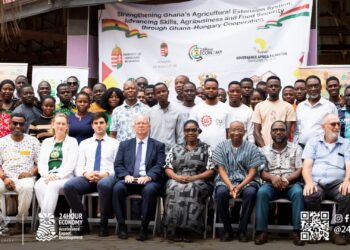
At the graduation ceremony themed “Pathways to Prosperity: Highlighting the Impact of Incubation Training and Grant Support,” the participants were awarded start-up grants to kickstart or expand their agribusinesses.
The financial empowerment of these young entrepreneurs symbolizes a renewed commitment to youth development in agriculture — a sector that continues to play a vital role in Ghana’s economic transformation.

Creating Sustainable Employment and Growth
Speaking at the ceremony, Nana Kofi Riverson, Head of Monitoring, Evaluation and Learning at Agri-Impact, emphasized that the support provided to these young agripreneurs would go a long way toward boosting productivity across the poultry, rice, soybean, and tomato value chains.
“Youth unemployment remains a major challenge in Ghana, and it is therefore important that sustainable initiatives like the HAPPY Programme are implemented to bring relief to our young people.”
Nana Kofi Riverson
Riverson added that Agri-Impact and its partners remain steadfast in their mission to help youth-led enterprises scale up and compete effectively in local and international markets.
The Programme’s design goes beyond funding; it integrates mentorship, market linkages, and technical support to ensure long-term sustainability for beneficiaries. This holistic approach aligns with Ghana’s broader goals of building a modern, technology-driven agricultural economy that can create decent jobs and reduce rural poverty.
Partners Champion Innovation and Inclusivity
Mr. Frank Obiora, Programmes Director at TechnoServe, reaffirmed the partners’ dedication to fostering a supportive ecosystem that encourages entrepreneurship, innovation, and job creation.
“We are building a future where agriculture is not just about farming but about innovation, technology, and enterprise. The beneficiaries of the HAPPY Programme are not only job seekers but job creators — the next generation of agripreneurs who will shape Ghana’s agricultural landscape.”
Mr. Frank Obiora
He noted that the inclusion of three agri-tech micro-businesses in the programme’s first cohort demonstrates the initiative’s commitment to promoting digital transformation in agriculture. From smart irrigation systems to mobile-based market platforms, the programme encourages the use of innovative solutions to overcome traditional barriers in farming and agribusiness.
Building on the success of the first cohort, the HAPPY Programme has already launched its second cohort of 122 new micro-businesses. These participants are set to begin their own training and incubation journey, receiving guidance, mentorship, and access to grants and market linkages.
The expansion signifies a strong commitment to scaling up impact and reaching more young people across the country. With each cohort, the programme strengthens Ghana’s agricultural entrepreneurship base, positioning young Ghanaians as catalysts for economic growth, food security, and innovation.
By focusing on value addition and local processing, the initiative also contributes to Ghana’s import substitution efforts, helping reduce dependency on foreign agricultural products while creating local employment opportunities.
Meanwhile, agriculture remains the backbone of Ghana’s economy, employing over 30% of the population and serving as a key driver of rural livelihoods. However, challenges such as limited access to finance, inadequate market structures, and the perception of agriculture as a less lucrative career path have discouraged many young people from entering the sector.
The HAPPY Programme seeks to change this narrative. Through strategic partnerships and targeted interventions, it is not only creating employment but also redefining agriculture as an engine of prosperity.
READ ALSO: Ghana’s Banking Industry Battles Rising Defaults from Migrated Medical Practitioners