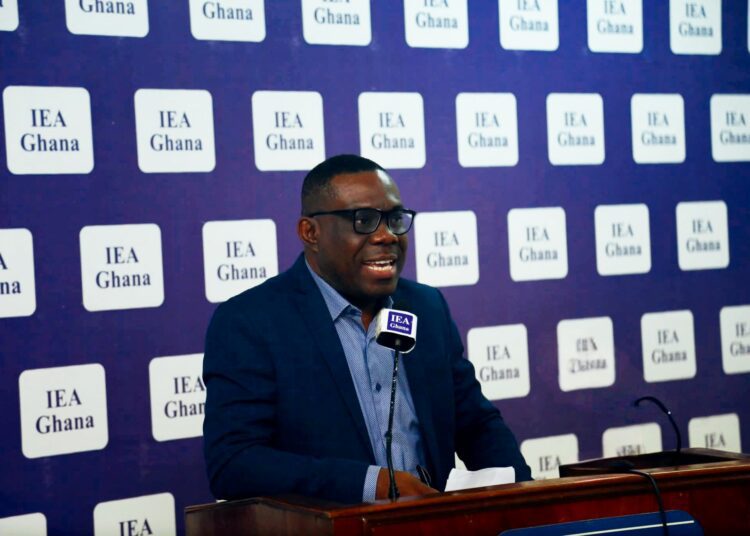
Ghana’s mining laws and fiscal regime must undergo urgent and comprehensive reform if the nation is to derive full value from its mineral wealth, according to Dr. E.O. Osae, Senior Fellow, IEA who presented a paper at the Institute of Economic Affairs (IEA) Seminar on “The Systems and Types of Benefits from Ghana’s Mineral Resources: Royalties, Rentals, Fees, Taxes, and Matters Arising.”
Dr. Osae warned that while Ghana remains one of Africa’s leading mineral producers, with rich endowments of gold, bauxite, manganese, and diamonds the structure of its mining laws and fiscal incentives continues to favour multinational companies over national development priorities.
“Ghana seems to give more than what it gets from the management of its natural resources.
“We offer more incentives, receive little in return, and allow huge capital flight and foreign dominance. It’s clear we are not managing our resources well.”
Dr. E.O. Osae, Senior Fellow, IEA
He emphasised that the current legal framework anchored on the Minerals and Mining Act, 2006 (Act 703) and its subsequent amendments was conceived under outdated assumptions that Ghana lacked technical and technological capacity to manage its own mineral resources.
“Continuing to manage our natural resources with these archaic laws only sustains perpetual underdevelopment.
“Political independence means little if we lack economic control over our resources.”
Dr. E.O. Osae, Senior Fellow, IEA
Flawed Incentive System
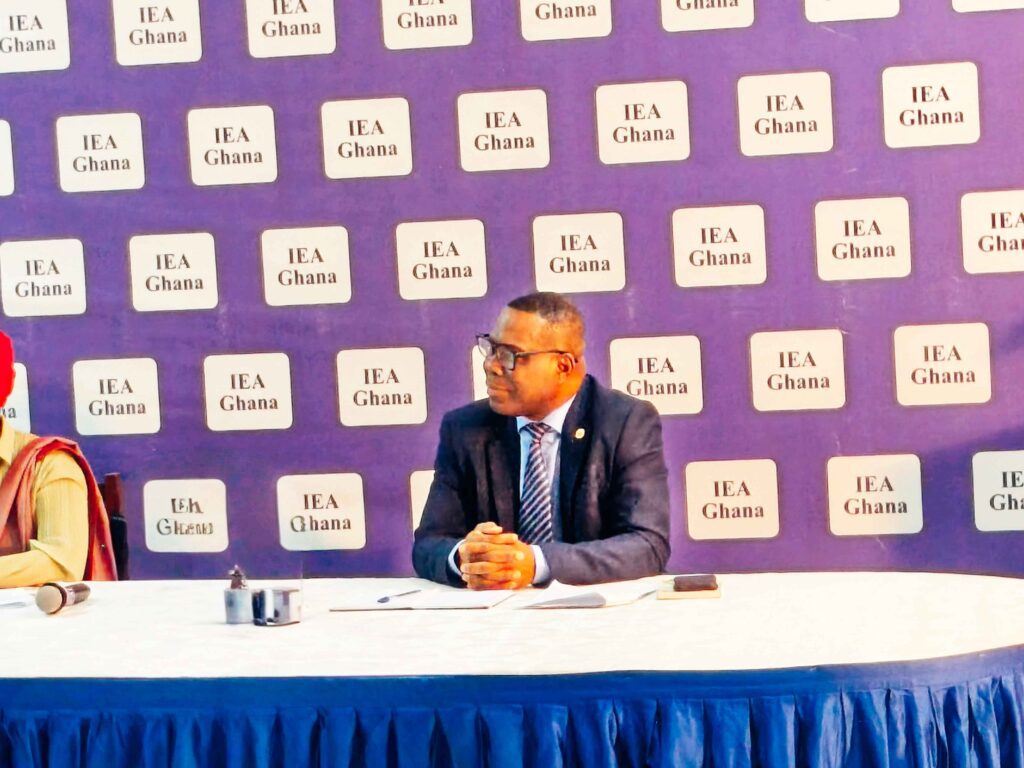
The presentation highlighted the extensive fiscal and non-fiscal incentives that mining firms currently enjoy under Ghana’s legal framework.
These include tax holidays, capital allowances, duty exemptions, and the ability to retain foreign exchange earnings offshore.
Dr. Osae pointed out that companies are permitted to “capitalize expenditures, carry forward losses for five years, and retain 25% of foreign exchange abroad,” provisions that significantly erode the country’s tax base.
“Operators enjoy generous incentives that, in effect, subsidise foreign profits.
“These policies might have made sense at independence, but today, they reflect outdated thinking and cost Ghana billions in foregone revenue.”
Dr. E.O. Osae, Senior Fellow, IEA
For example, mining companies currently pay a royalty rate capped at 5% of total mineral revenue; an arrangement Dr. Osae said is detrimental given that the state lacks mechanisms to verify actual production volumes.
“We have capped royalties without control over what is mined. That alone shows how much revenue we lose.”
Dr. E.O. Osae, Senior Fellow, IEA
He also criticised the dispute resolution mechanisms under Act 703, which often defer to international arbitration under UNCITRAL rules.
“This open-ended system weakens our sovereignty.
“Disputes involving Ghana’s resources should be settled in Ghanaian courts.”
Dr. E.O. Osae, Senior Fellow, IEA
Fiscal Benefits and Cost to Ghana
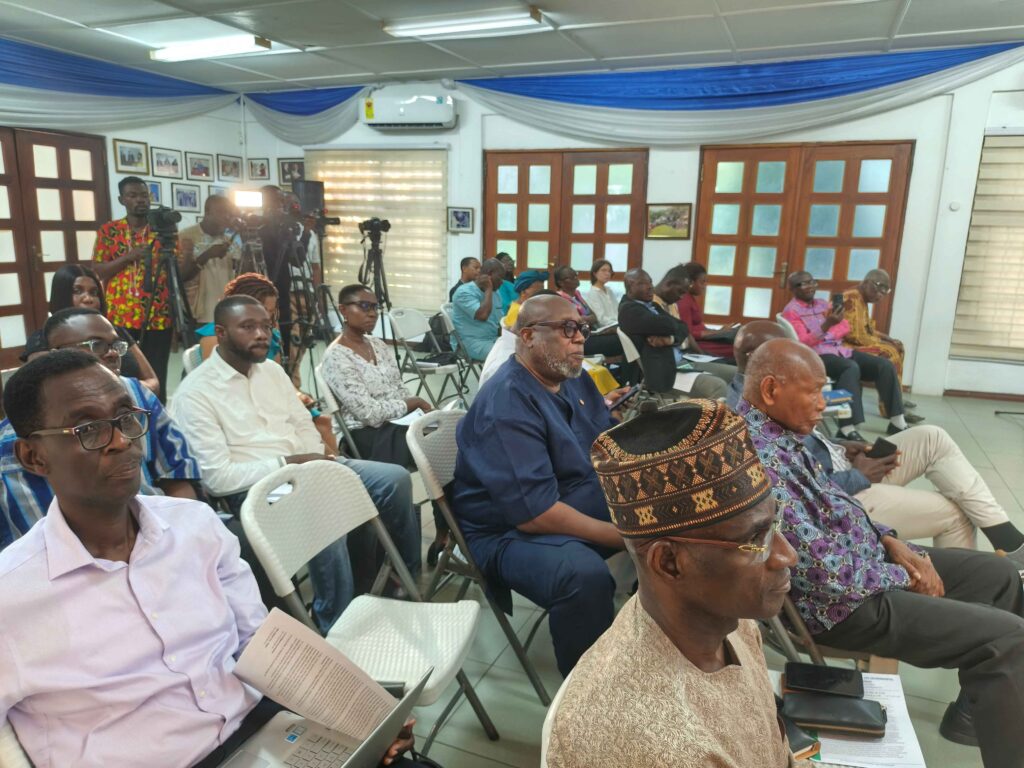
Despite the vast scale of Ghana’s mining industry, fiscal returns remain modest. Dr. Osae cited the 2024 Annual Mining Performance Report, which recorded total mineral revenues of US$7.1 billion but fiscal payments of only GH¢17.7 billion (about US$2.1 billion).
These included GH¢4.9 billion each from royalties and corporate taxes, and GH¢1.03 billion in dividends. Corporate social responsibility (CSR) investments totalled just US$28 million.
“The figures tell the story. We earn less than 30% of total mineral revenues, and even those payments are denominated in cedis, while the minerals are sold in dollars.
“It is time to demand our benefits in the same currency of sale.”
Dr. E.O. Osae, Senior Fellow, IEA
He added that the state continues to bear heavy indirect costs arising from mining operations such as road construction, environmental restoration, and health and security expenses that are not factored into the fiscal equation.
Recommendations for Reform
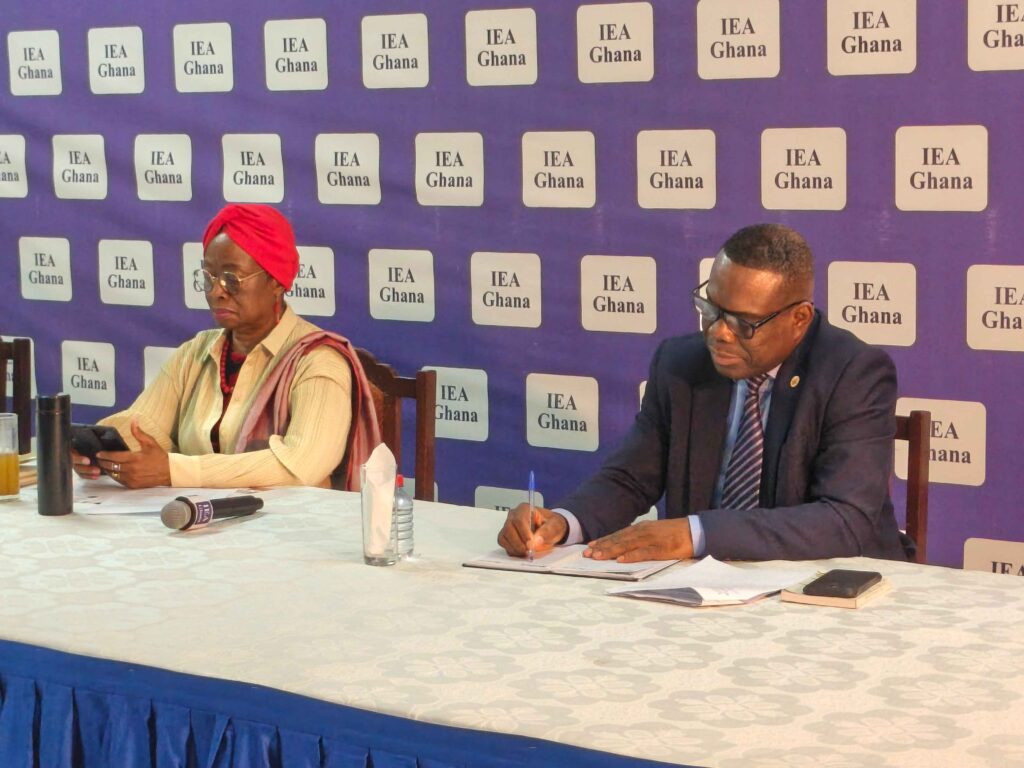
Dr. Osae has called for sweeping reforms to Ghana’s mineral wealth management, including abolishing outdated tax incentives, revising royalty rates, and pegging state benefits to the U.S. dollar in line with global pricing standards.
The policy proposals also seek to boost local ownership in the mining sector and expand the Ghana Gold Board’s mandate to oversee all large-scale mineral production.
Dr. Osae further recommended the creation of a Consolidated Mining and Minerals Fund to finance infrastructure and community projects, alongside strengthening the Ghana Revenue Authority’s auditing capacity to ensure independent verification of production and export data.
He also called for “a complete streamlining of institutional roles” among the Minerals Commission, Minerals Income Investment Fund (MIIF), Ghana Integrated Iron and Steel Development Corporation (GIISDEC), Environmental Protection Agency (EPA), and the Office of the Administrator of Stool Lands.
“The duplication of roles and weak coordination among agencies leads to inefficiency and revenue loss.
“We need a consolidated natural resource management architecture that is fit for purpose.”
Dr. E.O. Osae, Senior Fellow, IEA
Dr. Osae further recommended that Ghana review the fiscal terms of existing mining agreements and abolish the “juicy incentives” under Section 29 of Act 703, arguing that “Ghana now has the technical capacity to manage its mineral resources without depending excessively on foreign operators.”
Towards a New Resource Governance Vision

Concluding his presentation, Dr. Osae underscored that the status quo is unsustainable if Ghana is to achieve economic independence and sustainable development.
“A simple cost-benefit analysis indicates that we cannot continue the way we are going. The costs far outweigh the benefits.”
Dr. E.O. Osae, Senior Fellow, IEA
He urged policymakers to fast-track the ongoing review of the Minerals and Mining Act and anchor any reforms within Ghana’s long-term development strategy.
At an IEA Seminar in Accra, Dr. E.O. Osae called for urgent reforms to Ghana’s mining laws, citing archaic policies that favour foreign companies and deprive the nation of fair mineral revenues.
He urged a comprehensive overhaul of Act 703, greater local participation, dollar-denominated royalties, and streamlined governance to ensure Ghana maximises the economic benefits of its vast mineral wealth.
READ ALSO: Ghana’s Economic Recovery, Cedi’s Strength to Manage Inflation – IMF