The Institute for Energy Security (IES) has thrown its weight behind the National Petroleum Authority’s (NPA) fuel price floor policy, describing it as a vital safeguard for fair competition and long-term stability in Ghana’s downstream petroleum sector.
The defence comes amid mounting public debate over fuel pricing, sparked by claims that regulatory controls are preventing cheaper petrol for consumers.
In a press release, the energy policy think tank cautioned that recent public commentary on fuel prices risks oversimplifying a complex market and misleading the public on how petroleum pricing works.
“The petroleum downstream market is capital-intensive, high-risk, and highly exposed to global price volatility and exchange rate fluctuations.”
Institute for Energy Security (IES)
IES emphasised that the NPA’s price floor is not a price-fixing mechanism. Instead, it is intended to stabilise competition and prevent market distortions that could ultimately hurt consumers.
IES explained that the policy exists to curb predatory pricing by dominant players, protect smaller and emerging Oil Marketing Companies (OMCs), and ensure supply continuity during periods of tight margins.



In the Institute’s view, these objectives are central to promoting long-term consumer welfare rather than short-term price cuts that may prove unsustainable.
The controversy follows remarks by the Chief Executive Officer of StarOil Ghana, who suggested that the company could sell petrol at GHS9.50 per litre during off-peak night hours, between 10pm and 4am, if not for the NPA’s price floor.
The comments quickly gained traction on social media, with many consumers interpreting them as evidence that regulation is standing in the way of cheaper fuel.
IES acknowledged that public engagement on energy pricing is important but warned that such discussions must be grounded in economic realities rather than populist narratives.
According to the Institute, portraying the price floor as an obstacle to consumer relief ignores the structural risks inherent in the petroleum downstream market.
Lessons From Unregulated Price Wars

Drawing on international experience, IES warned that aggressive price wars in fuel markets often produce unintended consequences. While consumers may enjoy temporary price reductions, such battles frequently result in monopolisation, supply disruptions, and higher prices in the long run once competition is weakened.
“Short-term price reductions that undermine market structure are not pro-consumer in the long run,” the Institute cautioned, adding that strong regulatory oversight is essential in markets that directly affect household welfare and national economic stability.
IES also raised regulatory and economic concerns about the proposal to selectively reduce fuel prices during specific hours of the day. The Institute rejected comparisons between fuel retailing and digital services, where marginal costs can fall sharply during off-peak periods.
“Fuel retailing is not a digital service where marginal costs disappear at night. Storage, financing, distribution, and inventory risks remain constant.”
Institute for Energy Security (IES)
According to IES, these fixed costs make it questionable whether prices below the regulatory floor could be sustained without losses.
The Institute further questioned whether such losses could be cross-subsidised in a way that crowds out competitors, particularly smaller OMCs with limited financial buffers, thereby distorting competition.
Industry Pushback and Credibility Gap
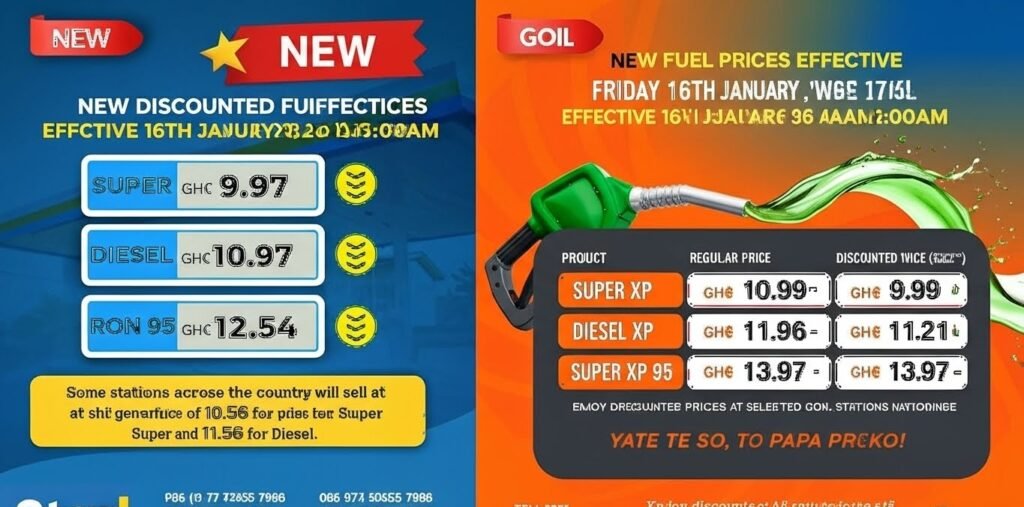
IES pointed to growing pushback from within the industry itself, including public comments from GOIL Ghana’s Group Chief Executive Officer.
The GOIL boss has challenged claims of cheaper pricing, noting that some companies calling for lower fuel prices are unable to compete even at the approved floor price of GHS9.80 per litre in the current pricing window.
“This divergence between industry realities and public-facing narratives underscores the danger of oversimplifying fuel pricing dynamics for social media appeal.”
Institute for Energy Security (IES)
The Institute also questioned the timing and motivation behind renewed calls to remove the price floor, asking whether such demands would have surfaced if StarOil were not currently a market leader.
“Historically, price floors and similar regulatory protections are what enabled many OMCs, large and small to survive intense competition.”
Institute for Energy Security (IES)
Given the gravity of the claims made in the public domain, IES has called on the NPA to investigate StarOil’s pricing assertions and cost structures.
The Institute urged the regulator to assess compliance with existing pricing rules, examine any potential predatory pricing practices, and reaffirm the principles underpinning the price floor regime.
As debate over fuel pricing continues, the Institute urged stakeholders to move beyond headline-grabbing statements and engage seriously with competition policy, energy security, and sustainable consumer protection in Ghana’s petroleum downstream sector.
READ ALSO: GIPC Unveils $152m Investment Opportunities Bonanza