
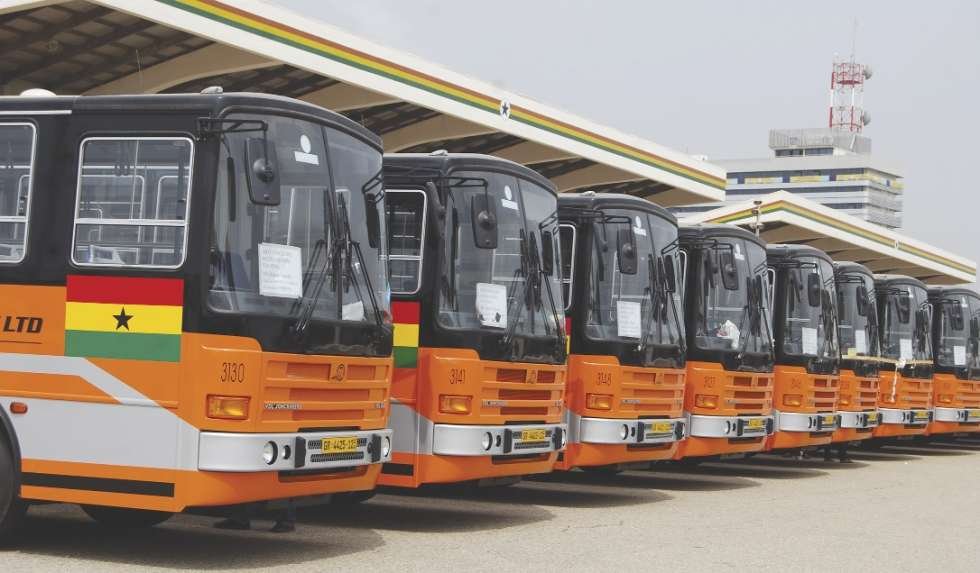
Legal practitioner and activist Oagyefo Oliver Barker-Vormawor has renewed calls for sweeping reforms to Ghana’s public auction system following revelations that Metro Mass Transit sold more than 300 buses for just GH¢2,500 each in 2020. The disclosure has reignited debate about transparency, value for money, and the chronic weaknesses in how the State disposes of surplus assets.
Reacting to the reported sale, Barker-Vormawor questioned the justification that the buses were unserviceable, arguing that even their scrap value should have fetched far more. He framed the issue as a symptom of a deeper institutional failure rather than an isolated incident involving a single state-owned company.
“So Metro Mass sold over 300 buses for GH¢2,500 each in 2020? They say they were unserviceable. But if even sold for scraps, I think even I could manage to get more than 2,500 cedis for each.”
Osagyefo Oliver Barker-Vormawor, Legal Practitioner and Activist
According to him, such outcomes are inevitable in a system where public assets are disposed of quietly, without open competition or reliable public records. Barker-Vormawor argued that Ghana lacks a unified and transparent government auction framework, allowing valuable state property to disappear through opaque processes that favour insiders.
Open Bidding Reduces Price Fixing
In a strong critique, he noted that when the State no longer needs buses, vehicles, furniture, laptops, or equipment, there should be a single public platform where all items are listed openly for sale, allowing anyone to bid and see the results. Open bidding, he stressed, reduces price fixing, discourages sweetheart deals, and ensures that market forces determine value.

Instead, he said, government auctions often happen out of public view, with citizens only learning of them after the fact, when the prices sound implausibly low. In his view, the same small circles of insiders somehow always know when and where these auctions are taking place, reinforcing public suspicion of self dealing.
Barker-Vormawor extended his criticism to asset disposal practices at Ghana’s ports, describing a pattern of weak oversight and limited disclosure around the sale of seized or abandoned items. He argued that ordinary citizens cannot easily find out what was sold, who bought it, or at what price, unless they already belong to the right networks.
Best Example: Auction Open Online Platforms
To illustrate that alternatives exist, the activist pointed to international examples, particularly in the United States, where surplus government assets are sold through open online platforms. He cited the website GovDeals, which lists a vast range of public assets, from office furniture to heavy vehicles, available for competitive bidding by anyone.
“Over a million items are listed there at any time. Old laptops. Office desks. Farm equipment. Vans. Trucks. Buses. You name it. Anyone can log on and bid. Prices are driven by the market. Records are public.”
Osagyefo Oliver Barker-Vormawor, Legal Practitioner and Activist
He noted that even in Ghana, the United States Embassy conducts its auctions online with clear procedures and no secrecy. “The white van we use for FixTheCountry demonstrations was bought from a US Embassy online auction,” he said, explaining that the vehicle was acquired through competitive bidding, not through personal connections or intermediaries.
“Used to belong to the US government. Now it belongs to the streets.” Turning back to Ghana, Barker-Vormawor painted a familiar picture of government vehicles abandoned at ministries, agencies, and district assemblies across the country.
Many of these vehicles, he observed, sit idle for years with flat tyres and peeling paint until they completely deteriorate, leaving the State with no recoverable value. He argued that this waste is not the result of technical complexity or lack of expertise, but of weak political will and institutional complacency.
A Single National Auction Portal with Mandatory Listing
In his view, the solution is straightforward: a single national auction portal with mandatory listing of surplus government assets, open public bidding, proper record keeping, and independent oversight.
“This is not complicated to fix. It does not require genius. It does not require foreign consultants. It just requires the decision to be transparent and organised.”
Osagyefo Oliver Barker-Vormawor, Legal Practitioner and Activist
Beyond the financial losses, Barker-Vormawor said what troubles him most is the apparent lack of urgency or accountability surrounding public asset management. He questioned why there is so little public outrage or official embarrassment when state property is sold for amounts that appear to defy common sense.
His comments come at a time when Ghana faces significant fiscal pressures and is under scrutiny to improve public financial management. Analysts have long argued that leakages in asset disposal, procurement, and revenue administration collectively cost the State millions of cedis annually, resources that could otherwise support essential public services.

While Metro Mass Transit has yet to publicly respond in detail to the renewed criticism, the controversy has amplified broader calls for reform. Civil society groups and governance advocates argue that transparent auction systems would not only improve revenue recovery but also rebuild public trust in how the State manages collective resources.
As Barker-Vormawor bluntly concluded, the issue goes beyond buses and auctions to questions of national attitude and responsibility. For him, the sale of hundreds of buses at bargain prices is not just a bad deal, but a reflection of a system that has normalised inefficiency and secrecy in the handling of public assets, and hence the need for urgent and decisive reforms to reverse it.
READ ALSO: Ghana’s Insurance Industry Enters New Era as Boatemaa Barfour-Awuah Takes GIA Helm