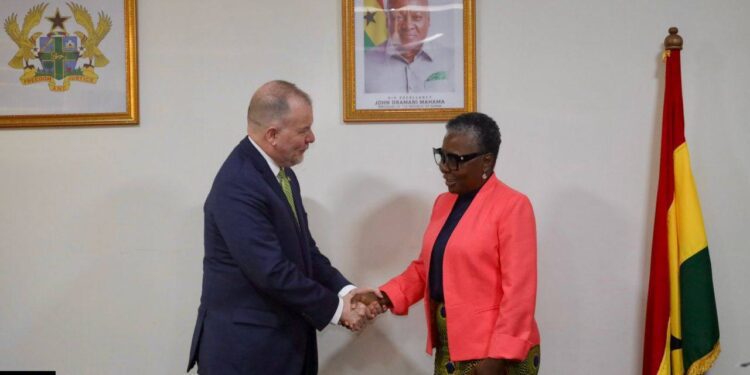
The maritime relationship between Ghana and the United States has reached a new strategic milestone following a high-level diplomatic engagement at the Ministry of Fisheries and Aquaculture Development (MoFAD) in Accra that outlined a roadmap for deep-sea governance and aquaculture expansion to help combat illegal fishing.
A delegation from the United States Embassy, led by the Deputy Chief of Mission, Rolf Olson, paid a courtesy call on the Minister for Fisheries and Aquaculture Development, Hon. Emelia Arthur. The meeting, which served as Mr. Olson’s official introduction to the Ministry, signaled a shift toward a more technology-driven partnership aimed at protecting Ghana’s territorial waters.
“At the heart of the discussions was the escalating threat of Illegal, Unreported, and Unregulated (IUU) fishing. For Ghana, the stakes are exceptionally high; the fisheries sector supports the livelihoods of over 10% of the population and is a cornerstone of national food security.
“However, the encroachment of industrial trawlers and illicit maritime activities has historically undermined the sustainability of these resources”
Ministry of Fisheries and Aquaculture Development
The United States positioned itself as a critical ally in Ghana’s fight to sanitize its maritime domain. Mr. Olson underscored that the U.S. shares Ghana’s deep-seated concerns over the ecological and economic fallout of IUU fishing, which he characterized as a global crisis that destabilizes marine ecosystems and destroys local livelihoods.
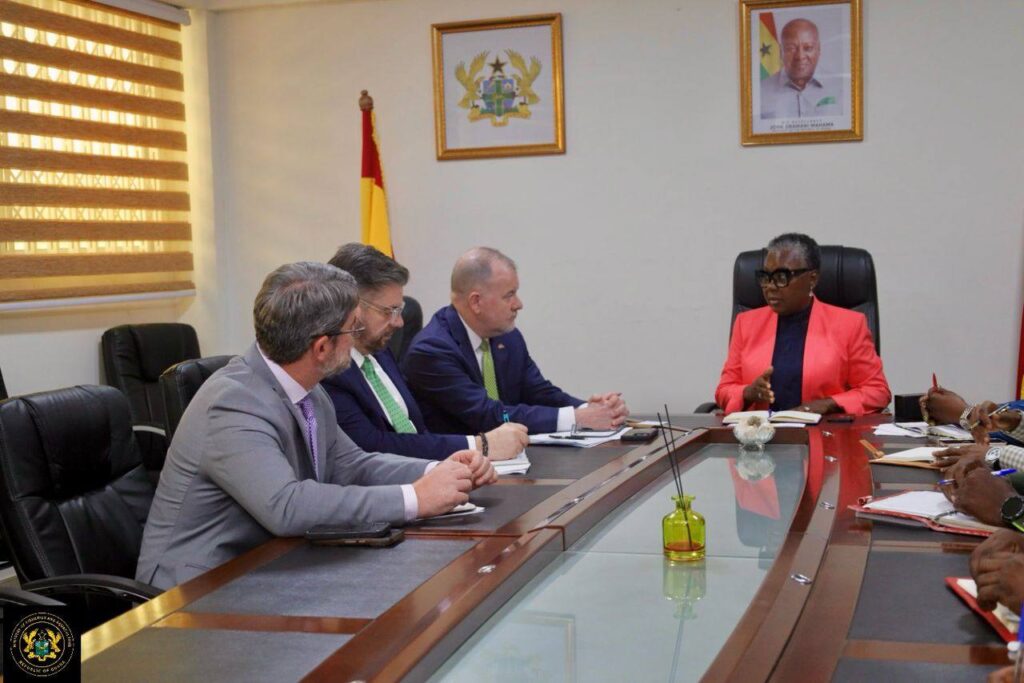
The U.S. strategy involves more than just diplomatic oversight; it is an invitation for private-sector involvement. By strengthening governance frameworks, the embassy believes Ghana can unlock significant investment across the fisheries value chain.
The delegation highlighted that closer collaboration would naturally attract American technical expertise and innovative technologies, providing the “responsible investment” needed to modernize the sector.
Addressing the Surveillance Gap
Hon. Emelia Arthur was candid about the obstacles hindering the sector’s growth.
While the government is ambitious about its transition toward a more industrial fisheries model, the lack of sophisticated monitoring infrastructure remains a primary bottleneck. She specifically identified Vessel Monitoring Systems (VMS) as a high-priority area for bilateral cooperation.
“She outlined key capacity gaps within the sector, including the need for enhanced vessel monitoring systems to improve surveillance at sea and robust fish health management frameworks to support a modern, resilient aquaculture industry”
Ministry of Fisheries and Aquaculture Development
The Minister’s focus on VMS is timely. Without real-time data and surveillance, enforcing maritime laws against well-equipped illegal fleets is nearly impossible.
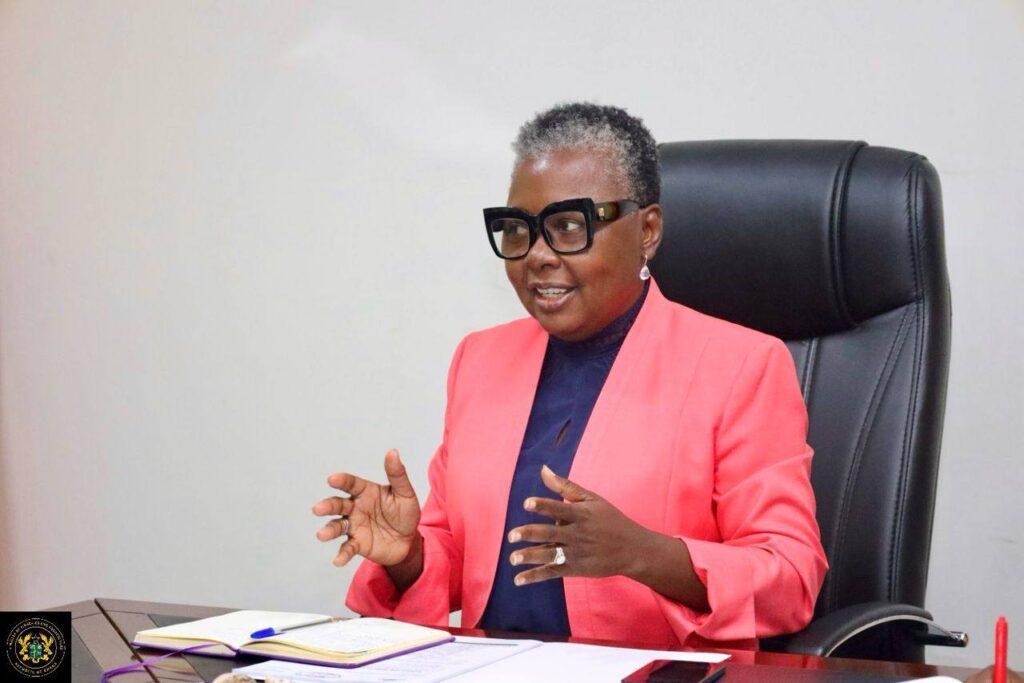
MoFAD observed that by partnering with the U.S., Ghana hopes to gain access to satellite-based tracking and surveillance technologies that would allow the Ghana Navy and fisheries officials to monitor the “dark activities of unauthorized vessels” more effectively.
Strategic Priority
Beyond the open sea, the government is looking inward at the massive potential of its inland waters.
Hon. Arthur reiterated that aquaculture is being treated as a strategic priority for economic diversification. The goal is to move the sector beyond subsistence farming and into a commercial powerhouse capable of creating thousands of jobs for youth and women.
However, scaling up aquaculture to drive economic growth, create jobs for youth and women, and improve national food security, requires more than just water and fingerlings; it requires a robust biosecurity and health management framework.
“The Minister pointed out that Ghana needs international expertise to build a resilient industry that can withstand disease outbreaks and meet the stringent health standards of global export markets”
Ministry of Fisheries and Aquaculture Development
The U.S. delegation responded positively to this vision, indicating that emerging business opportunities within Ghana’s fisheries could bridge the gap between local production and international demand. This would involve a transition where Ghana doesn’t just harvest fish but manages a technology-intensive industry supported by research and innovation.
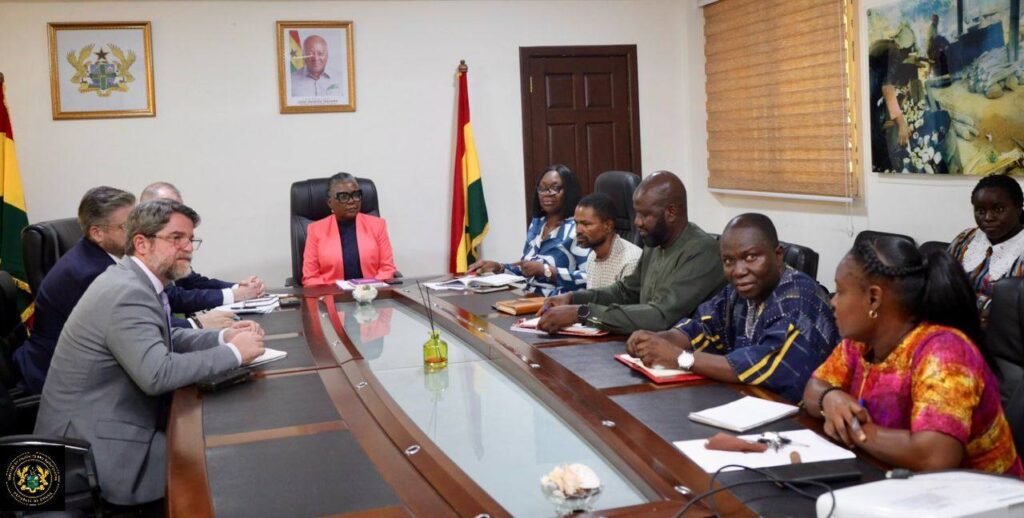
The engagement concluded with a reaffirmed commitment to a “Blue Economy” that balances exploitation with conservation. The Minister stressed that the path toward long-term sector transformation is paved with technology transfer and joint enforcement.
The Fisheries Minister stressed that strategic partnerships with international allies such as the United States are critical to addressing these challenges effectively. She noted that collaboration across technology transfer, research, monitoring, and enforcement would significantly advance Ghana’s efforts.