
The African Energy Chamber (AEC) has intensified its call for investment models that guarantee African participation, reject discrimination and uphold strong local content principles, as Africa’s oil and gas industry continues to expand.
The Chamber argues that while global energy debates grow increasingly polarized, Africa cannot afford to undermine a sector that remains central to economic growth, job creation and energy security.
“Across many Western countries, anti-energy activists attack the very oil and gas industry that provides tax revenue to build schools, pave roads and fund universities.”
African Energy Chamber (AEC)
At the AEC, leaders insist that Africa must chart a different course. The Chamber maintains that defending oil and gas development is essential to the continent’s economic sovereignty and long-term development.
The Chamber emphasizes that investment will only flow at scale if governments maintain regulatory clarity, efficient permitting systems and consistent enforcement of laws.
It rejects the notion that policymakers should “pick energy winners and losers” rather than allowing market principles to operate.
By advocating for stable regulatory frameworks, the AEC says it is defending the same market foundations that enabled today’s strongest global economies to emerge.
The Chamber views continued domestic and foreign capital inflows as critical to unlocking Africa’s vast hydrocarbon resources.
At the same time, it warns that Africa must avoid adopting policies that unnecessarily restrict oil and gas activity in pursuit of external political agendas.
Africa’s Energy Must Deliver for Africans

For many citizens, skepticism about oil and gas development often centers on employment and opportunity. The Chamber acknowledges this concern and positions local content as a non-negotiable pillar of sustainable growth.
“Expecting the industry to create jobs for Africans is not radical – it is right,” the Chamber stated, stressing that energy projects must translate into tangible benefits for local communities.
The AEC points to progress made in building African leadership within the industry. Companies such as Seplat, Renaissance Energy, Oando, Etu Energias, First E&P and ND Western are cited as examples of African-led enterprises that have grown from partnerships with international oil companies.
The Chamber notes that regulators such as the Nigerian Upstream Petroleum Regulatory Commission, Agencia Nacional de Petroleo, Gas e Biocombustiveis and Ghana Petroleum Commission have played important roles in pushing for local participation.
Despite progress, the Chamber says serious concerns persist regarding exclusionary practices within parts of the industry.
“Policies or practices that exclude Black professionals from employment opportunities contradict the very principles of growth, fairness and partnership the industry claims to uphold.”
African Energy Chamber (AEC)
The AEC criticized Frontier’s leadership, including Daniel Davidson, for what it described as resistance to inclusive hiring. It argued that organizations benefiting from African markets and capital cannot deny fair employment opportunities to Africans.
This debate has also drawn attention to the Africa Energies Summit, with the Chamber warning that institutions seeking African government support must demonstrate commitment to diversity and equal opportunity.
Considering a Selective Boycott

In a strong signal of intent, the Chamber revealed it is considering a targeted and lawful boycott of institutions that refuse to adopt inclusive hiring practices.
Companies such as TGS and other industry partners participating in platforms perceived as unwelcoming to Black professionals were urged to recognize their influence and act responsibly.
Invoking the words of Martin Luther King Jr., the Chamber reminded stakeholders that “there comes a time when silence is betrayal,” emphasizing that neutrality in the face of discrimination is no longer acceptable.
The AEC also called on African ministers and regulators attending industry summits to align their participation with local content commitments.
It warned that failing to do so risks undermining public trust and giving critics of the oil and gas industry grounds to question its social legitimacy.
Defending the Sector’s Future
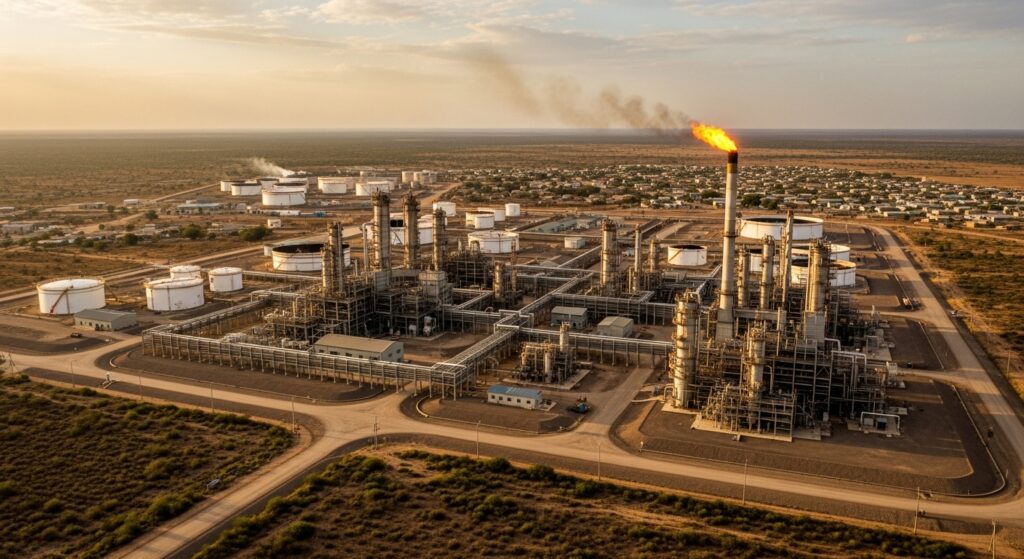
The Chamber maintains that its stance is rooted not in confrontation but in decades of advocacy for Africa’s energy future. It argues that ignoring local content and inclusion could jeopardize the long-term sustainability of the industry.
Oil and gas, the AEC insists, remain vital to ending energy poverty, strengthening energy security and financing development across the continent.
In the coming weeks, the Chamber plans to engage African officials and industry leaders to secure firm commitments to inclusive hiring and equal opportunity. Where progress is lacking, it says it will exercise its lawful right to protest.
Ultimately, the AEC’s message is one of unity. Africa’s energy future, it argues, must be built on investment, opportunity and inclusion for all, ensuring that the expansion of the oil and gas sector delivers shared prosperity across the continent.
READ ALSO: UK High Court Rules Palestine Action Ban Unlawful