The Mahama administration has intensified its drive toward an export-led industrial economy with the official Cabinet approval of new processing facilities and a comprehensive roadmap for the nation’s idle manufacturing assets.
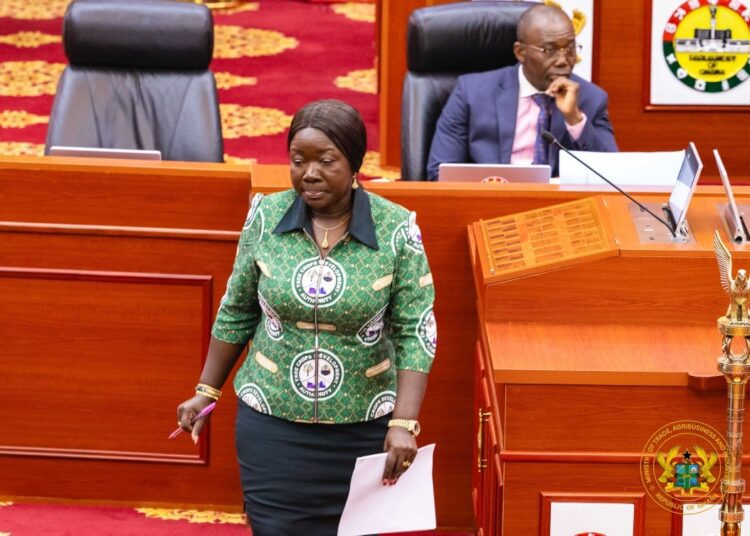
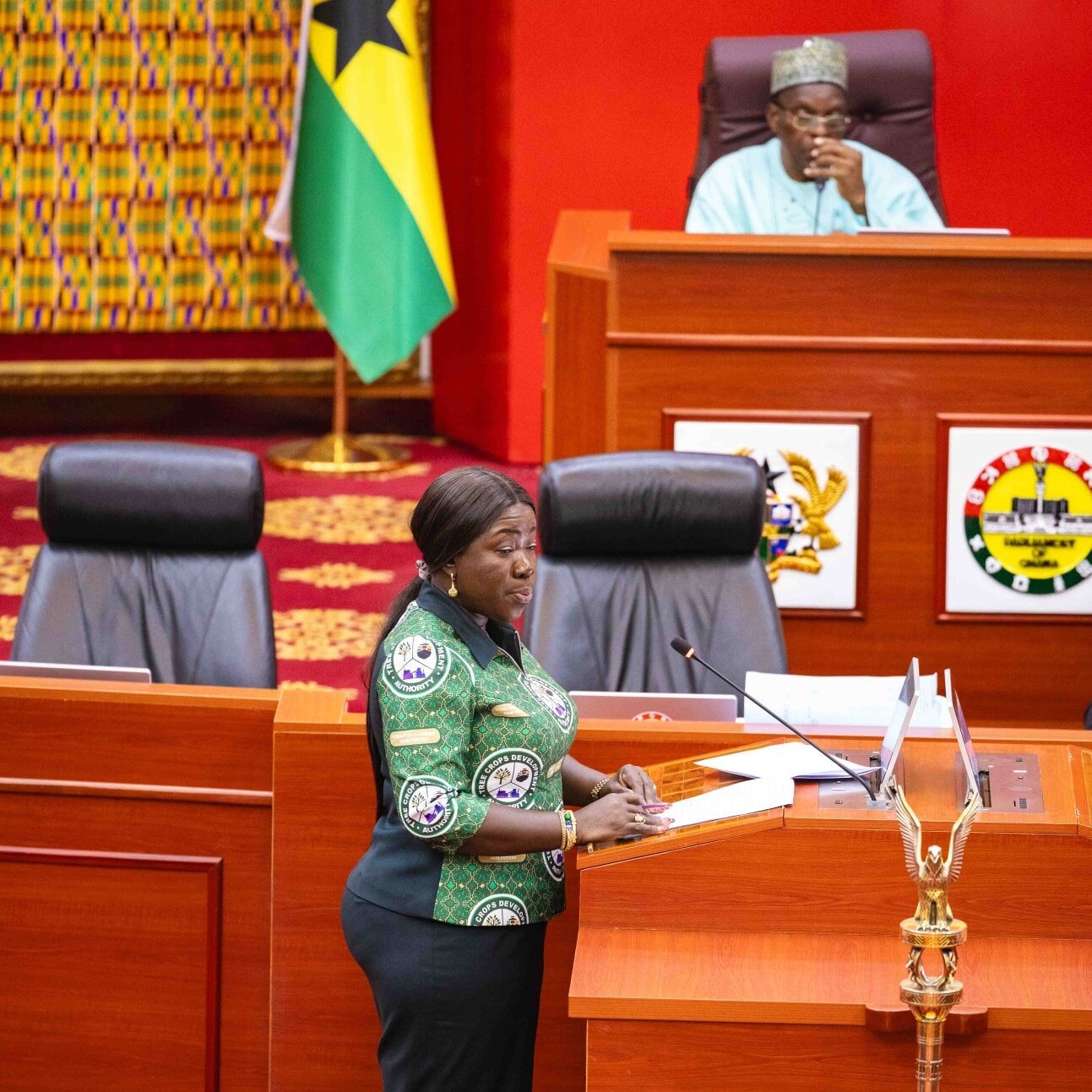
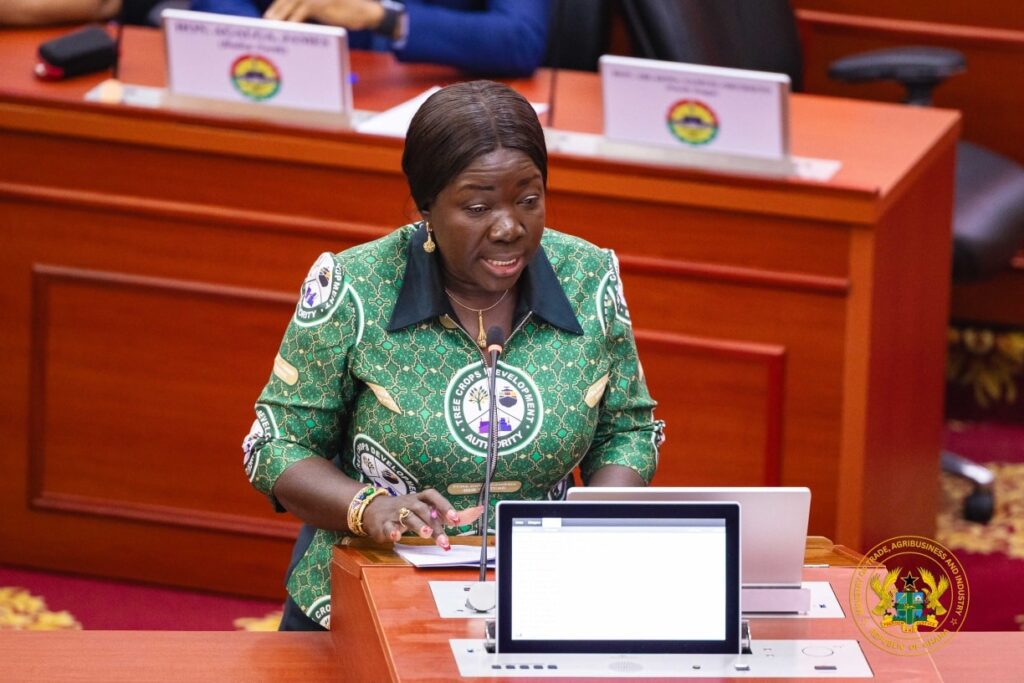
This came after the Minister for Trade, Agribusiness and Industry, Hon. Elizabeth Ofosu-Adjare, took to the floor of Parliament to outline a high-stakes strategy to permanently end Ghana’s reliance on raw commodity exports, highlighting the pivotal role of the Bono and Bono East regions in the nation’s agricultural output.
According to the Ministry of Trade, Agribusiness and Industry (MoTAI), Hon. Ofosu-Adjare announced the establishment of two state-of-the-art cashew factories designed to absorb the surplus from the newly enforced raw cashew export ban.
“This industrial expansion is the heartbeat of the Ghana FIRST agenda, which seeks to transform the country into the manufacturing hub of West Africa.
“By moving beyond assembly and into the primary processing of local crops and automotive components, the Ministry is laying the groundwork for a resilient, inclusive economy that prioritizes value-addition over the traditional quasi-fiscal drainage of the past”
MoTAI
MoTAI noted that a major highlight of the parliamentary briefing was the detailed turnaround plan for the Komenda Sugar Factory. Recognizing the facility as a dormant giant with the capacity to process 1,250 metric tonnes of sugarcane daily, Hon. Ofosu-Adjare revealed that the government has moved past the assessment stage.

“Hon. Ofosu-Adjare outlined decisive steps being taken to restore operations at the Factory, noting that despite its enormous potential to create jobs, years of technical, financial and operational challenges have stalled its full operations”
MoTAI
Following extensive consultations with local chiefs and farmers in the Central Region, the Ministry has prioritized the appointment of a Transaction Advisor to secure a strategic private-sector investor. With specific provisions already made in the 2026 Budget, the factory is positioned to become a cornerstone of the region’s economic revitalisation.
The revitalization of Komenda is being integrated into the “Feed the Industry” initiative, ensuring that local farmers have a guaranteed off-taker for their sugarcane, thereby securing the raw material pipeline before the machines begin to roll.
Automotive Sovereignty and Export Liquidity
The Minister also provided a progress report on the Ghana Automotive Component Manufacturing Development Policy, a strategic shift from simple vehicle assembly to the high-value production of vehicle parts.
This policy is being “fine-tuned in collaboration with the Finance Minister, Hon. Cassiel Ato Forson,” to ensure that the incentives offered to investors are both competitive and sustainable under the African Continental Free Trade Area (AfCFTA).
“The draft policy is designed to attract investment into vehicle component manufacturing, build technical skills, and integrate local enterprises into regional and global value chains”
Hon. Elizabeth Ofosu-Adjare, Minister for Trade, Agribusiness and Industry
Beyond policy frameworks, Hon. Ofosu-Adjare noted that the Ministry has achieved a significant victory for the private sector by negotiating with the Bank of Ghana to double the export proceeds repatriation period from 60 to 120 days.
This move is expected to dramatically improve the cash flow of local manufacturers, allowing them to reinvest in their operations rather than being stifled by rigid foreign exchange timelines.
Scaling the 24-Hour Plus Economy
Under the personal chairmanship of President John Dramani Mahama, Hon. Ofosu-Adjare explained, the Accelerated Export Development Advisory Committee has been tasked with providing the strategic direction for the government’s 24-Hour+ Economy policy.
This framework is already yielding results, with MoTAI currently pursuing the establishment of three new garment factories through Public-Private Partnerships. By integrating agricultural production with industrial processing, the government is ensuring that the “Feed the Industry,” model provides the reliable supply of raw materials needed to sustain multi-shift operations.
“Hon. Ofosu-Adjare further highlighted interventions under the Accelerated Export Development Programme aimed at stimulating domestic production, including the distribution of over 211,000 coconut seedlings and the implementation of the ‘Feed the Industry’ initiative which integrates agriculture and agro-processing”
MoTAI
According to the Minister, the deployment of a “single-window export platform,” by the Ghana Free Zones Authority and the strengthening of certification systems by the Ghana Standards Authority are the final pieces of the puzzle. Together, these interventions are designed to make “Made in Ghana” a global mark of quality.
As the Trade Ministry accelerates the establishment of the two new Cabinet-approved cashew factories in the Bono and Bono East regions – alongside three new garment factories through Public-Private Partnerships – the message to the global market is that Ghana is no longer just a source of raw materials, but a sophisticated industrial power ready to dominate the African landscape.
READ ALSO: France Releases Suspected Russian Shadow Fleet Tanker