
Speaking at the Ghana Tree Crops Investment Summit and Exhibition 2026, the Minister for Food and Agriculture, Hon. Eric Opoku has announced that the state will no longer sanction the exportation of raw cashew, rubber, and coconut – signalling a definitive close to the era of Ghana serving as a mere plantation for global industrial giants.
According to the Minister, this policy shift – as the government pivots toward a “value-addition-only” strategy for tree crops – is designed to dismantle the fragmented production models of the past and replace them with organized, industrial value chains that retain the lion’s share of wealth within the country’s borders.
“By repositioning these three commodities as the primary drivers of the Great Industrial Reset, the Mahama administration will insulate the economy from the volatility of global commodity prices.
“The goal is to transform the potential of the soil into the prosperity of the factory floor, ensuring that every ton of cashew or rubber harvested contributes to domestic job creation and increased foreign exchange earnings”
Hon. Eric Opoku, Minister for Food and Agriculture

Central to this industrial leap is the Tree Crops Development Authority (TCDA), which has been tasked with creating a “predictable and bankable,” environment for global investors. Hon. Opoku challenged the notion that regulation serves as a bottleneck, arguing instead that a robust oversight framework is the only way to guarantee the long-term sustainability of the sector.
He noted that through the TCDA, the Ministry of Food and Agriculture (MoFA), will digitize data systems and improve traceability – essential requirements for Ghanaian products to meet the increasingly stringent “green standards,” of the European and North American markets.
Hon. Opoku explained that by ensuring that every seedling can be traced from the nursery to the finished industrial product, Ghana is positioning itself as a high-trust destination for agro-industrial capital.
Scaling Up Production
To prevent the supply-gap that often plagues new processing plants, the government is scaling up the distribution of certified seedlings and establishing training centers across major production zones.

The Minister noted that for a “processing-first” policy to work, the farmers – particularly women and youth – must have the technical support to double their yields. This includes a massive expansion of extension services to ensure that the raw material reaching the new agro-industrial parks meets the specific quality standards required for downstream manufacturing.
“The government has taken a deliberate decision to reposition tree crops as major drivers of economic growth through processing and industrial development.
“The country is moving from fragmented production to organized value chains, and from raw exports to industrial processing. The aim is to create jobs, increase farmers’ incomes, and boost foreign exchange earnings”
Hon. Eric Opoku, Minister for Food and Agriculture
This focus on the “mid-stream” ensures that investors can move into the Ghanaian market with the confidence that the raw material pipeline is both reliable and of premium quality.
Dr. Opoku’s address served as an invitation to both local and foreign investors to look beyond simple trade and toward long-term plantation development and agro-industrial partnerships. The 2026 Summit is being used as a matchmaking platform to pair land-rich communities with capital-rich processors, effectively turning rural production areas into economic hubs.
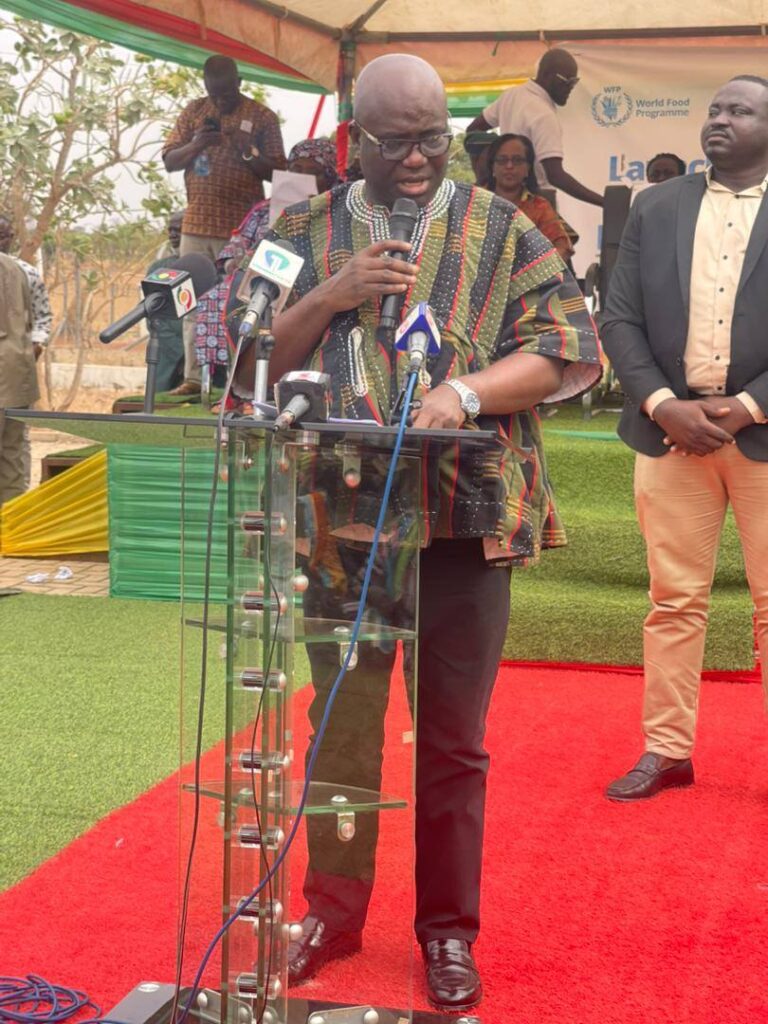
The Minister concluded that the “talk shop,” era is over, and the focus is now on the “work shop,” reality of building factories that can compete on the global stage.
Through this bold move, Ghana is not only finally cutting the cord of colonial-style raw material exports for cashew, rubber, and coconut, but underscoring its preparedness to do the same with cocoa in the near future – as recently announced by President John Dramani Mahama.
READ ALSO: Cedi Remains Anchor of Monetary System Amid Virtual Asset Boom- BoG