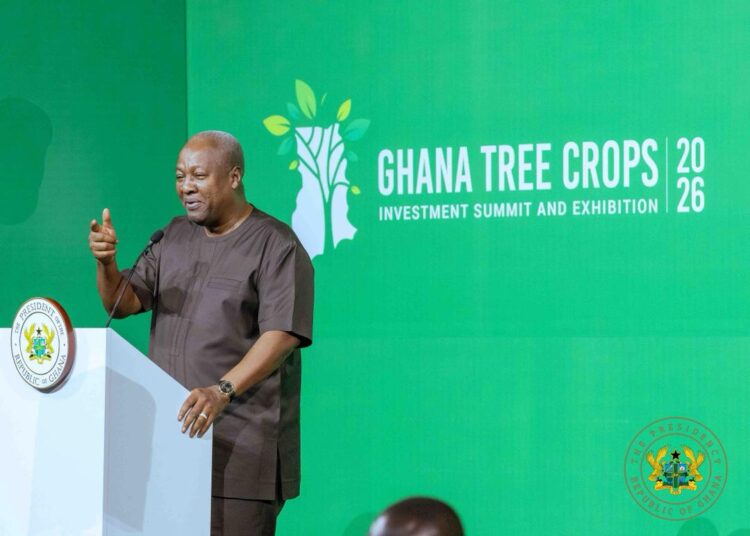
President John Dramani Mahama has urged Ghana to treat the recent surge and volatility in global cocoa prices as a decisive moment to fundamentally rethink how the country manages its cocoa industry.
Speaking at the Ghana Tree Crops 2026 Investment Summit and Exhibition, he argued that the crisis has laid bare the long standing risks of relying heavily on raw material exports without sufficient local processing and value addition.
According to him, the challenges facing the cocoa sector are not unique to Ghana but have affected cocoa producing countries across the world. He said the disruption demonstrates how unstable economies can become when they depend primarily on exporting unprocessed raw materials.
In the President’s view and considerations, the current situation should not be seen only as a setback but as an opportunity to reset national priorities in cocoa production and trade.
President Mahama noted that the country has for decades absorbed price shocks without addressing the deeper structural issues that leave farmers and the broader economy exposed. He stressed that the lessons from the present crisis must inform a new direction for the sector.
“And we’ve exported raw beans since Gordon Guggisberg’s time. For those of you who don’t know Gordon Guggisberg, he was one of the colonial governors. And Ghana, at that time, was the leading exporter of cocoa. And to think that in the 21st century, we’re still the leading exporter of raw cocoa beans.”
President John Dramani Mahama
President Mahama further argued that continuing to lead the world in raw cocoa exports in the twenty first century is not an achievement the country should celebrate.
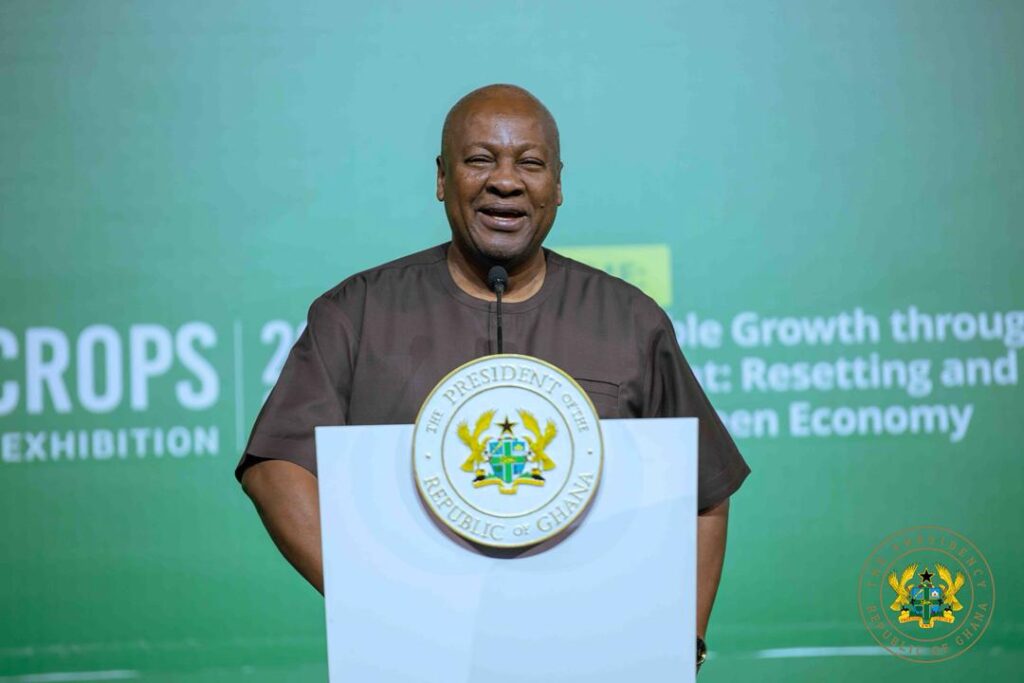
According to him, national pride should instead be anchored in producing and exporting finished and semi-finished cocoa products that generate higher income, create jobs, and strengthen industrial capacity.
President Mahama stressed that the global cocoa crisis should mark a turning point, compelling Ghana to move away from exporting beans as its primary cocoa output. He said real value lies not in volume alone but in how much of the cocoa value chain is retained within the country.
Financing Constraints and Processing Limits
The President explained that one of the major obstacles to local cocoa processing is the way the sector is financed. He said Ghana traditionally collateralizes cocoa beans to secure external financing, which is then used to purchase cocoa from farmers for export.
As a result, most of the beans are tied to export obligations, leaving limited quantities available for domestic processors. According to him, this financing model constrains the ability of local factories to operate at full capacity and discourages expansion of processing facilities.
President Mahama noted that even when Ghana has installed processing capacity, access to raw beans remains a challenge because export commitments take priority.
He emphasized that this structure has kept the country locked into a cycle where it produces large volumes of cocoa but captures only a fraction of the value generated along the global cocoa supply chain.
President Mahama said government has taken a strategic decision to change the cocoa funding cycle in response to these limitations. He explained that the new approach involves raising financing locally in Ghanaian currency to pay farmers, rather than depending primarily on external financing secured against cocoa exports.
Under this model, he said, a defined portion of cocoa beans can be allocated directly to local processing plants. This, he noted, would allow existing factories to increase utilization and encourage further investment in cocoa processing infrastructure.
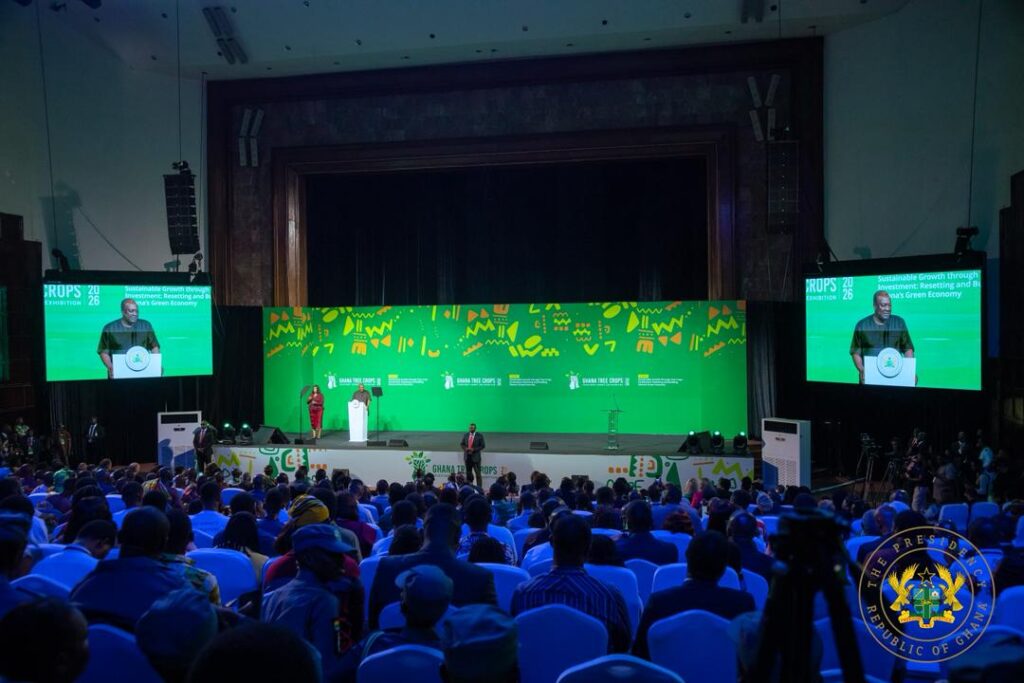
He added that expanding local processing is not only about boosting export earnings but also about creating sustainable jobs within the cocoa value chain. According to him, value addition offers greater price stability, reduces exposure to global commodity swings, and strengthens the domestic economy.
Stabilizing Prices and Protecting Farmers
President Mahama further argued that processing more cocoa locally would help stabilize prices for both farmers and the national economy. By reducing dependence on raw bean exports, Ghana would be better positioned to manage fluctuations in international markets and ensure more predictable incomes for producers.
He said farmers often bear the brunt of global price shocks despite having little influence over international markets. Strengthening domestic processing, he noted, would spread risk more evenly across the value chain and enhance resilience.
He emphasized that policy decisions in the cocoa sector must prioritize long term sustainability over short term export volumes. According to him, Ghana’s future in cocoa lies in innovation, industrialization, and strategic control of its most valuable agricultural commodity.
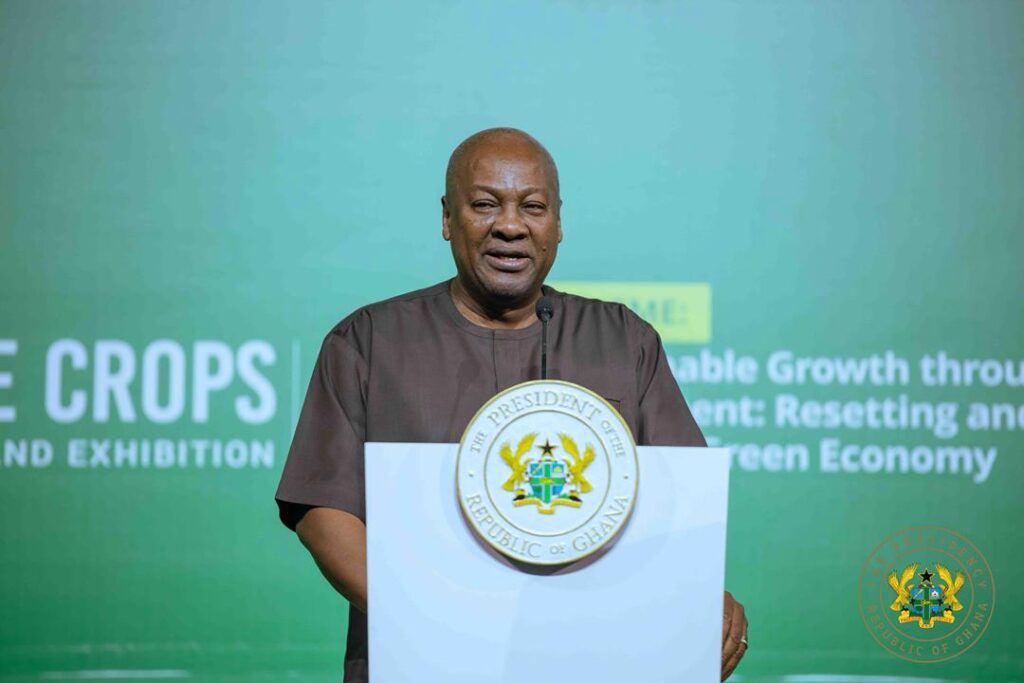
President Mahama concluded by stressing that the cocoa crisis should not pass without lasting reform. He said Ghana has reached a moment where it must choose between maintaining the status quo or pursuing a bold transformation that adds value, creates jobs, and secures economic stability.
He urged policymakers, investors, and industry stakeholders to align behind a shared vision that positions Ghana as a leader in processed cocoa products rather than merely a supplier of raw beans. He said the choices made now will determine whether future generations inherit a resilient cocoa industry or one perpetually vulnerable to external shocks.