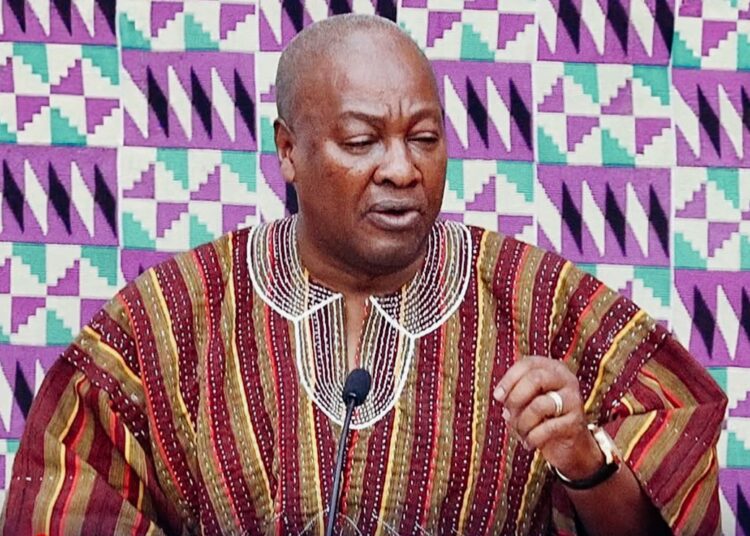
President John Dramani Mahama has announced that Ghana is now fully up to date on its gas payment obligations, declaring that the country is paying for all the gas it currently consumes.
Addressing Parliament during the 2026 State of the Nation Address on Friday, February 27, the President said decisive measures taken in 2025 have cleared longstanding arrears owed to key gas suppliers, strengthening confidence in the energy sector.
“I announce that we are paying for every gas we are consuming today,” he told Members of Parliament, signalling what he described as a new era of fiscal discipline and reliability in Ghana’s gas-to-power value chain.
“In addition, between January and December 2025, through carefully coordinated policy actions, the government settled all outstanding gas invoices that were owed to E&I and VITO, amounting to approximately 500 million dollars.”
President John Dramani Mahama
The payments bring Ghana fully up to date with its gas consumption obligations to the Sankofa partners, a development expected to improve relations with upstream suppliers and secure steady gas flows for electricity generation.
The Sankofa field, operated by Eni in partnership with Vitol, plays a critical role in supplying gas for thermal power plants across the country. Delays in payments in previous years had raised concerns about supply reliability and the financial sustainability of the energy sector.
2026 Budget Makes Provision for Timely LNG Payments
Beyond clearing arrears, the President assured Parliament that mechanisms have been put in place to prevent a recurrence of payment backlogs.
“And I’m pleased to announce that the 2026 budget has made adequate provision to ensure timely payments for all liquid natural gas that we consume going forward.”
President John Dramani Mahama
The assurance signals a commitment to embed financial discipline within the energy sector, where accumulated debts have historically strained relationships between government and independent power producers as well as upstream gas suppliers.
Energy analysts note that timely payment for liquefied natural gas (LNG) imports is crucial to maintaining stable electricity supply, particularly during periods when domestic gas production may fluctuate.
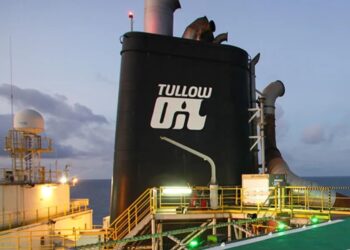
The President further disclosed that the government has engaged other upstream players to create a sustainable payment roadmap. He highlighted discussions with Tullow Oil and partners in the Jubilee Field as part of efforts to guarantee full settlement of gas consumed.
The Jubilee Field remains one of Ghana’s major hydrocarbon assets, contributing both oil and associated gas for domestic power generation. Strengthening cooperation with its partners is considered essential for long-term energy planning.
Boosting Electricity Reliability and Industrial Growth
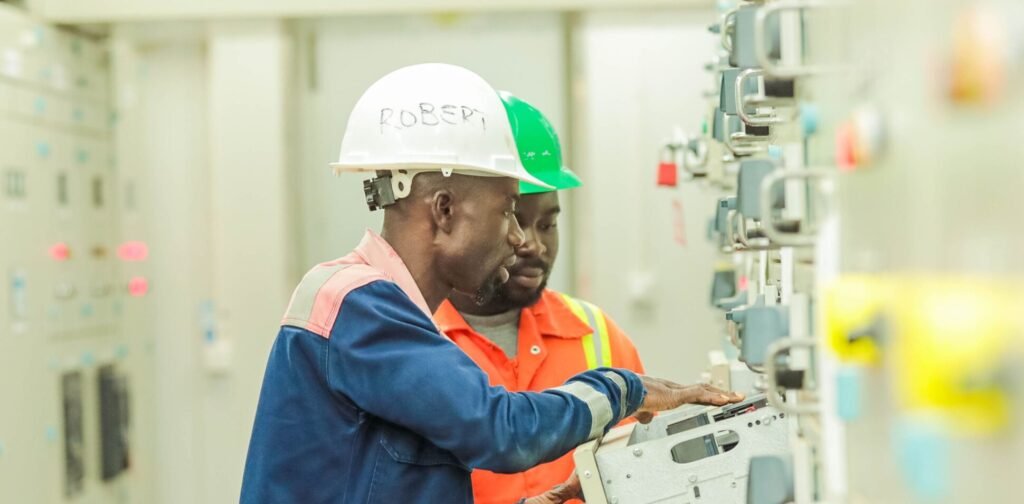
President Mahama linked the settlement of gas debts and the new payment framework to broader national objectives, particularly reliable electricity supply and industrial expansion.
“This approach supports reliable nationwide electricity generation and has erased industrial growth,” he stated, underscoring the connection between secure gas supply and economic performance.
Gas-fired power plants account for a significant portion of Ghana’s electricity generation mix. When gas supply is disrupted due to payment challenges, utilities often resort to more expensive liquid fuels, increasing generation costs and exerting pressure on tariffs.
By ensuring that gas invoices are paid promptly, the government aims to stabilise generation costs and reduce dependence on costly alternatives such as light crude oil and diesel.
“Engagement with upstream partners has resulted in increased gas production guided by a clear national vision to rapidly scale up domestic gas supply and reduce reliance on expensive liquid fuels.”
President John Dramani Mahama
Expanding domestic gas output is central to Ghana’s strategy of enhancing energy security while managing costs. Greater local production reduces exposure to volatile international fuel markets and strengthens the resilience of the power sector.
A Reset for the Energy Sector

The announcement marks a significant shift from previous years, when mounting arrears in the energy sector created uncertainty and strained investor confidence.
By clearing $500 million in outstanding obligations and committing to timely payments, the administration is seeking to reset relationships with suppliers and investors.
For businesses and households, the implications are tangible. Stable gas supply underpins consistent electricity generation, which in turn supports productivity, job creation and economic stability.
With payment systems strengthened and production scaled up, the government projects a more reliable and financially sustainable gas-to-power framework in the years ahead.
READ ALSO: President Mahama Concludes SONA: State of Ghana is Resilient, Renewing