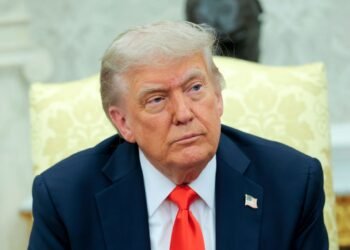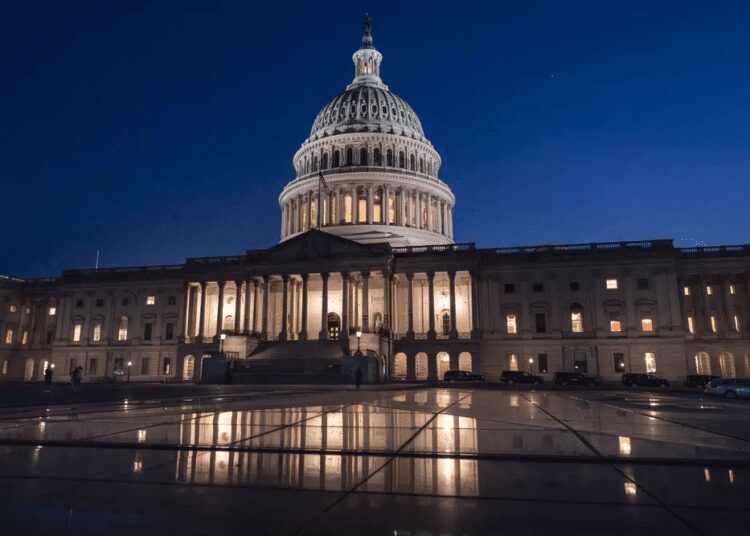
The Senate will hold a vote today, Wednesday, March 4, 2026, on Democratic-backed war powers resolution that would prevent President Donald Trump from continuing the conflict against Iran.
The war powers resolution introduced by Democratic Senators Tim Kaine, Adam Schiff and Minority leader Chuck Schumer would force an end to US participation in the current hostilities and require the President to go to Congress before re-entering the war.
Kaine told reporters yesterday, “We shouldn’t be at war without a debate and vote.”
“That was what the framers intended. We protect our troops when we do it the right way. We put them at risk when we do it the wrong way.”
Tim Kaine
The vote comes amid shifting messaging from the administration about the strikes and warnings about more American casualties to come.
Trump said early this week that the operation in Iran was projected to last four to five weeks, but the US has the “capability to go far longer than that.”
Democrats have condemned Trump for ordering an air campaign against Iran without first seeking permission from Congress, while offering shifting explanations of its objectives.
Democrats walked away from a classified briefing with Trump administration officials on Tuesday unsatisfied with what they heard. Democratic Senator, Chris Murphy of Connecticut, said, “They told us in there that this is an open-ended operation that hasn’t even really started in earnest yet,” adding, “There will be more Americans killed. They refuse to take off the table, the insertion of ground troops.”
The resolution will require 50 votes to advance. Democrats control 47 seats, but the Pennsylvania Senator John Fetterman said that he will oppose the resolution, meaning they’ll need at least five Republicans to join with them for it to succeed.
It’s the second time in less than a year that Democratic Senator Tim Kaine of Virginia has forced a vote on a war powers resolution related to Iran. The upper chamber voted down a similar effort in June, after the US bombed three locations central to Iran’s nuclear program.
Senate Republican are expected to vote against the resolution as Majority leader John Thune told reporters that he believes Trump has the proper authorization for the campaign, which the US military is carrying out alongside Israel.
Thune remarked at a Tuesday press conference, when asked if Trump should at some point seek congressional approval to continue the conflict, “The President has the authority that he needs to conduct the activities, the operations that are currently under way there.”
“I think the President is acting in the best interest of the nation and our national security interests by ensuring that he’s protecting Americans and American bases and installations in that region, as well as those of our allies.”
John Thune
The Democratic Senator Chris Murphy predicted that the resolution “will likely fail”, but said that it would nonetheless offer an important opportunity to consider the justification for the conflict.
Murphy told reporters after receiving a classified briefing from administration officials Tuesday afternoon, “We shouldn’t be voting to proceed to other pieces of legislation until we get a debate on this deeply unpopular, immoral and illegal war with Iran.”
War Powers Resolution Up For Vote In House of Representatives
In the House of Representatives, Democrat Ro Khanna and Republican Thomas Massie have introduced their own war powers resolution, which is expected to come up for a vote on Thursday.
However, that also faces Republican opposition, with Speaker Mike Johnson saying on Monday that it would be “dangerous” to force an end to US involvement in the conflict.
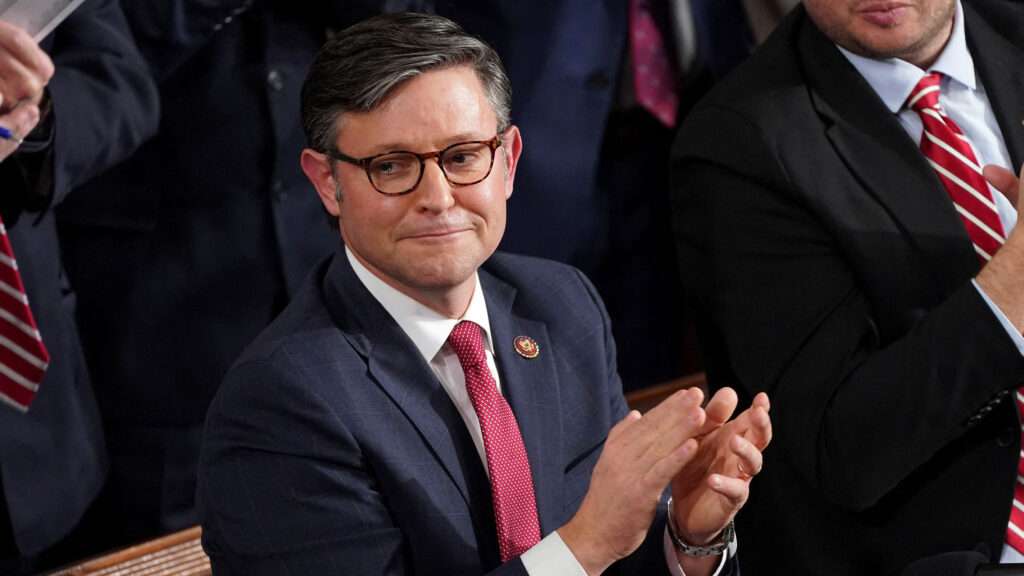
“The idea that we would take the ability of our Commander in chief, the President, take his authority away right now to finish this job, is a frightening prospect to me. It’s dangerous. I am certainly hopeful and I believe we do have votes to put it down.”
Mike Johnson
Even if a war powers resolution was to clear the House and Senate, Trump could veto it, and lawmakers would need two-thirds majorities in both chambers to override that.
The President has also retaliated against lawmakers who have broken with him over foreign policy issues, including saying that four Republican Senators who voted in January to advance a war powers resolution blocking hostilities against Venezuela “should never be elected to office again.”
Two of those Senators later dropped their support, and the measure failed. This week’s votes may nonetheless offer some Trump allies the opportunity to come out against a conflict that has thus far resulted in the deaths of six US service members, as well as 787 people in Iran, according to the country’s Red Crescent.
READ ALSO: Ghana Must Consolidate Gold Gains Before Price Reversion – Dr. Acheampong