
Mr. Sammy Gyamfi, the Chief Executive Officer of the Ghana Gold Board (GoldBod), has welcomed a high-level delegation from the Kimberley Process (KP) to Accra for a critical evaluation of the country’s diamond trade safeguards.
The review visit, which runs from March 9 to March 12, 2026, serves as a comprehensive assessment of Ghana’s adherence to the Kimberley Process Certification Scheme (KPCS), an international initiative designed to prevent “blood diamonds” from entering the legitimate global market.
“As a diamond-producing country, Ghana remains firmly committed to the principles, objectives, and requirement of the Kimberley Process Certification Scheme. Our participation reflects our determination to ensure that diamonds produced and exported from Ghana meet international standards while contributing to national development.”
Mr. Sammy Gyamfi,
The hosting of this distinguished delegation, currently under the leadership of the Russian Federation, underscores Ghana’s rising prominence in global mineral governance following its recent appointment as Vice Chair of the Kimberley Process for 2026.
During the opening session at the Mövenpick Ambassador Hotel, Mr. Gyamfi reaffirmed that the nation remains steadfast in upholding its international obligations.



This engagement is particularly significant as Ghana prepares to assume the Chairmanship of the KP in 2027, making the current four-day exercise a pivotal moment for demonstrating the country’s “transparency, accountability, and responsible governance” in the extractive sector.
“Your presence here reflects the continued commitment of the Kimberley Process community to transparency, accountability, and the responsible governance of the international diamond trade.” Sammy Gyamfi stated.
Strengthening Inter-Agency Collaboration and Value Chain Oversight

The implementation of the KPCS within Ghana is not a siloed effort but is anchored on a robust framework of inter-agency cooperation.
Mr. Gyamfi detailed that the GoldBod’s strategy relies on seamless coordination between the Ministry of Lands and Natural Resources, the Minerals Commission, and the Customs Division of the Ghana Revenue Authority.
By involving law enforcement agencies and private industry stakeholders, the state ensures that every stone exported is accompanied by a valid KP certificate, verifying its conflict-free status.
Furthermore, the GoldBod CEO highlighted that the board has initiated “deliberate reforms to further strengthen governance across the diamond value chain.”
These internal upgrades focus on modernizing inspection and verification mechanisms to match evolving global expectations. “Our continued oversight efforts in key producing areas, including Akwatia and surrounding communities, reflect our commitment to continuous improvement,” Gyamfi noted, emphasizing that the focus remains on enhancing data management and building the technical capacity of frontline personnel.
Peer Learning and Institutional Fortification
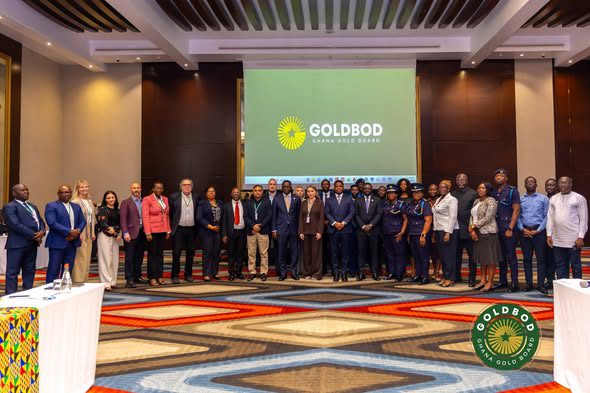
Beyond the technicalities of the audit, the GoldBod leadership views this visit as a vital platform for “constructive engagement, peer learning, and institutional strengthening.”
By opening its processes to international scrutiny from delegates representing nations such as the USA, India, and South Africa, Ghana positions itself as a transparent leader in the West African mining landscape.
This peer-review mechanism allows the GoldBod to refine its internal control systems based on the observations and recommendations provided by the visiting experts.
The review team’s insights are expected to bolster Ghana’s regulatory framework, ensuring it remains resilient against illicit trading activities.
Gyamfi expressed high confidence in the team, noting that their feedback would directly support the Ghana Gold Board in “strengthening its implementation of Kimberley Process requirements.” This collaborative approach is intended to maintain the high level of consumer confidence required to keep Ghanaian diamonds competitive in the high-value international market.
Economic Implications and Mining Industry Benefits
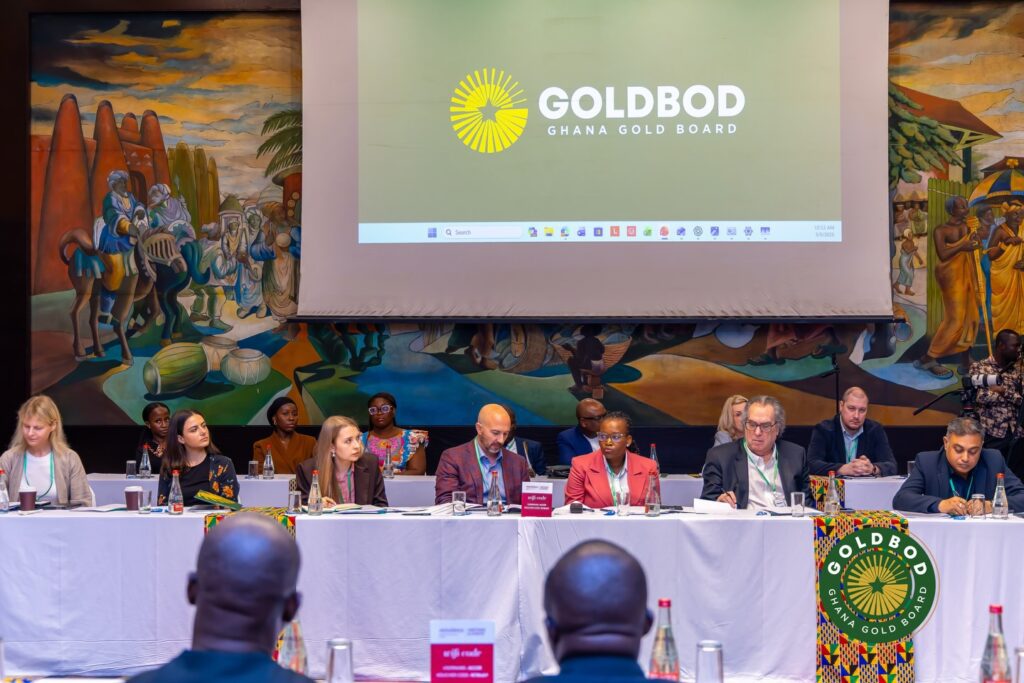
For the broader Ghanaian mining industry, a successful Kimberley Process review yields tangible economic dividends and logistical advantages.
Strict adherence to the KPCS ensures that Ghana retains its “selective trading protocol,” allowing the nation to trade exclusively with other certified KP members. This exclusivity protects the legitimacy of the local diamond trade and prevents the catastrophic market exclusions that often befall non-compliant states.
By aligning with international standards, Ghana secures the “well-being of its citizens” through stabilized foreign exchange inflows and the formalization of artisanal mining communities.
The engagement also paves the way for greater “local value addition,” as seen in recent GoldBod directives aimed at streamlining the gold and diamond purchasing regimes for licensed jewellers.
Ultimately, this high-level engagement reinforces Ghana’s status as a premier destination for responsible mining investment, ensuring that the country’s mineral wealth continues to serve as a catalyst for sustainable national development.
READ ALSO: Ato Forson Tightens Border Controls to Protect Revenue