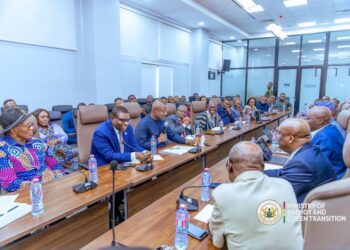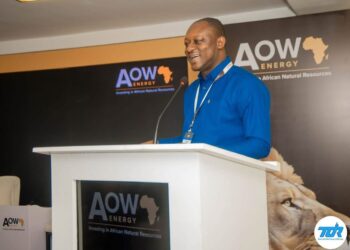
State Interests and Governance Authority (SIGA) has commended the Board, Management, and Staff of the Tema Oil Refinery (TOR) following the company’s historic administrative breakthrough in completing and submitting its multi-year backlog of outstanding Audited Financial Statements spanning the years 2019 through 2025.
This major statutory compliance milestone officially ends a prolonged era of fiscal opacity during which the state-owned refinery failed to declare its audited books, effectively repositioning the critical energy institution on a path toward transparent public governance and operational viability.
By regularizing its standing with the state regulatory authority, the refinery has signaled its readiness to transition from an underperforming asset into an accountable commercial entity capable of driving downstream sector stability.
“While challenges remain — particularly in relation to liquidity pressures, retained deficits, and long-term balance sheet restructuring — SIGA is greatly encouraged by the refinery’s clear recovery trajectory and the improving financial indicators reflected in its 2025 performance.”
State Interests and Governance Authority (SIGA)

The newly released financial records presented to the state authority reveal an extraordinary structural recovery highlighted by a historic Profit Before Tax of GHS 1.24 billion for the 2025 fiscal year, marking the oil refinery’s first profitable operations in an entire decade.
According to the official press statement issued in Accra, this landmark performance was driven by an aggressive operational expansion that included a substantial foreign exchange gain of GHS 1.3 billion alongside the successful completion of critical Turnaround Maintenance (TAM) operations, which allowed the refinery to process approximately 600,000 barrels of crude oil.
Furthermore, management aggressively minimized institutional liabilities by slashing trade and other payables from a staggering GHS 7.1 billion in 2024 down to GHS 5 billion in 2025, while simultaneously improving revenue collection efficiency by reducing its outstanding receivable days from 1,099 days down to 652 days.
“SIGA therefore urges the Board and Management of TOR to sustain the current momentum, deepen operational efficiencies, strengthen corporate governance standards, and accelerate efforts toward achieving long-term profitability, competitiveness, and national energy security. The Authority reiterates its commitment to supporting all Specified Entities that demonstrate accountability, strategic transformation, and measurable performance outcomes in alignment with Ghana’s national development priorities.”
State Interests and Governance Authority (SIGA)
Dismantling Fiscal Liabilities and Stabilizing the National Petroleum Supply Chain
The sudden financial rebound of this critical state asset provides immediate relief to Ghana’s broader downstream petroleum market, which has historically suffered from the vulnerabilities of importing finished petroleum products.

By reversing a ten-year cycle of compounding losses and generating a GHS 1.24 billion profit before tax, the refinery minimizes the risk of sudden supply disruptions that frequently trigger domestic fuel inflation and product scarcity.
This sudden optimization of internal operations directly translates into a more reliable supply of localized refined petroleum products, significantly shielding Ghanaian consumers and commercial transport networks from unpredictable international energy market spikes.
Furthermore, the dramatic GHS 2.1 billion reduction in trade and other payables significantly eases the systemic debt burden that has long choked domestic energy sector liquidity.

When a massive state institution like TOR carries deep, un-audited debts, it creates an adverse domino effect that compromises the financial health of local commercial banks, bulk distribution companies, and specialized engineering contractors.
Regularizing these books and systematically reducing liabilities to GHS 5 billion restores operational confidence across the entire domestic supply chain, allowing commercial banks to confidently resume the extension of competitive credit lines to downstream operators.
Easing Foreign Exchange Volatility and Reinforcing Sovereign Reserves
The successful operational shift directly supports the Bank of Ghana’s monetary efforts to stabilize the Ghanaian Cedi against major international currencies by significantly reducing the periodic commercial rush for US Dollars.
The capital saved by processing energy products domestically keeps crucial monetary liquidity within the local economy, creating a stabilizing buffer that benefits all import-dependent sectors.

As the refinery continues to scale up its refining volumes, the corresponding reduction in the national import bill will strengthen the country’s balance of payments and improve overall economic resilience.
Strategic Infrastructure Investments and Long-Term Capital Maximization
Sustaining this commercial momentum requires an absolute focus on the targeted modernization of primary refining infrastructure, specifically the refinery’s central Crude Distillation Unit (CDU) and the specialized Residue Fluid Catalytic Cracker (RFCC).
The authority’s directive to deepen operational efficiencies emphasizes that long-term profitability cannot rely solely on short-term accounting adjustments or debt restructuring.
Instead, the refinery must leverage its newly unlocked financial strength and its GHS 155 million growth in share of associate profits to execute deep, permanent technical upgrades on these primary processing assets.

Optimizing the CDU will directly expand raw processing capacities, while a fully operational RFCC allows the refinery to maximize the extraction of high-value secondary fuels like Liquefied Petroleum Gas (LPG) and premium gasoline from heavy residual oils.
This specific engineering capability is what transforms raw feedstock into high-margin commercial outputs, successfully shifting the refinery away from low-value heavy fuel oils toward highly profitable consumer products.
“The Authority recognizes that these achievements are the results of deliberate strategic leadership,” SIGA noted, affirming that maintaining rigid compliance standards is the ultimate pathway to securing permanent national energy independence.
READ ALSO: Obi Mikel Brands Arsenal Fans “Delusional” After Champions League Final Heartbreak