

The Fisheries Enforcement Unit, under the direct operational command of Unit Coordinator Commodore Faustina Anokye Boakye, has arrested two inshore fishing operators at the Tema Fishing Harbour during a targeted operation focused on maritime non-compliance.
According to the Ministry of Fisheries and Aquaculture Development (MoFAD), the tactical enforcement action resulted in the immediate interception of the operators after surveillance teams identified that they were actively conducting commercial activities without possessing valid fishing licenses.
Furthermore, inspection teams discovered that the vessels were deploying improper and unapproved fishing gear, representing a direct breach of established maritime and conservation laws.
“The suspects were subsequently handed over to the Tema Police for further investigations and processing before court. The operation forms part of ongoing efforts by the Ministry of Fisheries and Aquaculture to combat illegal, unreported, and unregulated (IUU) fishing practices and ensure compliance with fisheries laws and regulations”
Ministry of Fisheries and Aquaculture Development
Following the formal seizure and containment of the vessels within the Greater Accra installation, comprehensive secondary investigations are underway, as well as systematic preparation of the suspects for subsequent criminal prosecution.
MoFAD noted that it is moving the sector away from passive monitoring systems toward an active, deterrent-based model of maritime policing, with the arrest of the inshore operators demonstrating an institutional workflow where state surveillance assets are directly linked to real-time enforcement interventions.
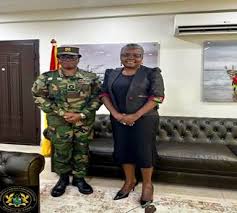
The operation at Tema Fishing Harbour establishes a highly clear precedent for cross-agency cooperation in the enforcement of the blue economy. When the Fisheries Enforcement Unit intercepts an inshore vessel, the initial evaluation hinges entirely on verifying sovereign authorization documents and examining physical equipment metrics.
In this specific case, the operators failed to present any valid fishing licenses, establishing that their presence and extraction activities within the maritime zone were completely undocumented and unrecognized by the state.
This fundamental violation was compounded by the physical presence of improper fishing gear, a tactic often utilized to maximize catch volumes at the expense of selective harvesting standards.
Once these infractions were physically verified by Commodore Faustina Anokye Boakye’s specialized boarding teams, the operational protocol required a seamless handoff from maritime enforcement to civil judicial authorities.
Countering Wrong Maritime Activity
The enforcement action stands as a critical checkpoint in the state’s broader institutional campaign to clean up commercial extraction operations across all domestic waters, as IUU fishing functions as an economic and ecological threat that directly undermines the sovereign management of national resources.
When operators bypass licensing protocols, their extraction data is completely lost to state analysts, creating massive data gaps that prevent accurate assessments of national marine stocks. MoFAD framed the arrests as a direct countermeasure against this underground economic activity, emphasizing that regulatory compliance is completely mandatory for all commercial actors.

Operating a commercial vessel without a valid license effectively deprives the state of regulated revenue while creating an unfair competitive advantage over law-abiding fishing enterprises that invest heavily in legal permits and standardized equipment.
MoFAD acknowledged the vigilance displayed by the enforcement teams, noting that physically executing these arrests at a major commercial logistics hub – the Tema Fishing Harbour – sends a clear message regarding the immediate legal risks facing any entity that attempts to bypass the sovereign regulatory framework.
Policymakers and Officials have emphasized that the long-term survival of the country’s marine ecosystems depends entirely on the continuous, uncompromised application of statutory penalties against non-compliant actors.
The administration noted that selective enforcement or lax oversight at landing beaches invariably accelerates resource depletion, threatening the food security and corporate stability of the entire maritime supply chain.
For commercial and semi-industrial fleets operating along the coast, the public commendation of Commodore Boakye’s unit reinforces the reality that the regulatory apparatus possesses full executive authority to board vessels, inspect gear configurations, and detain unauthorized operators without prior notice.
To prevent future operational shutdowns and legal liability, MoFAD has issued a clear administrative directive urging all remaining vessel operators, industrial conglomerates, and independent mariners to immediately align their operations with the established maritime code.
This requires a comprehensive audit of all vessel documentation, the immediate renewal of expired operational permits, and the total removal of any unapproved or non-standardized harvesting nets and equipment from active ships.
READ ALSO: Moliy Launches Baddies Love Moliy Europe UK Tour in October