In a bold stride to take the “Made-in-Ghana” brand to the heart of the American Midwest, the Chief Executive Officer of the Ghana Enterprises Agency (GEA), Ms. Margaret Ansei, has successfully negotiated new pathways for Ghanaian small businesses in the United States.
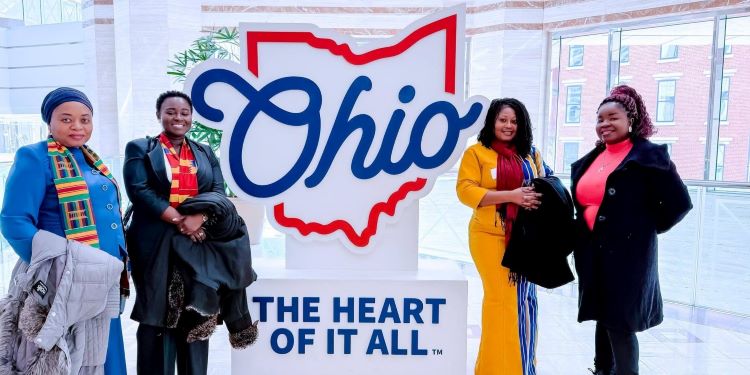
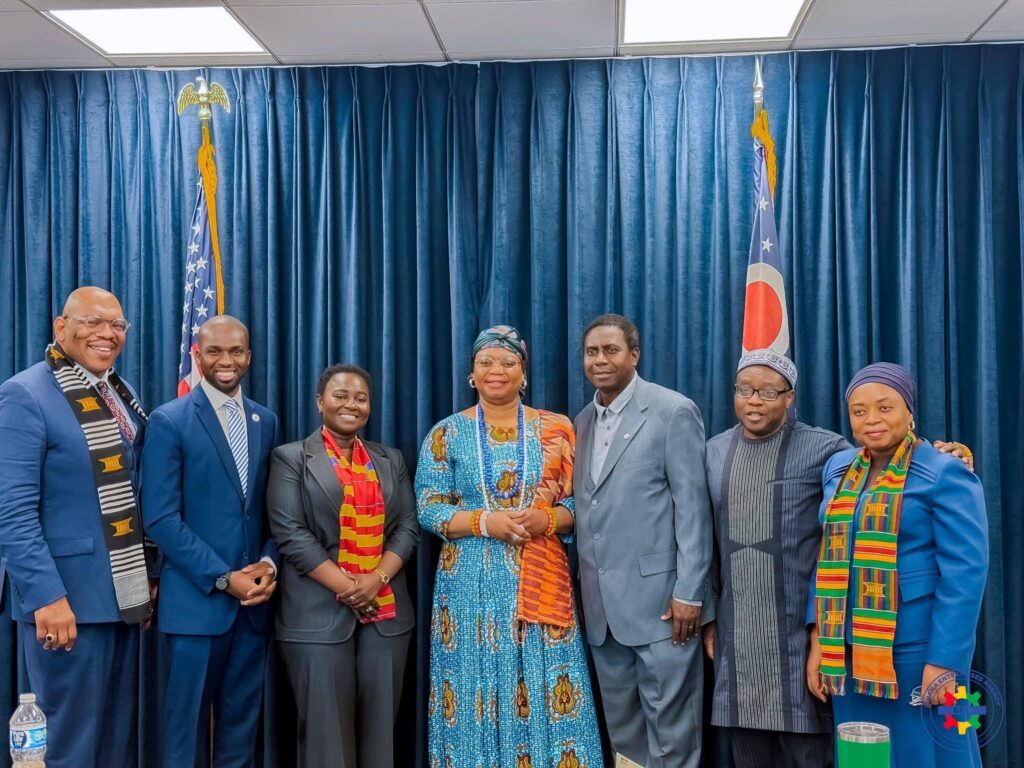
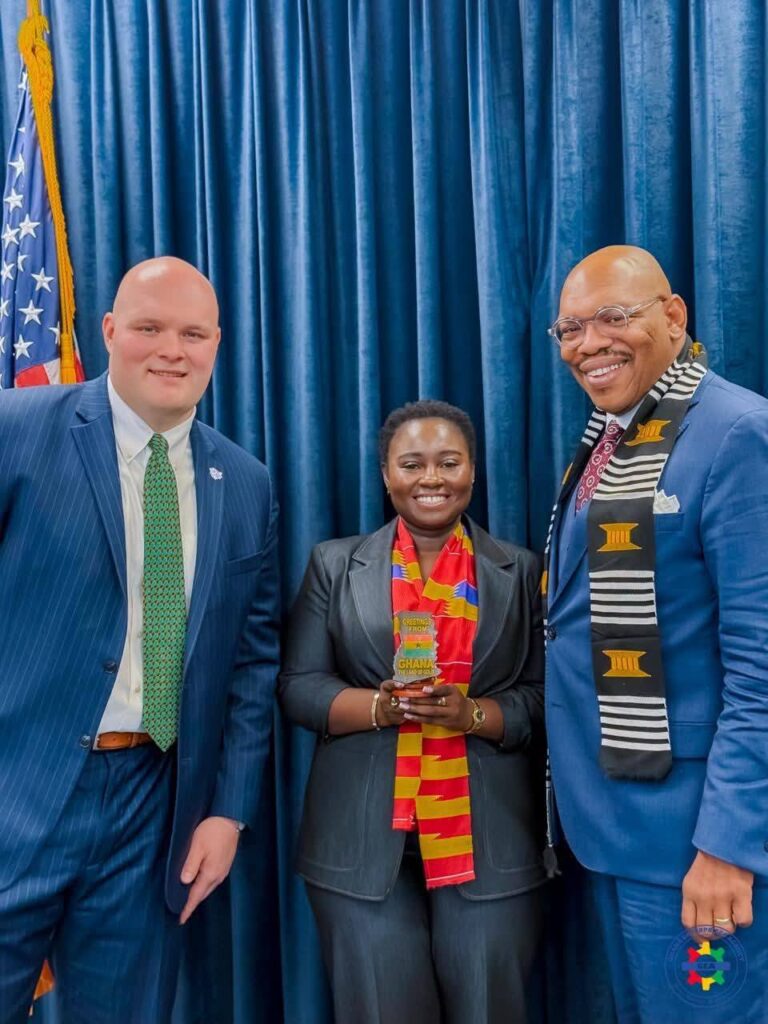
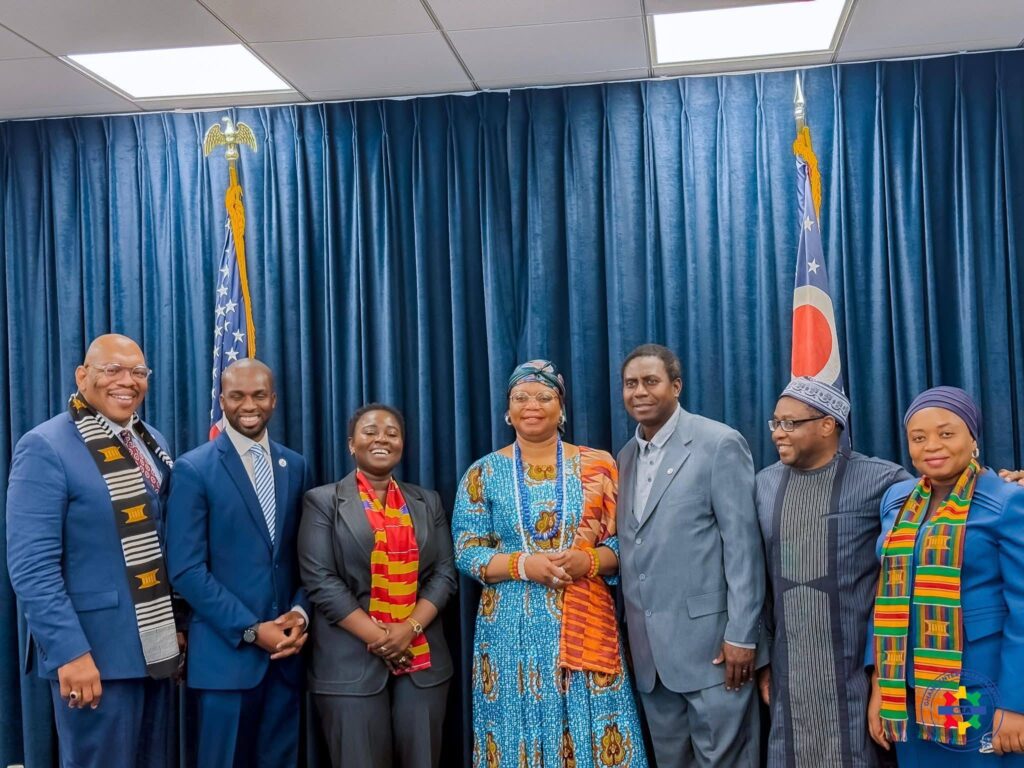
Leading a high-level delegation to the Business Forum 2026 in Cincinnati, Ohio, Ms. Ansei moved beyond the conference halls to engage in a strategic courtesy visit to the Office of the Governor of Ohio.
The mission was singular: to transform the “global competitiveness,” of Ghana’s Micro, Small, and Medium Enterprises (MSMEs) from a policy aspiration into a logistical reality by embedding them into the lucrative Columbus and Cincinnati business ecosystems.
“As Ghana’s lead agency supporting MSME development, the Ghana Enterprises Agency remains committed to strengthening the capacity and global competitiveness of Ghanaian small businesses, and positioning them to access opportunities beyond the domestic market”
Ghana Enterprises Agency
According to the GEA, this diplomatic and trade offensive comes at a time when the government is aggressively pursuing its Accelerated Export Development strategy and the domestic market is no longer the final destination for Ghanaian ingenuity.
Building direct bridges to Ohio – a state with a robust industrial base and a significant African diaspora – is Ms. Ansei’s strategic way of positioning Ghanaian MSMEs to bypass traditional trade barriers.
According to the GEA boss, the focus is on creating a “plug-and-play” environment where a small-scale agro-processor in Techiman or a textile manufacturer in Kumasi can find direct shelf space and distribution networks in the United States.
The GEA delegation’s discussions with Mike Schadek and representatives from the New African Immigrants Commission – including Ronald Todd II and Ibrahim Solo – marked a critical pivot in how Ghana engages its diaspora. Rather than viewing the diaspora solely as a source of remittances, Ms. Margaret Ansei is leveraging these communities as market gatekeepers.
The Agency revealed that the Columbus business ecosystem is being eyed as a primary landing zone for Ghanaian exports, offering a sophisticated network of logistics, retail partnerships, and knowledge exchange platforms that can help MSMEs refine their branding and packaging for the American consumer.
A key component of this engagement was the focus on the exchange of ideas, premised upon the fact that MSMEs often struggle with the stringent regulatory and quality standards of the US market.
The GEA establishing a direct line to the Ohio Governor’s office and the Immigrants Commission, facilitated a two-way street of information, where Ghanaian entrepreneurs will gain insights into US consumer trends and compliance requirements, while Ohio-based businesses will discover the untapped potential of high-quality, sustainable products coming out of the Industrialization drive in Ghana.
Institutional Support
For the GEA, the strength of this mission lay in its technical depth. Ms. Ansei was accompanied by a team of specialists, including Hajia Habiba Sumani, Director for MSMEs, and Abena Nursaa Yiadom, Access to Market Coordinator.
This specialized composition signalled that the GEA was not just looking for handshakes but for contracts, and the presence of the Partnership Coordinator, Mary Asswegnlaa Nkrumah Inusah, ensured that the discussions in Ohio will be followed by rigorous MOUs and partnership frameworks that provide MSMEs with long-term security in the international market.
As Ghana’s lead agency for small business development, the GEA is now acting as an international trade facilitator, guided by that understanding that under the 24-Hour Economy framework, these MSMEs are expected to scale their production to meet international demand.
This Ohio mission provided the “anchor demand” necessary to justify such expansion. When a Ghanaian soap maker or cocoa processor knows they have a secured off-take agreement in Ohio, they can confidently “invest in the machinery and labor shifts required to operate around the clock.”
The Ohio trade mission was a key aspect of the GEA’s 2026 roadmap, which prioritizes “Access to Markets” above all else. Ms. Margaret Ansei’s leadership reflects a shift toward an export-led growth model that empowers the grassroots.
Through focusing on MSMEs, the GEA is ensuring that the benefits of international trade are decentralized, reaching the rural and urban entrepreneurs who form the backbone of the Ghanaian economy. This is the essence of turning local talent into global players.
The success of this visit to the Governor’s office will serve as a blueprint for GEA engagements in other US states and European markets. The agency is creating a “global corridors,” strategy, where specific Ghanaian regions are linked to specific international markets based on product strengths.
For example, the ties built in Ohio could prioritize high-value agricultural exports and artisanal textiles, aligning with Ohio’s retail and manufacturing strengths. This strategic mapping ensures that Ghanaian MSMEs are not just entering any market, but the right market.
With the GEA delegation concluding their engagement, the work of implementation begins. The bridges built in Cincinnati and Columbus must now be crossed by the thousands of entrepreneurs currently being incubated by the GEA.
The agency’s commitment to “global competitiveness” will be put to the test, and early indicators suggest that the American Midwest is ready for what Ghana has to offer. For the local artisan or the small-scale industrialist, the world just got a little smaller and the opportunities a lot larger.
Under the guidance of Ms. Margaret Ansei, the Ghana Enterprises Agency is proving that with the right architecture and a bold international vision, size is no longer a barrier to global trade.