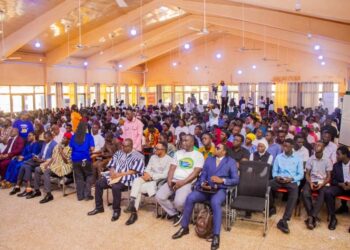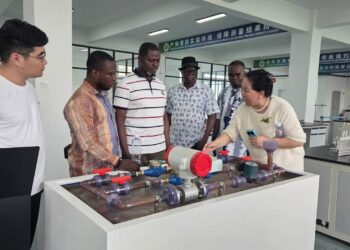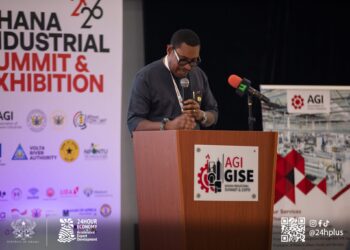

The Ministry of Trade, Agribusiness and Industry (MoTAI) has officially launched the opening round of bilateral negotiations with the United Arab Emirates (UAE) aimed at establishing a Comprehensive Economic Partnership Agreement (CEPA).
Championed by Trade Minister Hon. Elizabeth Ofosu-Adjare and her Emirati counterpart, H.E. Dr. Thani Al Zeyoudi, UAE Minister for Foreign Trade, the three-day state deployment marks an institutional transition toward a formalized, high-liquidity economic architecture.
According to MoTAI, the legal framework is engineered to move entirely beyond traditional trade agreements by codifying binding rules for cross-border investments, digital commerce, innovation-driven industrialization, and non-traditional export expansion.
“The agreement aligns perfectly with Ghana’s economic transformation agenda, supporting industrial development, export diversification, and the creation of sustainable jobs for youth and women entrepreneurs”
Hon. Elizabeth Ofosu-Adjare, Minister for Trade, Agribusiness and Industry
This diplomatic mobilization strategically leverages Ghana’s position as the host nation of the African Continental Free Trade Area (AfCFTA) Secretariat, transforming the country into the primary gateway for Gulf capital entering the wider African consumer market.
The structural parameters of the CEPA signal a fundamental pivot in how Ghana negotiates international trade treaties, as for decades, traditional agreements focused almost exclusively on standard tariff reductions and basic market access for primary, unprocessed commodities.
The MoTAI framework deliberately expands this scope, introducing highly integrated chapters that govern digital commerce, technical innovation systems, and diversified capital investments to create a modern, predictable legal environment that systematically de-risks Ghanaian industries, making them highly attractive targets for incoming Emirati sovereign wealth funds and private enterprise networks.

MoTAI noted that this strategic alignment is to directly fuel Ghana’s domestic economic transformation agenda. Rather than functioning purely as an exporter of raw materials, the state is utilizing the CEPA to attract fixed capital investments into domestic agribusiness and manufacturing setups.
The industrial acceleration is expected to establish robust production hubs capable of meeting the strict quality standards of the Gulf market while simultaneously generating resilient, long-term employment pools within the local economy.
Continental Multiplier
A central pillar of Ghana’s negotiating leverage during the high-level sessions was its unique status as the administrative heart of the African Continental Free Trade Area (AfCFTA). Hosting the AfCFTA Secretariat in Accra gives Ghana a critical position in continental trade diplomacy.
Hon. Ofosu-Adjare explicitly positioned this geographical and institutional advantage as a primary selling point to Emirati trade delegations, framing Ghana not merely as an isolated market of over 30 million consumers, but as a consolidated launchpad into a unified African market valued at over $3.4 trillion.
For the UAE, a finalized CEPA with Ghana provides structurally optimized access to a vast network of pan-African supply chains. Under the rules established by the AfCFTA, goods processed or manufactured within Ghana can be distributed across the continent with significantly reduced tariff barriers.
Emirati enterprises establishing production facilities in Ghana can effectively bypass historical fragmented market limitations, utilizing Ghanaian transport and industrial corridors to distribute goods fluidly from West Africa to regional markets across the continent.
The execution of the three-day operational session requires intense technical synchronization across a broad array of regulatory disciplines. Emirati Minister for Foreign Trade, H.E. Dr. Thani Al Zeyoudi, directed bilateral technical teams to rapidly finalize complex legal and institutional frameworks.

These discussions focused on four primary areas of operational friction: trade facilitation protocols, the standardization of customs procedures, investment protection mechanisms, and strict rules of origin.
Resolving these technical details is critical to ensuring the agreement functions smoothly on day one. She noted that establishing clear rules of origin prevents third-party nations from illegally exploiting the preferential tariff structures of the CEPA by routing finished products through Ghanaian or Emirati ports without performing real domestic value addition.
Concurrently, the modernization of customs procedures through digitized, automated verification systems is to eliminate bureaucratic delays at ports of entry, lowering overall transaction costs and improving supply chain reliability for cross-border corporate actors.
Strategic Trajectories
Beyond macro-economic integration and trade balances, the CEPA framework is explicitly engineered to address domestic socioeconomic vulnerabilities. The Ministry of Trade, Agribusiness and Industry has structurally tied the outcomes of these trade negotiations to the creation of sustainable economic opportunities for youth and women entrepreneurs.
These demographics currently form the backbone of Ghana’s informal micro-enterprise sector, but have historically faced massive structural barriers preventing them from scaling into international trade chains. The integration of dedicated provisions for small and medium enterprises (SMEs) directly into the text of the treaty provides a direct bridge to formalize these businesses.
This includes targeted capital allocation, digital commerce training, and specialized market access programs that empower women-led agribusinesses and youth-driven technology startups to export directly to the UAE.
MoTAI added that the localized approach ensures that the incoming Foreign Direct Investment translates into equitable wealth distribution and sustainable job creation across all levels of the national workforce.
The final trajectory of these historic talks demonstrated a sophisticated exercise in economic statecraft, building a comprehensive trade framework that unifies Gulf capital with West African industrial ambition.
MoTAI is successfully setting a new regional standard for trade negotiations, with the long-term success of the CEPA depending on the speed at which the technical teams codify these legal protections, allowing corporate entities to confidently deploy capital, optimize supply chains, and secure long-term market access across both jurisdictions.
READ ALSO: BoG Opens High Stakes MPC Meeting Amid Mounting Economic Threats