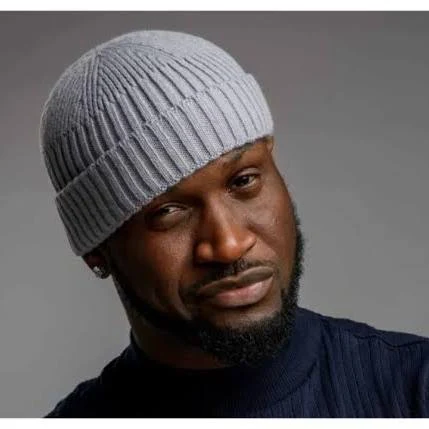
Singer, Peter Okoye, one half of the defunct Nigerian music duo P-Square, has told a Federal High Court in Lagos that he received approximately $800,000 in music royalties from the French rights organisation SACEM but did not share any portion with his elder brother, Jude Okoye.
The disclosure came on Monday, September 21, 2026, during virtual cross-examination before Justice Alexander Owoeye. Peter was questioned by Clement Onwuewunor, SAN, counsel representing Jude Okoye and his company, Northside Music Limited.
The pair face a seven-count charge filed by the Economic and Financial Crimes Commission (EFCC) involving alleged fraud of about N1.3 billion and $1 million. Both defendants have pleaded not guilty.
Peter confirmed that the royalties, paid between 2016 and 2026, related to roughly ten P-Square songs. When asked whether he remitted any of the funds to Jude, he replied that he had not. “No, the money was for the artists,” he told the court, adding that he did not inform his elder brother about the payments. He maintained that the sums belonged solely to the performing artists-himself and his twin brother, Paul Okoye.
The singer further stated that although Jude signed the SACEM contract, it was executed on behalf of “the team.” Peter insisted that Jude was not part of P-Square. “Jude is not part of P-Square,” he said, emphasising that all songs performed by the group were composed, written and produced by him and Paul. He acknowledged, however, that Jude had directed some of the group’s music videos.
Peter also addressed earlier financial arrangements. He admitted that he had previously paid a quarter of his SACEM earnings to Jude but denied any continuing obligation to do so after the brothers reconciled in 2022.
He rejected suggestions that Jude had demanded quarterly payments from the royalties following that reconciliation. On the question of management, Peter said he held no direct employment contract with Jude; the arrangement operated through Northside Entertainment Limited.
During the same session, Peter confirmed that Jude had sent him royalty records covering 2016 to 2022. He explained that he requested the documents because interested parties were looking to buy the P-Square music catalogue.
He also acknowledged receiving account information from Jude in 2022 and noted that the EFCC was aware the report had been forwarded to him.
The testimony forms part of a long-running and highly publicised family and business dispute involving the Okoye brothers. Jude previously managed P-Square at the height of the group’s success.
The EFCC case centres on allegations surrounding the handling of royalties and company funds linked to Northside Music Limited. The charges include claims related to the acquisition of property and the movement of funds through various accounts.
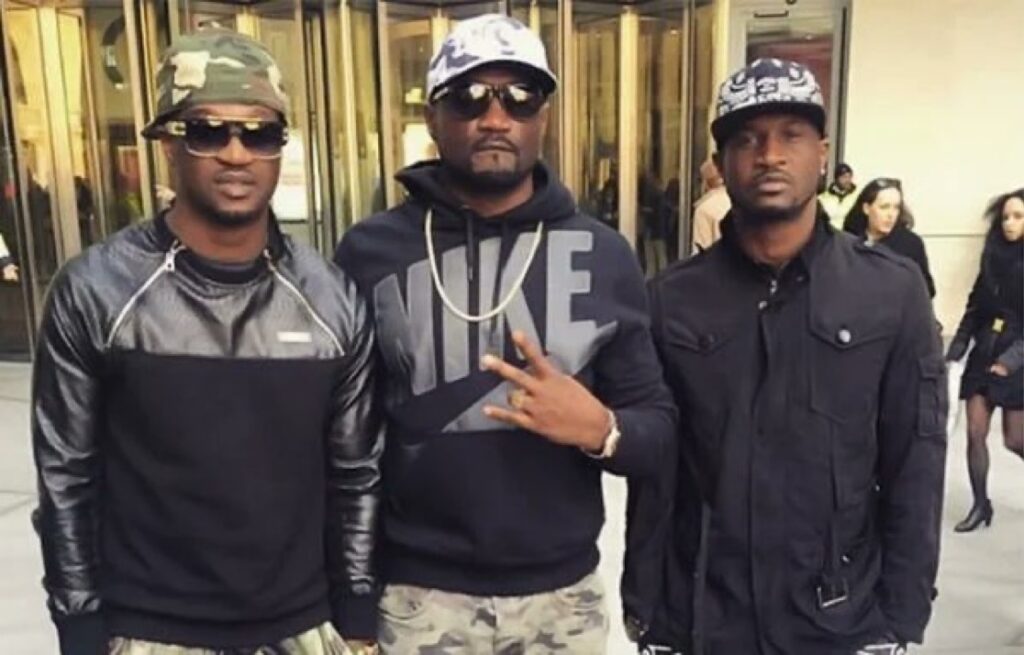
P-Square, once one of Africa’s most successful music acts, split in 2017 before briefly reuniting years later. Financial disagreements over royalties, catalogue ownership and management have continued to surface in court proceedings and public statements.
Peter has appeared as a prosecution witness in the matter, having earlier petitioned the EFCC over concerns about the group’s finances.
Justice Owoeye adjourned further hearing in the case until December 8 and 9, 2026. The proceedings remain ongoing, and all allegations against Jude Okoye and Northside Music Limited are subject to determination by the court. Defendants are presumed innocent until proven guilty.
Public Reaction
The latest court session has drawn significant public attention in Nigeria, where the Okoye family dispute has been followed closely by fans of the group and observers of the entertainment industry. SACEM, the French society that collects and distributes royalties for authors, composers and publishers, collects fees from the public performance and other uses of music in its territory and distributes them to rights holders.
Peter’s testimony highlights the complex questions surrounding who qualifies as a rights holder or entitled party in group projects, particularly when family members play multiple roles as artists, managers and business partners. While Peter maintained that the SACEM payments were exclusively for the artists, the defence has sought to examine the contractual arrangements and Jude’s historical involvement in the group’s affairs.

As the trial continues, further evidence and cross-examination are expected to explore the flow of royalty payments, company structures and the precise nature of financial entitlements among the parties. The outcome of the case will be watched closely by those interested in the intersection of music business practices, family enterprises and financial regulation in Nigeria’s entertainment sector.
The Federal High Court in Lagos will resume sitting on the matter in December, when additional proceedings are scheduled.
READ ALSO: Mahama Backs Local Medicine Manufacturing To Cut Maternal Mortality In Ghana