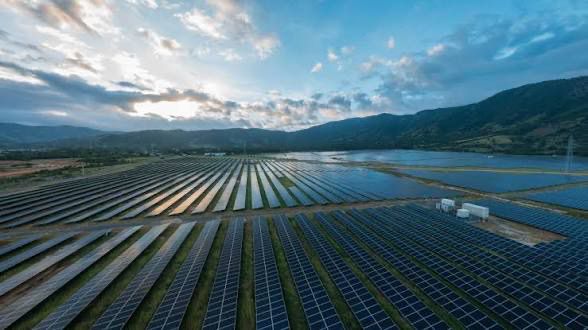
Ghana’s installed solar photovoltaic capacity reached 276.7 megawatts (MW) by the end of 2025, but the country now faces a more demanding task: converting a growing renewable-energy pipeline into reliable, investable capacity while strengthening the systems needed to integrate it into the national grid.
The figure is contained in Ghana’s updated Renewable Energy Master Plan (REMP) 2026–2030, launched by the Ministry of Energy and Green Transition with support from the United Nations Development Programme (UNDP).
The latest capacity comprises 183.1MW of utility-scale solar, 86MW of distributed solar installations and 7.6MW from small-scale residential systems.
The milestone provides a clearer picture of where Ghana’s solar sector stands as the country enters a new five-year renewable-energy investment cycle.
Solar Expansion Must Close Existing Capacity Gap
Despite the progress, installed solar capacity remains below the targets previously established for the sector.
The updated figures show that utility-scale PV deployment was below the earlier 347.5MW target, while distributed solar and small-scale residential systems also remained below their respective 100MW and 15MW targets.
The response under the new plan is significantly more ambitious.
Ghana is targeting an additional 852MW of utility-scale solar PV, 214MW of distributed solar and 5MW of small-scale PV by 2030.
The plan also seeks to expand renewable-powered mini-grids from around 4MW currently to 444MW.
That means the central challenge is shifting from policy formulation to execution.
The country’s ability to meet the new targets will depend heavily on whether projects can secure financing, obtain credible offtake arrangements, connect to the grid and reach commercial operation within the remaining four years.
Storage Becomes Central To Solar Strategy
The scale of planned solar deployment also makes energy storage increasingly important.
Ghana’s updated plan targets 1,970 megawatt-hours of battery energy storage capacity between 2026 and 2030, alongside measures to establish rules for battery pricing and grid integration and attract private investment into storage.
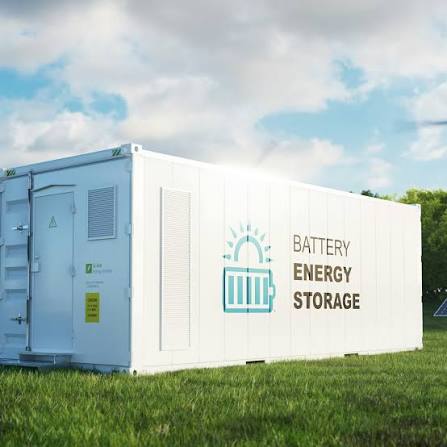
The significance extends beyond simply adding batteries.
As solar penetration increases, Ghana will need greater flexibility to manage the difference between periods of strong solar generation and periods of electricity demand.
Storage can provide part of that flexibility by shifting electricity availability across different periods of the day.
But storage also introduces a new investment requirement. The economics of battery projects will depend on how the electricity market values services such as energy shifting, balancing and grid support.
This means Ghana’s renewable-energy transition will increasingly require coordinated planning between generation, transmission, distribution and storage, rather than treating solar projects as standalone investments.
Private Capital Will Determine Delivery
The updated REMP places substantial responsibility on private investors.
The plan expects the private sector to finance 41% of investment in utility-scale PV, 50% of distributed PV and 70% of solar-home systems.
The broader financing framework includes green bonds, concessional funding, climate finance, development-bank resources, pension funds and other long-term capital.
The approach reflects Ghana’s fiscal constraints and the amount of capital required to expand renewable generation.
UNDP estimates that implementing the broader updated REMP will require approximately US$10.8 billion and could generate more than 353,000 jobs across manufacturing, installation, operations and research. The plan covers solar alongside wind, hydropower, mini-grids and other renewable-energy interventions.
The financing challenge, therefore, is not simply about attracting money into renewable energy. It is about creating projects sufficiently bankable for long-term private capital.
Predictable regulation, credible power-purchase arrangements, grid availability and clear investment rules will become increasingly important if Ghana is to turn its renewable-energy targets into actual infrastructure.
Ghana’s Industrial Opportunity Lies Beyond Generation
There is also a potentially important industrial dimension to the new plan.
Ghana intends to develop a domestic solar manufacturing industry alongside the expansion of installed capacity.
That could change the economic value of renewable-energy investment if local companies increasingly participate in equipment assembly, installation, engineering, maintenance and other parts of the supply chain.
The direction is consistent with the broader evolution of Ghana’s renewable-energy policy.
Earlier work on the country’s renewable-energy framework also emphasised local participation and the development of renewable-energy technologies rather than relying solely on imported equipment.
For Ghana, this matters because adding solar capacity without building domestic capabilities risks limiting the transition’s industrial benefits.
The renewable-energy market could instead become an avenue for developing technical skills, local enterprises and specialised services around solar and storage.
Reliability Must Accompany Renewable Growth
Ghana’s renewable-energy expansion is also taking place within a power system where reliability remains a central concern.
The Energy Ministry identifies Ghana’s power supply as a combination of hydro, thermal generation, solar and electricity imports, while the country’s transmission system is undergoing investment to address equipment and network constraints.
Solar therefore needs to complement, rather than simply add to, the existing generation architecture.
The updated REMP’s emphasis on battery storage, distributed generation and mini-grids suggests that the renewable-energy strategy is gradually moving toward a more diversified system rather than relying exclusively on large centralised power plants.
Ing. Seth Mahu, Director of Renewable Energy at the Ministry of Energy and Green Transition, previously described the updated plan as a roadmap intended to make clean energy a stronger foundation for the economy.
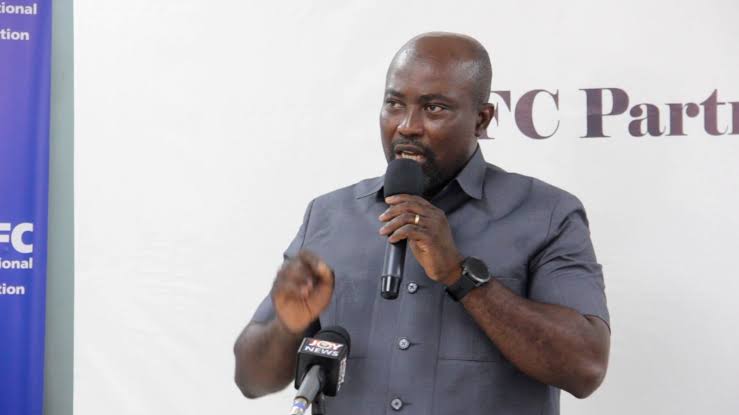
“Let us work together and make clean energy the backbone that drives the economy.”
Ing. Seth Mahu, Director of Renewable Energy, Ministry of Energy and Green Transition
The 276.7MW figure should therefore be viewed as a starting point for the next phase rather than the culmination of Ghana’s solar journey.
The country now has to add 852MW of new utility-scale solar alone, while simultaneously expanding distributed generation, mini-grids and battery storage.
The real test will be whether Ghana can finance that expansion, integrate the resulting electricity reliably and capture more of the industrial value created by the renewable-energy build-out.
If those pieces move together, the solar programme can contribute not only additional generation but also greater energy diversification, reduced exposure to conventional fuel costs and a stronger domestic renewable-energy industry.
READ ALSO: Ghana TVET Partners UNESCO, KPMG, Microsoft to Train 100,000 in AI