
Ghana’s renewable energy push received a significant boost after the Bui Power Authority (BPA) reported strong financial and operational results for 2025 and outlined plans for a major expansion of solar and battery-backed electricity generation.
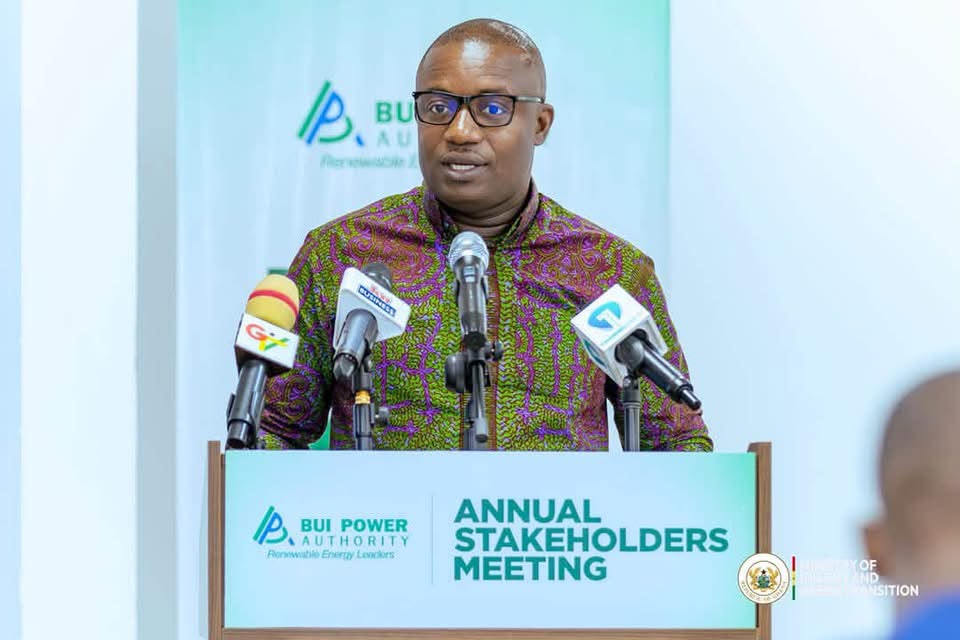
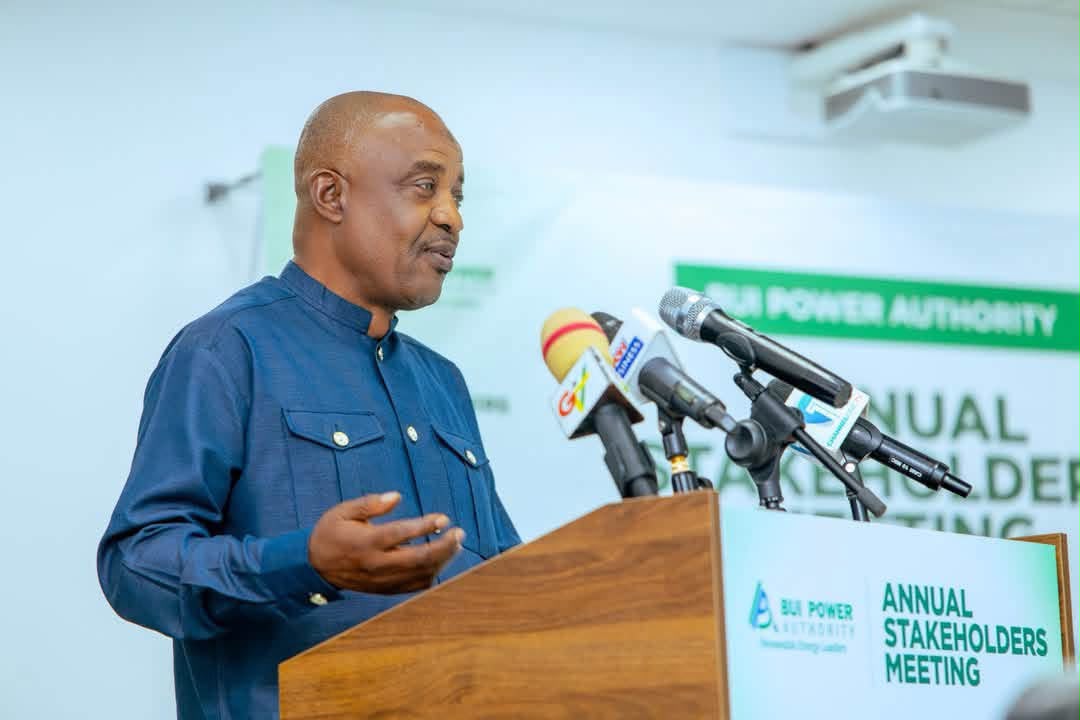
The Authority disclosed the performance at its 8th Annual Stakeholders’ Meeting, held in Accra, where government officials, regulators, traditional authorities, energy-sector institutions and industry partners reviewed BPA’s progress and its role in Ghana’s transition toward a lower-carbon electricity system.
BPA reported a net profit of US$66.2 million on revenue of US$145.9 million and generated 1,438 gigawatt-hours (GWh) of electricity in 2025, surpassing its annual target of 1,350 GWh by 6.5 percent.
The results suggest that the Authority is not only expanding renewable generation but also maintaining financial performance during a period when many utilities across the region continue to face liquidity and payment challenges.
BPA’s 2025 performance demonstrated the Authority’s capacity to deliver on its mandate while laying the foundation for its next phase of growth, particularly in renewable energy.
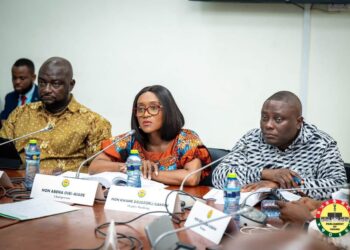
A statement delivered by Hon Alhaji Mohammed Kwaku Doku on behalf of Board Chairman Amb. Kwadwo Nyamekye-Marfo
Hydro remains strong while solar capacity nearly doubles
The Bui Hydroelectric Plant maintained an average availability rate of 95 percent, indicating continued operational reliability from one of Ghana’s most important renewable generation assets.
At the same time, BPA significantly expanded its solar portfolio, increasing installed solar photovoltaic capacity from 55 megawatt-peak (MWp) to 105 MWp during the year.
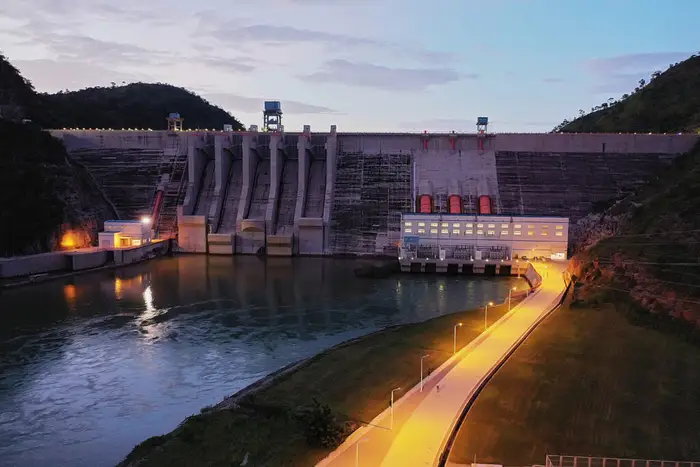
The expansion is important because it marks a continued evolution of BPA from a predominantly hydro-based utility into a broader renewable energy platform combining hydro, solar and future energy-storage infrastructure.
Energy analysts say the combination of hydro and solar can provide valuable operational flexibility, allowing hydro resources to support grid balancing as daytime solar generation increases.
Battery-backed solar becomes the next phase
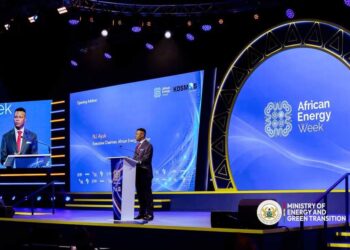
BPA’s Chief Executive Officer, Ing. Kow Eduakwa Sam, announced plans for a substantial further increase in renewable capacity.
According to the Authority, about 100 MWp of additional solar PV is expected to raise operational solar capacity to approximately 205 MWp.
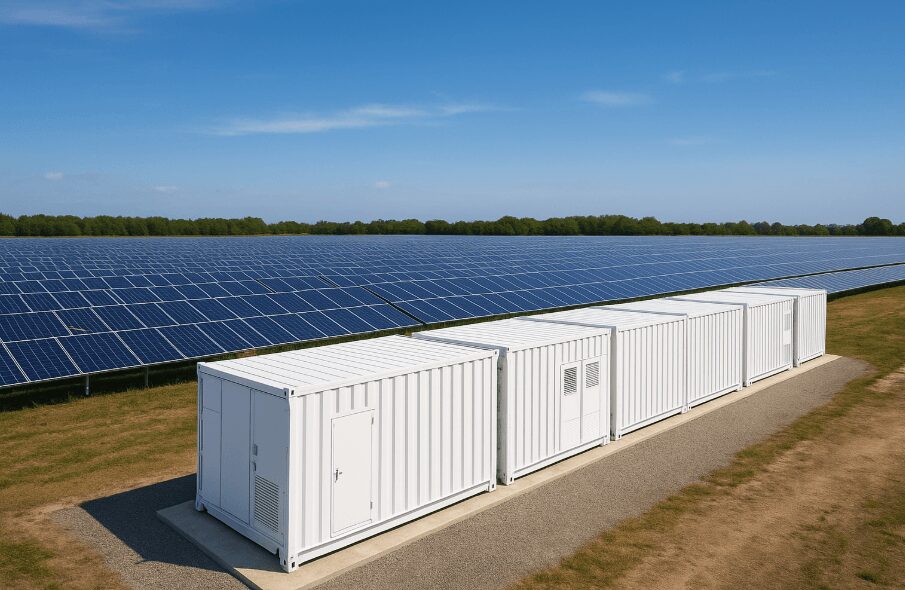
More significantly, BPA plans to develop 300 MWp of dispatchable solar PV integrated with large-scale Battery Energy Storage Systems (BESS) by the end of 2028.
The emphasis on dispatchable solar and storage reflects a broader shift in energy planning.
The future of renewable energy is not only about installing more solar panels; it is increasingly about ensuring that renewable electricity can be delivered when the grid needs it.
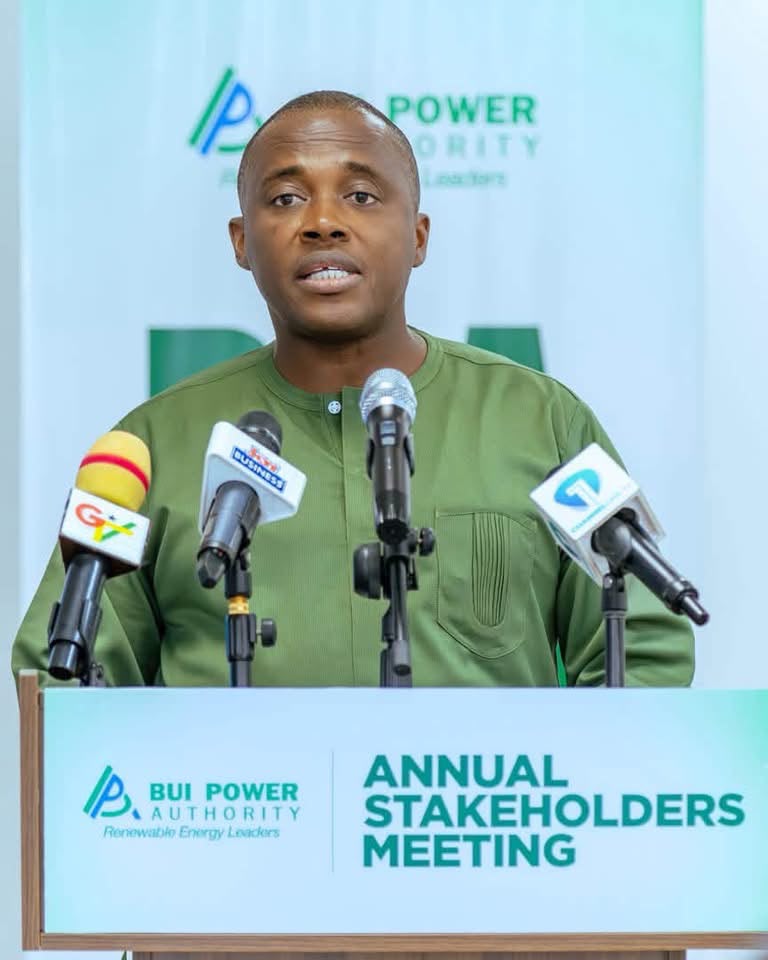
BPA’s Chief Executive Officer, Ing. Kow Eduakwa Sam
Large-scale batteries can help smooth solar output, improve reliability and reduce dependence on thermal generation during peak demand periods.
Financing challenge remains unresolved
Despite the strong performance, BPA identified a major constraint that could affect the pace of expansion: outstanding receivables from its principal off-taker.
The Authority said the unpaid amounts remain a key challenge to financing planned renewable projects.
This disclosure is significant because it highlights a persistent weakness in Ghana’s electricity value chain.

Even when a generation company is profitable on paper, delayed payments can restrict cash flow, increase financing costs and slow investment in new infrastructure.
The issue has become increasingly important as Ghana seeks to attract capital for renewable energy, grid upgrades and storage projects.
Jinapor links renewable growth to governance
Energy and Green Transition Minister Dr. John Abdulai Jinapor commended BPA’s performance but coupled the praise with a call for continued financial discipline.
He urged management to maintain prudence, transparency, accountability and sound governance as the Authority expands its mandate under Act 1046 and contributes to Ghana’s renewable energy agenda.
The Minister’s remarks suggest that government is seeking to position BPA as a model for balancing clean-energy growth with commercial sustainability.
Strong operational performance must be matched by strong governance if renewable expansion is to remain financially sustainable over the long term.
Energy and Green Transition Minister Dr. John Abdulai Jinapor
Why the numbers matter nationally
The 1,438 GWh generated by BPA represents a meaningful contribution to Ghana’s electricity supply, particularly as demand continues to rise from industry, urbanization and digital infrastructure.
The profit figure is also notable because it contrasts with the financial stress affecting other parts of the power sector.
BPA’s performance indicates that renewable generation can be commercially viable when supported by reliable operations and effective asset management, although the receivables issue shows that sector-wide financial weaknesses still affect even stronger-performing entities.
A signal for Ghana’s 2030 renewable ambitions
Ghana has set a target of increasing renewable energy penetration as part of its broader energy-transition strategy.
BPA’s planned expansion to more than 200 MWp of operational solar capacity and the proposed 300 MWp battery-backed solar programme could become one of the largest utility-scale renewable developments in the country.
If delivered on schedule, the projects would strengthen grid resilience, support lower-carbon generation and reduce exposure to fuel-price volatility.
The deeper story: from hydro utility to energy-transition platform
The most important signal from the stakeholders’ meeting is not simply that BPA made a profit.
It is that the Authority is increasingly being repositioned as a strategic energy-transition platform capable of combining hydro, solar and storage within a single operational framework.
That model could become increasingly relevant for Ghana’s future power system, where reliability, flexibility and financial sustainability will matter as much as installed renewable capacity.
The challenge now is execution.
Strong 2025 results provide momentum, but the next phase will depend on resolving payment bottlenecks, securing financing for storage projects and maintaining the governance standards needed to sustain investor confidence.
If those conditions are met, BPA’s latest performance may represent more than a successful financial year; it may mark a significant step in Ghana’s effort to build a cleaner, more resilient and commercially sustainable electricity system.