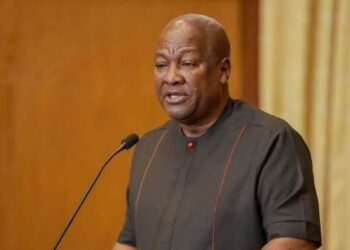
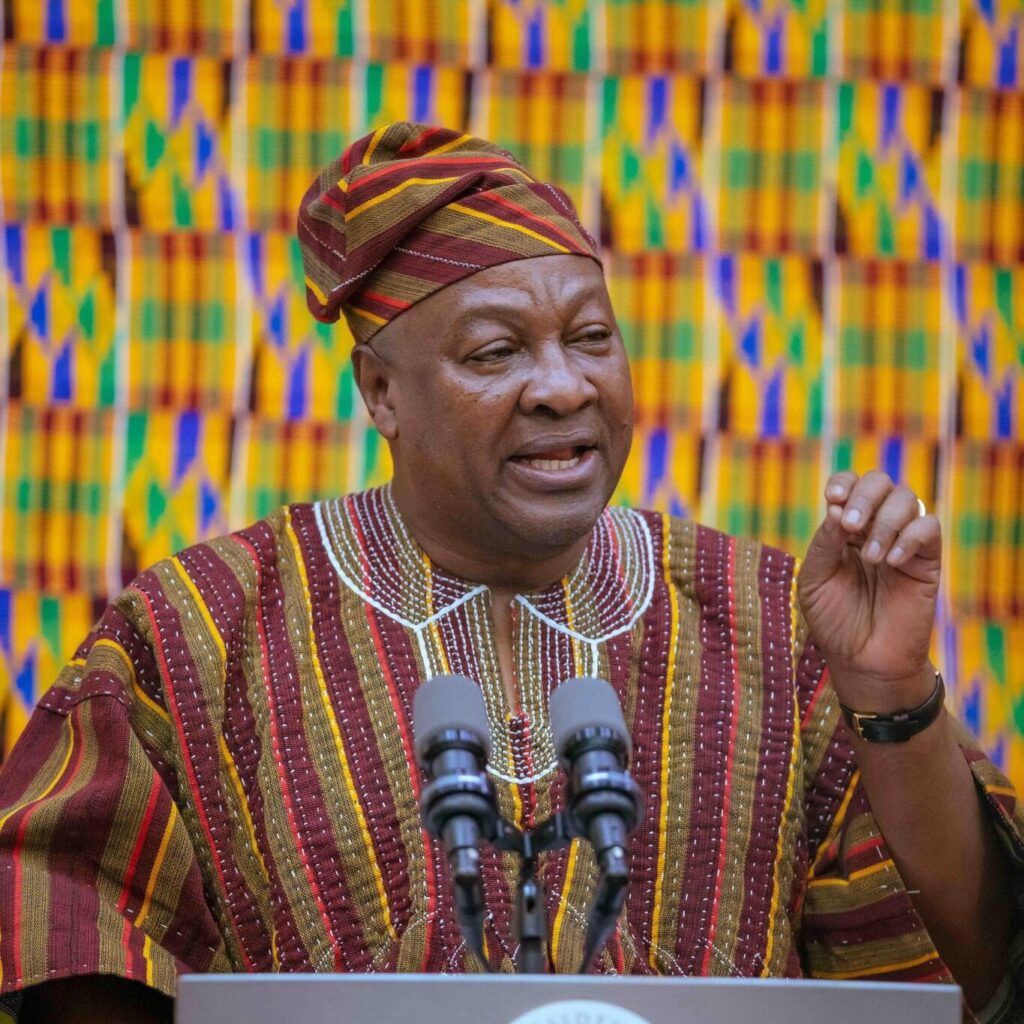
The Independence Square in Accra was recently transformed into a theater of industrial defiance as President John Dramani Mahama officially opened the inaugural Ghana AgroTech Fair.
Addressing a capacity crowd of innovators, diplomats, and industry titans, the President delivered a blistering mandate for national self-reliance, signaling the end of Ghana’s era as a passive consumer of foreign technology.
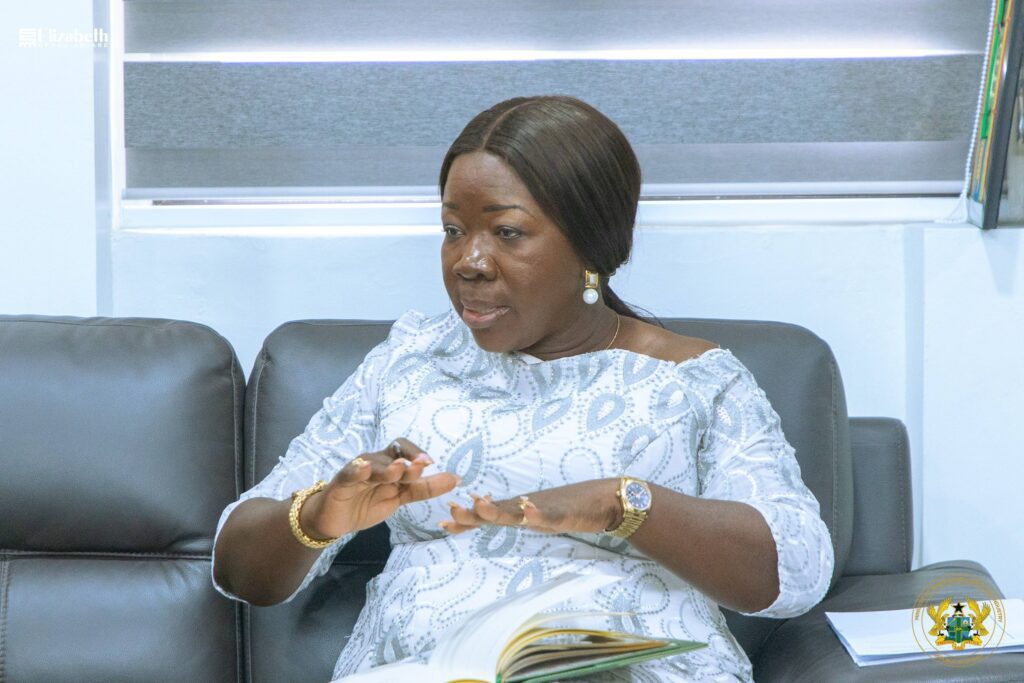
Flanked by the Minister for Trade, Agribusiness and Industry, Hon. Elizabeth Ofosu-Adjare, and the CEO of Ghana Ex-Im Bank, Hon. Sylvester Mensah, the President framed the fair not as a mere exhibition, but as the front line of an economic war against import dependence.
“Supporting Ghanaian manufacturers of agricultural machinery and agri-processing equipment is not simply an industrial policy choice. It is a strategic economic necessity. Because when we support local agri-tech manufacturing, we are strengthening Ghana’s industrial base, we are creating skilled employment for young people and we are reducing import dependence”
President John Dramani Mahama
The President’s keynote address served as a definitive policy anchor for the government’s 2026 agenda. He moved beyond the traditional rhetoric of “supporting farmers,” to demand a wholesale re-engineering of the national economy.



For President Mahama, the path to a 24-Hour Economy and Accelerated Export Development is paved with locally fabricated steel and indigenous software. He challenged the nation to stop viewing agriculture as a “sector of survival,” and start treating it as the primary engine of a high-tech, industrial future.
The most significant operational announcement of the day was the President’s confirmation that the government has moved from planning to ground-breaking on its flagship infrastructure project: the Farmer Service Centres (FSCs). President Mahama announced that he will personally break ground for the first centre this Friday at the Afram Plains.
He noted that this marks the start of a nationwide rollout of 50 centres designed to provide smallholder farmers with a one-stop-shop for mechanization, high-tech irrigation support, and modern storage solutions.
The FSCs are the physical infrastructure of the “Feed Ghana” program and registering with these centres will gain farmers guaranteed access to tractors, plowing services, and grain shellers, all maintained by local technicians. The President emphasized that these centres will also serve as hubs for extension officers to deploy the latest climate-smart farming techniques.
This systematic approach ensures that the rural economy is fully integrated into the 24-Hour Economy, where production does not cease because of a lack of equipment or seasonal limitations.
Breaking the Wheat Monopoly
In a major revelation that sent ripples through the agribusiness community, President Mahama reported a scientific breakthrough that could save the nation nearly $400 million annually in foreign exchange.
He disclosed that scientists from the Council for Scientific and Industrial Research (CSIR) successfully developed and harvested wheat on demonstration farms in Ghana, achieving yields of four to five tons per hectare. This achievement represents a massive blow to the import monopoly that has long burdened the national budget.
The President linked this scientific success directly to his Industrialization agenda, and stressed that by substituting imported wheat with locally grown grain, Ghana is not only securing its food supply but also providing the raw material for its domestic milling and baking industries.
For President Mahama, this “import substitution,” model is the core of the Agriculture for Economic Transformation Agenda, proving that when research moves “from the laboratory to the field,” it creates an immediate and measurable impact on the national balance of trade.

President Mahama’s address was also a direct appeal to the youth, whom he urged to reclaim agriculture as a high-status, high-income profession – explicitly rejecting the notion that the sector is the domain of the uneducated.
“To our young people, agriculture is not a sector of the past. It is one of the frontiers of our future. Today’s agricultural sector needs engineers, software developers, data scientists, agronomists, logistics specialists, fabricators and innovators. Agriculture today is digital, technological and entrepreneurial”
President John Dramani Mahama
The president motioned to the technology on display at the AgroTech Fair – locally made drones, automated processing lines, and digital soil sensors – and described them as the toolkit for this new class of “agri-preneurs.”
He also demanded that financial institutions shift their perception of Agrotech from an “admired concept,” to a “bankable, scalable industry.”
Though he made it clear that the Ghana Ex-Im Bank will continue to lead the way in financing the manufacture of local machinery, he called on the broader private sector to provide the capital necessary to scale these innovations across the African continent, as the vision is for Ghana to become the primary exporter of agricultural technology to its neighbors, fulfilling the promise of the AfCFTA.
As the President concluded his address, the message to the nation was unmistakable: the era of consumption without production is over. The Ghana AgroTech Fair 2026 is the definitive proof that the country has the talent, the technology, and the political will to feed itself and power its own industrialization.
From the upcoming ground-breaking at Afram Plains to the wheat fields of the CSIR, the government has established a clear, non-negotiable roadmap for prosperity, with President Mahama himself setting the stage for a Ghana that adds value to what it grows and processes what it produces.
With the support of the Ministry of Trade and Ghana Ex-Im Bank, the innovators showcased at Independence Square are no longer working in isolation; they are now the vanguard of a national movement.
As the fair continues through March 19th, President Mahama noted that the spotlight remains on the local fabricators who are building the machines that will build the new Ghana.
READ ALSO: Israel Claims To Have Killed Iran’s Larijani