

Ghana’s Court of Appeal has dismissed an application seeking to halt proceedings in the ongoing criminal trial involving former public official Charles Bissue and two co accused persons. The ruling clears the way for the case to proceed at the High Court, where the accused persons face allegations linked to corruption in the mining sector.
The application for a stay of proceedings was filed by the third accused, Dr. Naa Dedei Tagoe, in the case of The Republic v. Charles Bissue, Raphael Mensah, and Dr. Naa Dedei Tagoe. The motion sought to suspend the trial pending further legal challenges, particularly concerning the manner in which evidence is to be presented before the court.
The dispute stems from a prior decision by the High Court, which directed that the first prosecution witness testify in camera. This ruling, delivered on December 9, 2025, effectively allows portions of the testimony to be heard in private rather than in open court.
Counsel for Dr Tagoe argued before the appellate court that such a directive raises constitutional concerns. According to the defense, conducting proceedings in camera could undermine the right of the accused to a fair and public hearing, a principle widely regarded as fundamental to the administration of justice.
The defense maintained that the circumstances surrounding the case were exceptional and warranted intervention by the appellate court. It further contended that allowing the High Court proceedings to continue under the current conditions could result in prejudice against the accused, thereby justifying a temporary halt to the trial.

Prosecution Opposes Application
The prosecution strongly opposed the application, insisting that the High Court’s directive was lawful and appropriately balanced the interests of justice. State attorneys argued that the applicant had failed to demonstrate any real or imminent harm that would arise from the continuation of the trial.
According to the prosecution, the in camera arrangement was designed to safeguard the integrity of the proceedings while ensuring that the rights of all parties were protected. They emphasized that the High Court had put in place sufficient measures to prevent any miscarriage of justice.
The prosecution further argued that granting a stay would unnecessarily delay the trial, which involves serious allegations of public interest. In their view, the legal threshold for halting proceedings had not been met.
After reviewing submissions from both sides, the Court of Appeal concluded that the applicant did not meet the legal requirements necessary to justify a stay of proceedings.
The court held that no exceptional circumstances had been demonstrated and that there was no evidence of irreparable harm that could not be addressed within the trial process itself.
In dismissing the application, the court described it as lacking merit. The decision effectively affirms the earlier ruling of the High Court and allows the trial to proceed without further interruption.
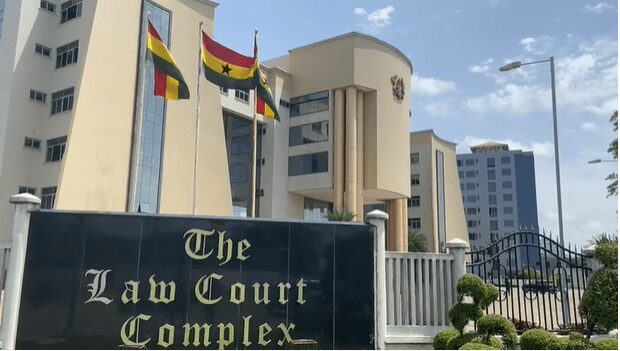
The ruling reinforces the principle that appellate intervention in ongoing criminal trials is reserved for cases where clear and compelling justification exists. In this instance, the court determined that such justification was absent.
Trial to Resume at High Court
With the dismissal of the stay application, proceedings at the High Court are expected to resume in line with the earlier directives. The prosecution is now set to call its first witness, whose testimony will be delivered in camera as previously ordered.
The case has attracted attention due to the nature of the allegations and the individuals involved. Charles Bissue and his co accused are facing charges related to the alleged receipt of bribes and illicit gifts in connection with the unlawful fast tracking of a mining concession sticker for an unlicensed company.
These allegations form part of broader concerns about illegal mining activities, commonly referred to as galamsey, and the role of public officials in facilitating unauthorized operations. The outcome of the trial is therefore expected to carry significant implications for accountability and governance within the sector.
The Court of Appeal’s decision highlights ongoing tensions between transparency in judicial proceedings and the need to protect certain aspects of testimony. While public hearings remain a cornerstone of the justice system, courts retain the discretion to adopt alternative measures in specific circumstances.

Legal analysts note that the use of in camera proceedings, though not uncommon, often raises important questions about fairness and openness. However, courts are generally guided by the need to balance these considerations against potential risks to witnesses, evidence, or the integrity of the trial.
In this case, the appellate court’s ruling suggests confidence in the safeguards established by the High Court. It also underscores the judiciary’s reluctance to disrupt ongoing trials without clear evidence of injustice.
As the case continues, attention is likely to remain focused on how the High Court manages the proceedings and whether the prosecution is able to substantiate its claims against the accused persons.
READ ALSO: President Mahama Launches Industrial Revolution at AgroTech Fair