Russia’s state nuclear company, Rosatom has evacuated more staff from Bushehr, saying that the risk of a nuclear accident at Iran’s Bushehr plant is increasing.
Russian news agencies reported that Rosatom evacuated a further 198 staff from the Bushehr nuclear power plant on Saturday, April 4, 2026. The company has been withdrawing workers since the Iran war began at the end of February.
The latest evacuation had been planned before the International Atomic Energy Agency said on X that one of the plant’s physical protection staff was killed by a projectile fragment. The agency added that a building at the site was affected by shockwaves and fragments.
Rosatom Chief Alexei Likhachev said that developments near the plant were unfolding in line with the worst-case scenario, according to Russian news agencies. He added that the staff member who was killed was an Iranian national.
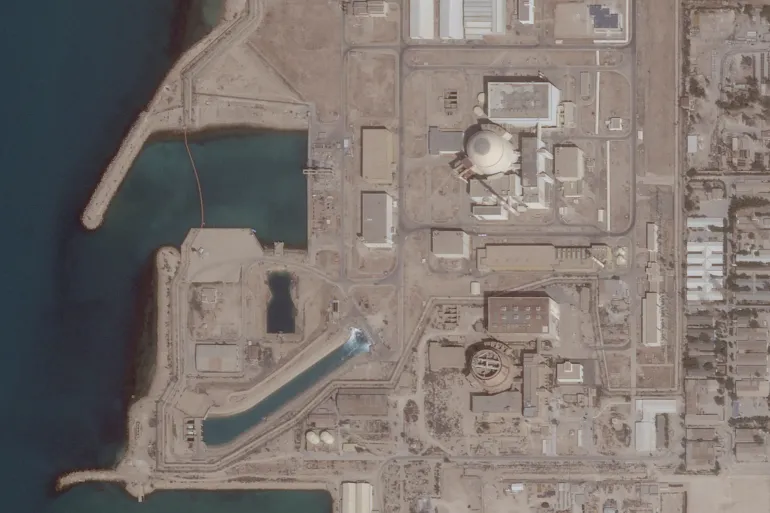
According to the International Atomic Energy Agency, the person was killed by projectile fragments after United States-Israeli strikes targeted a location close to Iran’s Bushehr nuclear plant.
The agency, citing confirmation from Iranian authorities, said in a statement on X that there was “no increase in radiation levels” after Saturday’s attack.
The Atomic Energy Organization of Iran (AEOI) confirmed the incident in a post on X. An “auxiliary” building on the site was damaged, but the main sections of the power plant were not affected by the strike, the government agency said, adding that the person killed was a member of security personnel.
The head of Russia’s state nuclear company, Rosatom, said that 198 Russian staff had evacuated the plant following the attack.
“As planned, we began the main wave of evacuations today, about 20 minutes after the ill-fated strike. Buses departed from the Bushehr station toward the Iranian-Armenian border. 198 people, to be exact – the largest wave of evacuation – are on the buses.”
Alexei Likhachev
Iran’s Foreign Minister Abbas Araghchi claimed the Bushehr facility had been “bombed” four times since the war erupted on February 28, criticising what he described as a lack of concern for its safety.
The Bushehr plant is Iran’s only operational nuclear power plant. It is located in Bushehr city, home to 250,000 people, and is one of Iran’s most important industrial and military nodes.
The strike comes as the US and Israel escalate their targeting of Iranian industrial sites, even as experts warn of the high risks of striking nuclear or petrochemical facilities.
Meanwhile, US and Israeli strikes on Saturday hit several petrochemical plants in the southern Khuzestan region, an important energy hub, according to Iranian media. At least five people were injured, Iranian media reported, citing a provincial official.
Explosions were heard, and smoke was also seen rising after missiles hit several locations across the Mahshahr Petrochemical Special Economic Zone. According to an Iranian news agency, the state-run Bandar Imam petrochemical complex, which produces chemicals, liquefied petroleum gas (LPG), polymers and a range of other products, was struck and sustained damage.
A provincial Governor in Khuzestan added that the Fajr 1 and 2 petrochemical companies, as well as other nearby facilities, were also hit, according to a news agency. The extent of damage is unclear.
Iran’s Islamic Revolutionary Guard Corps (IRGC) claimed it shot down an MQ-1 drone over central Isfahan province on Saturday, hours after authorities said they forced down two US warplanes.
Isfahan, which houses an underground uranium conversion and a research site, was one of three facilities bombed during US and Israeli strikes on Iran last June.
Strikes Near Bushehr Nuclear Plant Pose Significant Risks
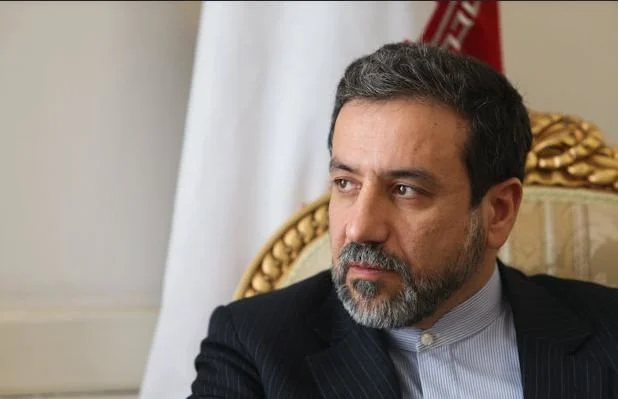
Abbas Araghchi, Iran’s Foreign Minister, warned that US and Israeli strikes near the Bushehr nuclear plant today pose significant risks to Iran and the wider Gulf region.
IAEA Director General, Rafael Grossi in a statement, expressed “deep concern about the reported incident and says [nuclear] sites or nearby areas must never be attacked, noting that auxiliary site buildings may contain vital safety equipment.”

Grossi also reiterated a “call for maximum military restraint to avoid risk of a nuclear accident.”
READ ALSO: Trump Seeks Massive Defence Spending Increase In Budget Request