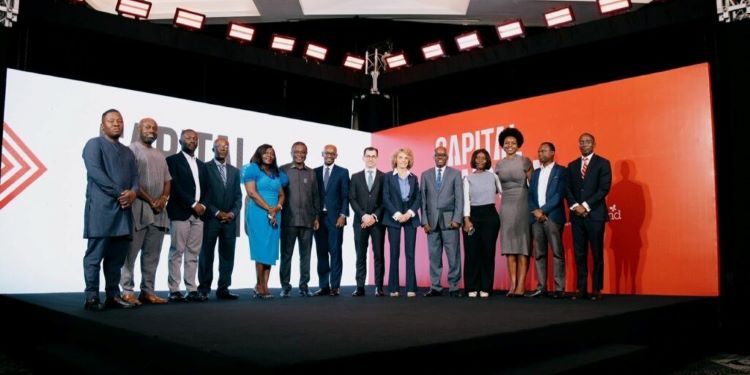
Growth Investment Partners (GIP), the investment vehicle established by British International Investment (BII), has successfully finalized a $20 million capital injection from Norfund and Axis Pension Trust.
This recently confirmed strategic funding round – consisting of $15 million from Norfund, the Norwegian Investment Fund for developing countries, and $5 million from Axis Pension Trust, one of Ghana’s leading private pension providers – is critical in GIP’s operational scale as it moves to address the persistent financing gap facing small and medium-sized enterprises (SMEs) across Ghana.
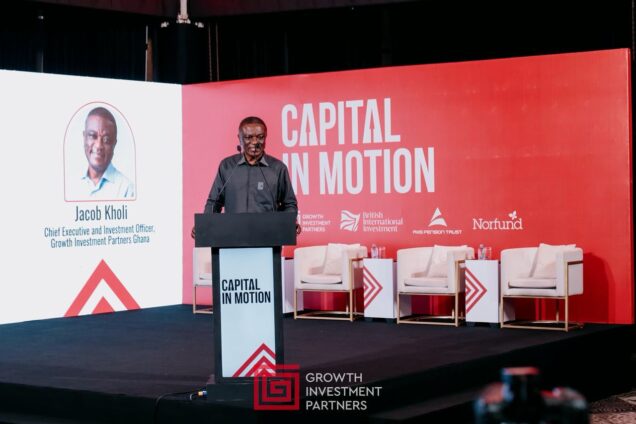
Speaking at the onboarding event for the new investors, GIP Chief Executive Officer Jacob Kholi underscored the importance of this milestone, which brings GIP’s total capital base to approximately $70 million, significantly enhancing the platform’s ability to provide long-term, flexible “patient capital,” to indigenous businesses.
“We now have additional capital to deploy, which allows us to reach more Ghanaian businesses and deepen our impact. This is the first step in mobilising local capital to complement our base. This is a very important milestone for us”
Mr. Jacob Kholi, GIP CEO
For years, Ghanaian SMEs have struggled to secure financing that matches their growth cycles, with traditional commercial banks often demand high collateral and offer short-term tenors that do not suit the needs of expanding firms in sectors like manufacturing or agribusiness.



GIP was specifically designed in 2023 to fill this void by providing financing that is not only flexible but also denominated in local currency to mitigate exchange rate risks. Mr. Kholi noted that the addition of Norfund and Axis Pensions is a validation of the GIP model, which seeks to blend foreign direct investment (FDI) with domestic institutional capital.
With local pension funds being conservative, primarily investing in government securities, the involvement of Axis Pension Trust is particularly noteworthy for the Ghanaian financial sector.
In committing $5 million to GIP, Axis has signaled a growing appetite among local institutional investors to support the real economy, provided the investment vehicles are structured with professional governance and clear impact mandates.
Proven Track Record
GIP highlighted how it has not wasted any time since its operational launch in July 2023. To date, the platform has already deployed $41 million into 16 Ghanaian companies – investments span a diverse range of critical sectors, including logistics, financial services, manufacturing, and agribusiness.
The real-world impact of this capital is measurable: GIP’s portfolio currently supports or sustains over 3,300 jobs, with 535 new roles created within the last 30 months alone. Beyond job numbers, the quality and inclusivity of these investments are high.
Mr. Kholi revealed that 84% of GIP’s portfolio companies are black-owned or black-led, ensuring that the wealth generated stays within the local economy. Furthermore, the same percentage – 84% – meets the “2x” criteria, a global standard for gender-smart investing that prioritizes women’s participation in leadership, ownership, and the workforce.
Mr. Naana Winful Fynn, Regional Director for West Africa at Norfund expanded on the impact of the investments, emphasizing that despite SMEs being the backbone of the Ghanaian economy, contributing roughly 75% of the national GDP, they remain underserved.

“This vehicle provides patient, flexible capital in local currency, designed specifically for SMEs, which is critical in our context. GIP allows us to expand our reach, particularly into sectors and SME segments we do not directly invest in”
Naana Winful Fynn, Regional Director for West Africa at Norfund
According to Mr. Fynn, Norfund’s decision to route $15 million through GIP allows the Norwegian fund to impact a broader base of smaller businesses that would otherwise be too small for direct Norfund intervention.
With the new $20 million boost, GIP is set to accelerate its deployment. The firm has set a target to invest in at least 10 more businesses before the end of 2026. This is part of a much more ambitious 15-year vision: to support over 300 SMEs and become a permanent fixture in Ghana’s financial architecture.
GIP operates as an open-ended investment vehicle, which means it does not have the typical exit pressure of a traditional private equity fund. It can recycle capital – reinvesting returns from successful businesses into new opportunities – creating a continuous loop of SME support.
The platform specifically targets businesses with an annual turnover between $500,000 and $15 million, or those employing between 10 and 300 people.
Recognizing that money alone is often not enough for an SME to scale, GIP explained that it integrates technical assistance into its investment model, especially as many Ghanaian firms struggle with corporate governance, financial reporting, and labor compliance.
GIP concluded by highlighting its work as a partner, helping these businesses implement the structures required to attract further international investment.
This technical assistance program is a collaborative effort, supported by partners including the Swiss Secretariat for Economic Affairs (SECO) and BII to professionalize these businesses and strengthen the overall business environment in Ghana.
READ ALSO: Vance Dismisses Claims Of US Interference in Hungary’s Election