

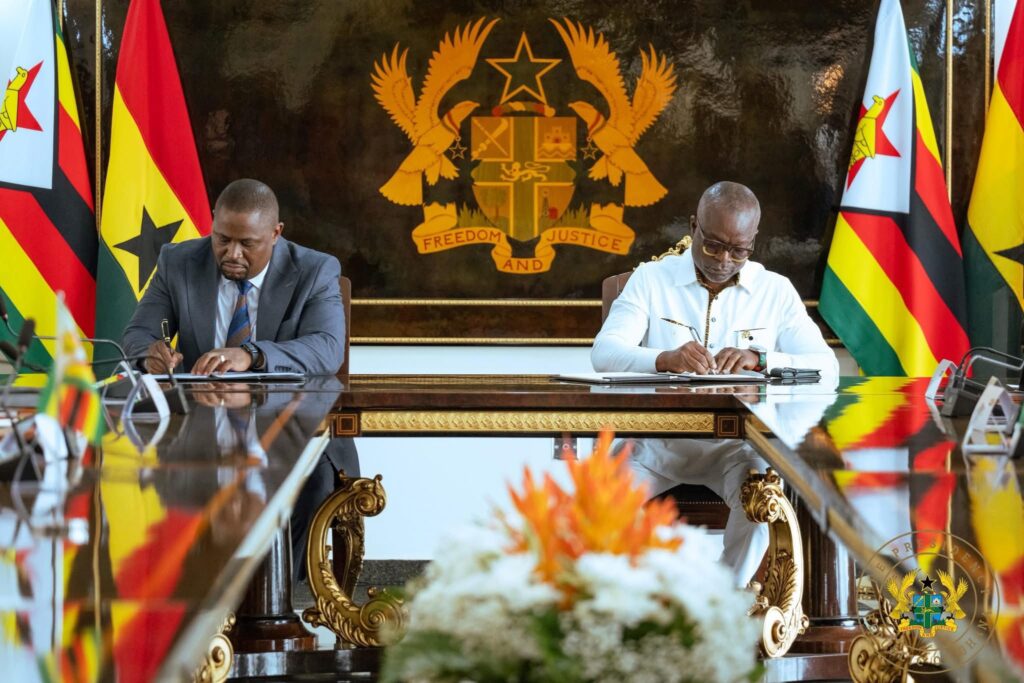
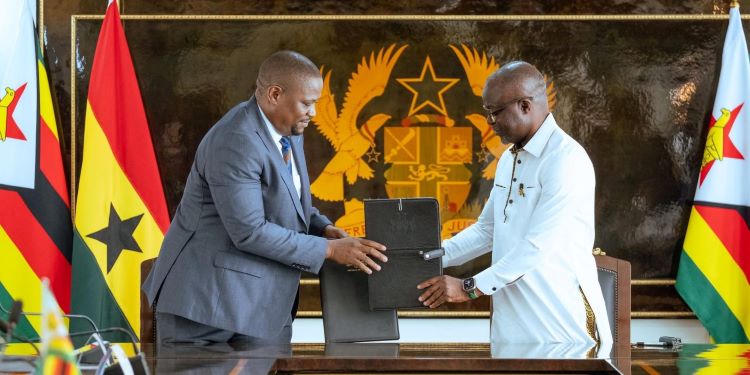
The formalization of the Memorandum of Understanding (MoU) between the Ghana Export Promotion Authority (GEPA) and ZimTrade has been recorded as a diplomatic milestone, but for those tasked with the technical logistics of continental trade, the focus has shifted from the ceremony to the execution.
In a strategic evaluation of the agreement’s potential, Mr. Bernard Adu Boateng, an X-Culture Certified International Business Consultant and market researcher, suggested that while the institutional framework is now in place, the path to a functional West-to-South commercial corridor remains obstructed by significant structural hurdles.
Mr. Boateng’s analysis provided a necessary reality check to the optimism surrounding the African Continental Free Trade Area (AfCFTA).
Despite the fundamental proposition of connecting ECOWAS and the Southern African Development Community (SADC) – a market of over 500 million people – being economically sound, it faces what the researcher described as the “elephant in the room”: an infrastructure deficit that threatens to price out the very businesses the agreement is meant to support.
“Infrastructure is the elephant in this room. The poor roads and transport connectivity between the West and the SADC are going to make the logistics costs very, very high.
“We know that Zimbabwe is a landlocked country, so transporting goods from Ghana to Zimbabwe would need to be facilitated through the roads or the railways. That is going to be the real challenge. Add to that, the inconsistent custom procedures across transit countries”
Mr. Bernard Adu Boateng, X-Culture Certified International Business Consultant
This prohibitive cost of physical trade between Accra and Harare was a primary concern highlighted in the interview, noting that while the MoU creates the “institutional groundwork,” it does not, in itself, pave the roads or lay the tracks necessary for a land-to-sea corridor.
For Mr. Boateng, Zimbabwe’s landlocked status necessitates a complex multi-modal logistics chain that must navigate varying customs procedures across multiple transit countries. Yet the cost of moving goods across these regional blocs can easily negate the tariff advantages provided by the AfCFTA.
Without a coordinated push for infrastructure financing – supported by the African Development Bank and regional governments – the corridor risks becoming a theoretical bridge rather than a functional one, especially as the “logistics part of the trade equation,” is where most bilateral agreements fail to gain traction.
Intelligence As Catalyst
However, Mr. Boateng argued that the primary reason African SMEs struggle to scale across borders is not a lack of product quality or connectivity, but a catastrophic lack of “trade intelligence,” – which he hailed the GEPA-Zimtrade MoU for trying to solve.
With the most underrated dimension of the researcher’s take being the role of information asymmetry in the failure of Small and Medium-Scaled Enterprises (SMEs), the GEPA-ZimTrade alignment was positioned as a shared intelligence network that could work.
“Small and Medium-Scale Enterprises typically fail in export markets, not because their products are bad, but because they lack information,” Mr. Boateng reiterated.
He noted that by institutionalizing data sharing, the two agencies can provide SMEs with the “market index” they previously couldn’t access, breaking the cycle of most small businesses operating in silos, unable to afford the market data or regulatory guidance required to navigate foreign jurisdictions.
According to Mr. Boateng, if a Ghanaian manufacturer can receive real-time regulatory guidance tailored to SADC requirements, the risk of export failure drops significantly. This shift will guarantee that the “SME engine” has the fuel of data to drive the industrial growth both nations desire.
As an extension of this, Mr. Boateng proposed an exploration of the potential for collaborative manufacturing as a driver for job creation. Rather than competing for the same export destinations, he posited a model where Ghana and Zimbabwe integrate their material bases, with the confectionery industry serving as the primary case study for this value-added approach.
He explained that the two nations can create finished products that are “Made in Africa,” for African consumers by combining Ghana’s cocoa and timber resources with Zimbabwe’s manufacturing and tobacco industry expertise.

This approach he emphasized will address the “commodity-export” trap that has long defined African trade.
Additionally, Mr. Boateng emphasized that processing raw materials within the West-South corridor will create more of the high-quality jobs in packaging, production, and distribution that the MoU seeks to establish.
For the business consultant, the real “narrative shift” for African trade will occur when trade volumes actively move through these value chains, moving away from a reliance on traditional North-South routes toward a model of regional transformation.
Three Pillars Of Sustainability
To transition from intent to impact, Mr. Boateng further identified three critical policy areas that must complement the GEPA-Zimtrade MoU. First is the standardization agenda – where the AfCFTA Secretariat in Accra must accelerate the harmonization of standards to prevent goods from sitting at borders due to conflicting regulations.
Second is infrastructure financing, which requires a shift in how transport corridors are funded across regional blocs, and the third, and perhaps most urgent, pillar is the reform of currency and payment systems.
The reliance on the US dollar for intra-African trade introduces a layer of dollar “volatility” that drains national reserves and increases costs for businesses. Mr. Boateng advocated for the use of local currency settlement mechanisms or the broader African currency framework to decouple regional trade from global financial shocks.
For him, this move is essential for protecting the margins of African manufacturers from the fluctuations of external markets.
In his final assessment, the Market researcher noted that while the Ghana-Zimbabwe partnership builds “institutional muscle,” it does not immediately rewrite decades of trade orientation, as the current structure of African exports is still heavily tilted toward Europe, Asia, and North America.
Breaking this cycle requires more than just a signed document; it requires a multiplication of these bilateral agreements and a sustained commitment of political will and financing.
Yet, he noted, that the GEPA-ZimTrade model serves as a replicable template for other nations. If these two agencies can successfully demonstrate that data sharing and joint market analysis can drive trade volumes, they will have provided the blueprint for the entire continent.
The real question for the 2026 industrial agenda, however, is whether the resources will be committed to making the agreement functional for a successful ECOWAS-SADC trade corridor.
READ ALSO: Obsolete Refinery Plants Undermine Fuel Stability; COPEC Boss Calls for Upgrades