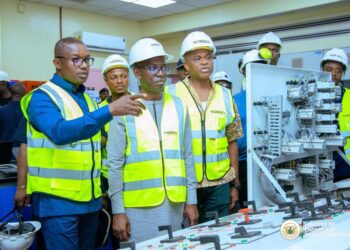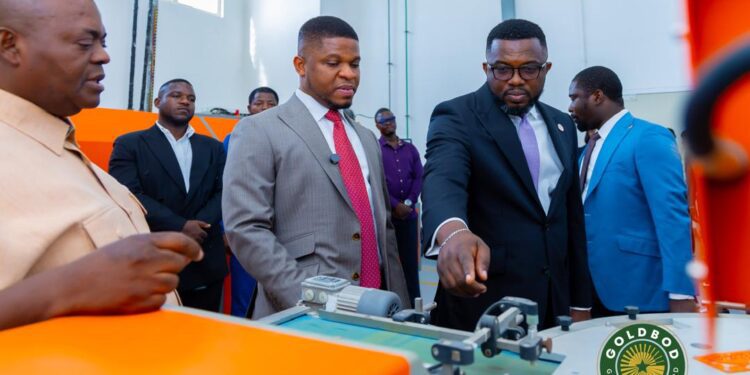
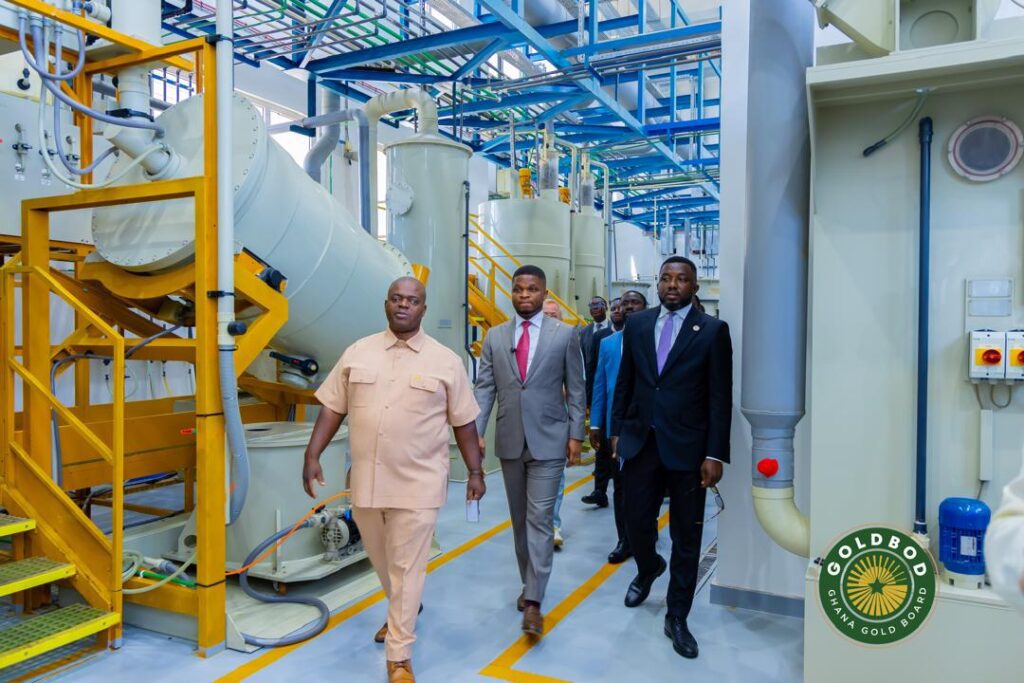
Chief Executive Officer of the Ghana Gold Board (GoldBod), Sammy Gyamfi, Esq., has conducted a strategic inspection of the Royal Ghana Gold Refinery as part of an intensified drive toward finalizing a refining services agreement designed to anchor local value addition within the nation’s extractive sector.
This high-level tour, which represents a critical juncture in the government’s industrialization policy, focuses on integrating domestic refining capacity to ensure that Ghana transitions from an exporter of raw mineral resources to a hub for high-value gold processing.
“The visit, forms part of GoldBod’s broader strategy to support the local value addition agenda of the government and ensure that Ghana derives greater economic benefit from its mineral resources through in-country refining.”
Ghana Gold Board
The inspection serves as a functional validation of the facility’s readiness, confirming its potential role in the board’s broader mandate to retain economic gains within the country.
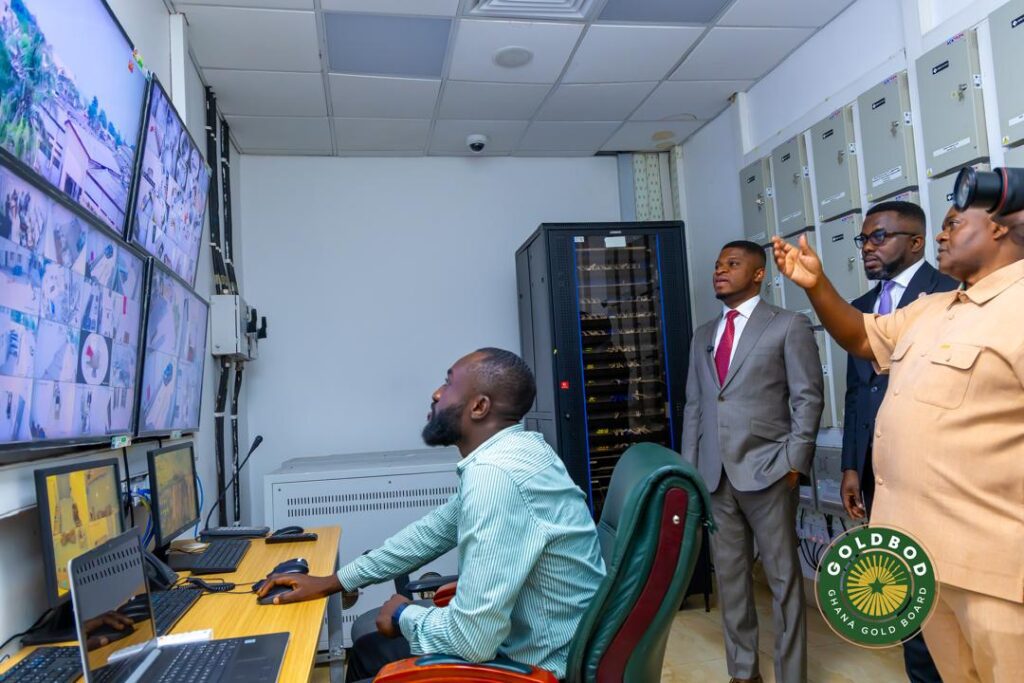
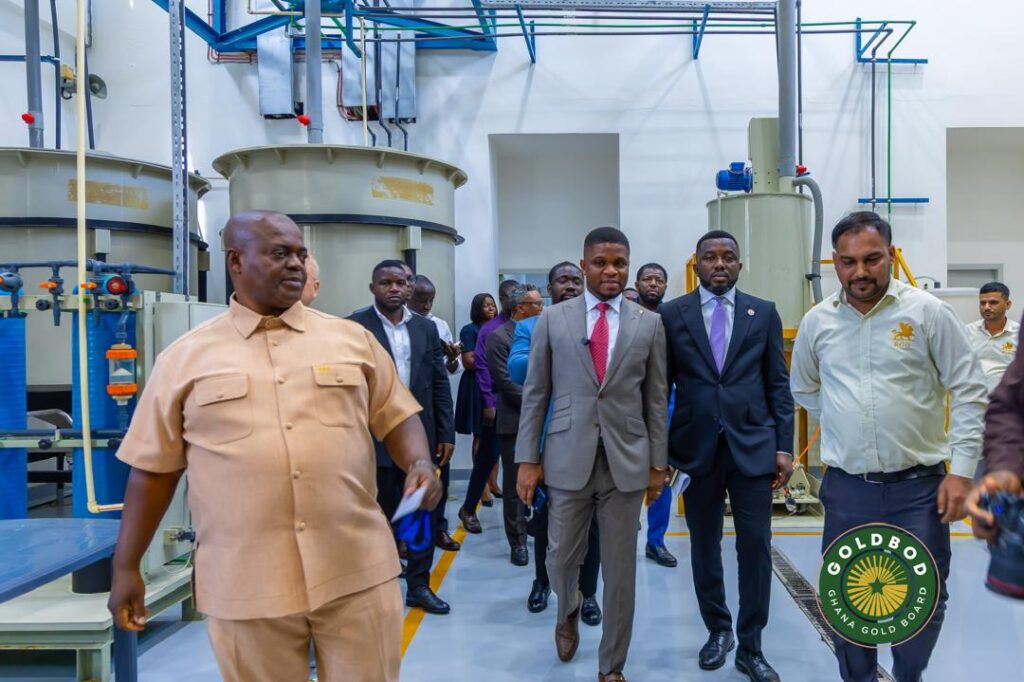
During the visit, Mr. Gyamfi assessed the refinery’s operational readiness, touring key technical zones such as the smelting room, assay laboratory, and receiving bay, while evaluating specialized infrastructure including XRF machines and ICP systems.



While expressing satisfaction with the refinery’s current technical foundation, the GoldBod CEO noted that the facility would require minor capacity reinforcements based on technical consultations to align fully with the stringent standards required for the formal partnership.
Bolstering Economic Sovereignty through Local Refining
This engagement underscores the government’s resolve to dismantle the historical reliance on exporting raw doré, a practice that has long deprived the economy of the premiums associated with refined gold.
By formalizing this partnership, GoldBod is positioning itself to capture the full value chain, ranging from artisanal and small-scale mining (ASM) output to large-scale production.
This transition is not merely industrial; it is a macroeconomic necessity. By retaining refining revenues domestically, the state secures a greater stake in its wealth, fosters job creation for local metallurgical engineers and technicians, and creates a robust ecosystem for sustainable resource management.
The move to refine gold locally allows for the application of national hallmarks, which significantly enhances the country’s reputation and credibility in the international bullion markets.
Accelerating Industrial Preparedness and Sustainability
To satisfy the ambitious goal of ending raw mineral exports by 2030, GoldBod is prioritizing the rapid operationalization of local refineries.
The visit to Royal Ghana Gold Refinery was, therefore, not just an inspection but a directive for speed; Mr. Gyamfi urged management to implement expert recommendations swiftly to facilitate a formal agreement in the coming weeks.
This urgency reflects the government’s commitment to building a “24-hour” industrial economy, where refineries operate at high capacity to process the output of the ASM sector, which is increasingly being brought into the formal fold under GoldBod’s regulatory oversight.
By embedding this infrastructure into the national agenda, the administration aims to transform Ghana from a mere supplier of raw materials into a sophisticated participant in the global gold trade, effectively insulating the economy from the volatility of raw commodity pricing.
Strategic Alignment with National Development Goals
The potential partnership with Royal Ghana Gold Refinery is viewed as a “strategic and timely” intervention that aligns directly with President John Dramani Mahama’s broader vision for the energy and mining sectors.
Beyond technical processing, the initiative is designed to create a ripple effect of employment and skills development, ensuring that the modernization of the Tema-based refinery and similar entities supports national employment targets.
As Ghana works toward achieving London Bullion Market Association (LBMA) standards, the integration of high-tech assaying and casting capabilities witnessed during the tour is essential for producing “five-nine” purity gold.
This shift, according to the GoldBod leadership, provides the framework necessary for Ghana to command higher global prices, stabilize foreign exchange earnings, and secure a lasting legacy of value-creation for generations to come.
READ ALSO: Ghana Hotels Association Demands Immediate Fiscal Policy Review