Africa Centre for Energy Policy (ACEP), a prominent energy sector think tank, has demanded that the government commit to the total public disclosure of investigation findings regarding the catastrophic fire outbreak at the Ghana Grid Company (GRIDCo) Akosombo Substation.
This call follows widespread concern over the reliability of the national power grid after the explosion on April 23, 2026, crippled critical evacuation infrastructure and plunged major parts of the country into darkness.
ACEP’s intervention seeks to move beyond mere government rhetoric, insisting that citizens receive verified facts rather than sanitized briefings.
By prioritizing this demand, the policy group aims to hold institutional actors accountable for a crisis that has severely disrupted both household stability and industrial productivity. While the Ministry of Energy and Green Transition has recently announced the restoration of two generating units following emergency technical interventions, the ongoing instability has left many sectors in a state of flux.
“ACEP calls on government to commit, from the outset, to publishing the full findings of all investigations into the Akosombo fire and the broader outage crisis, including any evidence of negligence, misconduct, or systemic failure, and to ensuring that appropriate consequences are enforced where warranted.”
Africa Centre for Energy Policy (ACEP)
ACEP argues that restoring power is only half the battle; the other half is addressing the systemic fragility that allowed such a disaster to occur.
Consequently, the organization is pressuring the state to provide not only the “how” of the recovery process but also the “why” behind the operational failure that left 1,000 megawatts stranded.
Demanding Accountability and Public Scrutiny
Transparency is not merely a bureaucratic checkbox; it is the bedrock of public trust in essential services. When the government publishes the full findings of these investigations, it subjects its own oversight mechanisms to public scrutiny, effectively shifting from a model of “trust-me” governance to one of verifiable responsibility.
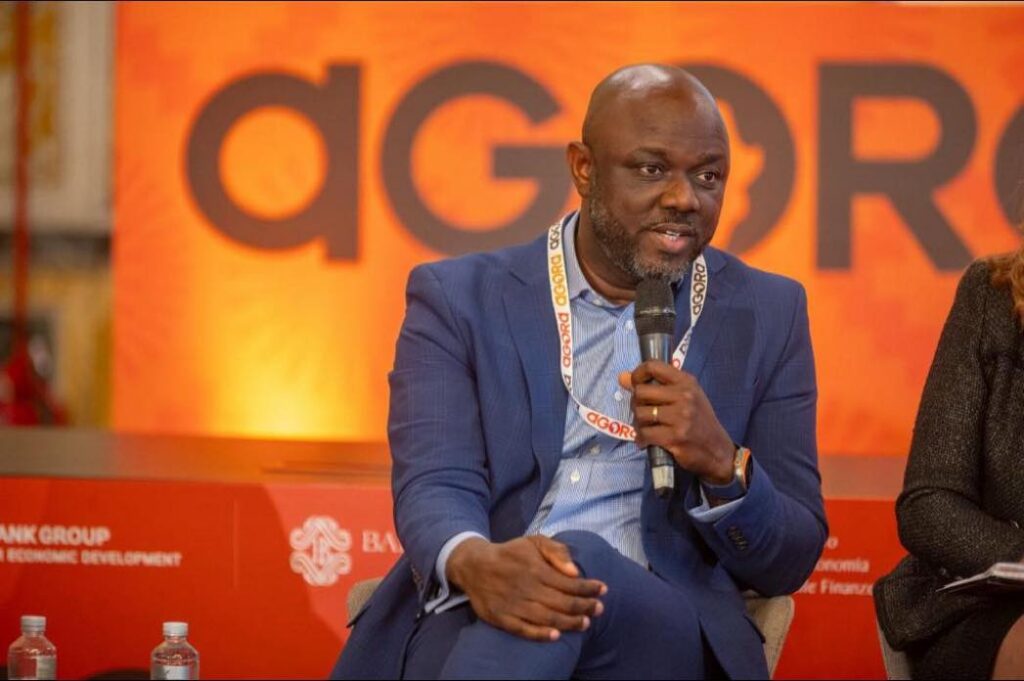
Public disclosure allows independent experts, civil society, and the public to analyze whether the incident was a freak accident or a direct result of “negligence, misconduct, or systemic failure,” said the Policy Lead for Petroleum & Conventional Energy at ACEP, Kodzo Yaotse.
Without this level of openness, speculation often fills the vacuum, fostering cynicism toward state institutions like the Public Utilities Regulatory Commission (PURC) and GRIDCo.
Lessons and Future Safeguards
Furthermore, detailed reporting on the disaster serves as a vital safeguard for the future. By airing the findings including technical audits and potential maintenance lapses the government forces a culture of improvement.
It ensures that the lessons learned from the Akosombo incident are not buried in internal memos but are instead translated into actionable policy reforms.
As Yaotse emphasized, this process is essential to “ensure that appropriate consequences are enforced where warranted,” thereby deterring future institutional complacency in the energy sector.
Ensuring Operational Predictability
In addition to the transparency of the investigation, ACEP has highlighted the urgent need for operational predictability.

The current reality of “irregular and unreliable communication” is, according to the group, a significant failure of institutional responsibility. Consequently, they are pushing for the publication of a “reliable load-shedding timetable.”
By forcing the system operators to provide a clear and regularly updated schedule, the think tank argues that the government would be performing a basic courtesy that allows businesses and households to plan their activities during this recovery phase.
Ultimately, the demand for disclosure is a call for a modern, responsive energy sector. The government has already tasked a seven-member committee, chaired by Ing. Dr. William Amuna, to investigate the root causes of the explosion.
However, ACEP remains vigilant, warning that a committee report without full public access would undermine the very objective of accountability.
As the nation watches the gradual restoration of capacity at the Akosombo plant, the demand for a clear, realistic timeline for full supply recovery remains as critical as the demand for the truth about the blaze itself.
Only by aligning operational recovery with total transparency can the government begin to repair the frayed trust between the state and the power consumer.
READ ALSO: Trump Calls For Jimmy Kimmel’s Dismissal