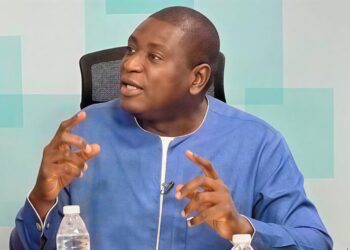
Grace Akosua Amoabeng, a member of the New Patriotic Party (NPP) Communications Team, has called for full public disclosure on the utilisation of funds generated through energy sector levies, termed as Dumsor Levy.
She challenged the government to provide clear documentation of the total revenue accrued since the policy’s introduction.
Amoabeng noted that, for a considerable period, Ghanaians paid an additional cedi on every litre of fuel purchased at the pump. She questioned the current status of the energy sector recovery debt, which served as the primary justification for the levy.
She further pointed out that the public remains largely unaware of the accounts holding these substantial funds, raising concerns about the lack of transparency surrounding their management. According to her, this opacity has left citizens uncertain about which projects, if any, have benefited from the proceeds.



Amoabeng stressed that detailed figures on total receipts from the levy have been absent from official communication, insisting that the government owes the public a clear account of how much debt has been settled through the collections.

Despite continuous deductions from consumers, information on the management of the funds remains limited. She argued that making such financial details public is essential to maintaining trust in the administration.
Her remarks come amid reports that several power plants are facing operational challenges due to outstanding debts owed to fuel suppliers. She highlighted that these debts have run into hundreds of millions of dollars, even as the levy continues to generate revenue.
Questioning the effectiveness of the current financial strategy, Amoabeng called for clarity on how resources are being allocated to prevent the collapse of critical energy infrastructure.
“Do you know how much they have received? Do you know how the monies have been used? Do you know the accounts in which they have been lodged? What projects have been undertaken with the funds?”
Grace Amoabeng, Member – NPP Communications Team
Referencing recent media investigations, she cited structural weaknesses within the national power grid, noting that some plants in Tema and Asogli have reportedly halted operations due to financial constraints.
She rejected suggestions that recent power instability is solely the result of technical maintenance or transformer replacements, arguing instead that inadequate financing for fuel and generation remains the core issue.
Amoabeng further asserted that challenges in power generation predate recent incidents, including fires at key facilities, accusing the administration of shifting blame rather than addressing underlying fiscal mismanagement.

She called for the immediate implementation of a comprehensive recovery plan to stabilise electricity supply nationwide, adding that previous approaches had proven more effective in ensuring consistent power delivery.
The impact of the ongoing energy challenges, she noted, has been particularly severe on small businesses. Entrepreneurs, including barbers and salon operators, continue to grapple with unreliable electricity despite paying high tariffs.
Amoabeng argued that the situation undermines the government’s ambition of establishing a 24-hour economy, as many young people are discouraged from starting or sustaining businesses under current conditions.
Energy Crisis Deepens as Small Businesses Struggle with High Tariffs
She also raised concerns about rising electricity costs and the rapid depletion of prepaid credit, even during periods of outages. Describing the phenomenon as exploitative, she called on the Public Utilities Regulatory Commission (PURC) to investigate the performance of smart meters.
While acknowledging that committees have been set up to examine these issues, Amoabeng criticised the lack of published findings, suggesting that such efforts risk being perceived as delaying tactics.

She dismissed recent explanations from the PURC that current tariffs reflect the true cost of electricity, noting that many small business owners have seen their expenses increase significantly within a short period.
“So now, if I run a small shop and I’m paying 100 cedis a day, is that the realistic cost? Previously, that same amount lasted me a week.”
Grace Amoabeng, Member – NPP Communications Team
Amoabeng maintained that the widening gap between past and present utility costs highlights growing affordability challenges for ordinary Ghanaians, particularly small-scale entrepreneurs.
She further noted discrepancies between official claims of improved power supply and the lived experiences of residents in heavily affected areas, many of whom continue to endure prolonged outages.
Calling for accountability, Amoabeng urged authorities to take responsibility for the sector’s current state and provide transparent accounts of how public funds are being utilised.
READ ALSO: Ghana Banking Sector Roars Back With Stronger Fundamentals