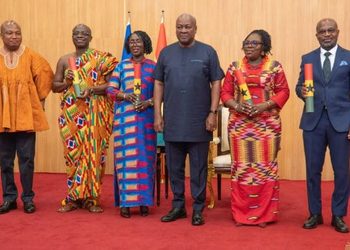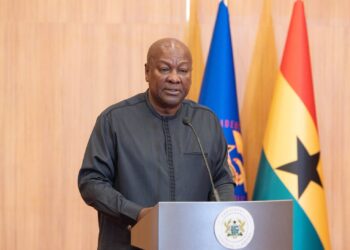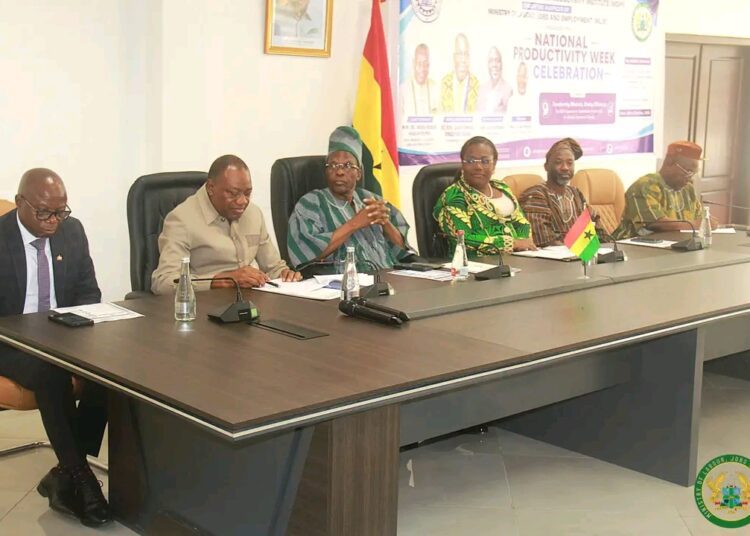
Speaker of Parliament, Rt. Hon. Alban Sumana Kingsford Bagbin, has officially launched the 2026 National Productivity Week Celebration with a strong call for a national mindset transformation centered on discipline, innovation, accountability, and efficiency. The event, held at the Ministry of Labour, Jobs and Employment in Accra, brought together government officials, labour unions, development partners, academia, civil society groups, and private sector leaders under the theme, “Transforming Mindset, Driving Efficiency.”
The launch formed part of a broader national effort to reposition productivity as a critical pillar of Ghana’s economic recovery and long-term development strategy. Discussions at the ceremony focused on institutional reforms, workforce discipline, technological innovation, and the need to improve productivity across both public and private sectors.
Delivering the special address as Guest of Honour, Speaker Bagbin stressed that Ghana’s ambitions for economic transformation and global competitiveness would remain difficult to achieve without a deliberate shift in national attitudes toward work and responsibility.
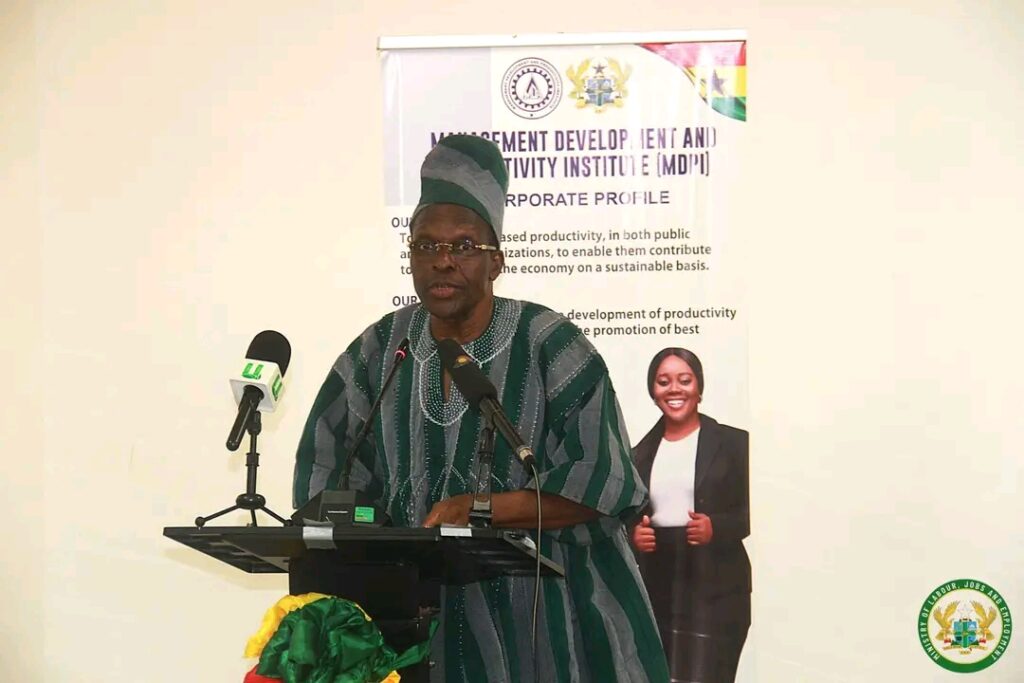
“The transformation we seek must first begin with the transformation of the Ghanaian mindset.”
Rt. Hon. Alban K. S. Bagbin, Speaker of Parliament.
According to him, productivity extends beyond physical effort and must be measured by efficiency, quality service delivery, innovation, and prudent use of resources.
“Productivity is not merely about working harder; it is about working smarter, delivering quality outcomes and maximizing available resources for national progress.”
Rt. Hon. Alban S. K. Bagbin, Speaker of Parliament.
Bagbin Calls for Discipline, Innovation and Accountability
Drawing inspiration from the vision of Ghana’s first President, Kwame Nkrumah, Speaker Bagbin called for the emergence of what he described as a “new African” capable of managing national affairs through competence, integrity, innovation, and excellence. He argued that policy reforms and technological advancements alone cannot transform the country unless citizens themselves embrace discipline and accountability.
The Speaker noted that Ghana continues to face challenges linked to weak institutional culture, inefficiency, poor work ethics, and low productivity levels, which he said undermine national development. His remarks align with recent national conversations around institutional reforms, digital transformation, and ethical governance. Earlier this year, Bagbin also emphasized the need for ethical and responsible innovation during the launch of Ghana’s National Artificial Intelligence Strategy.
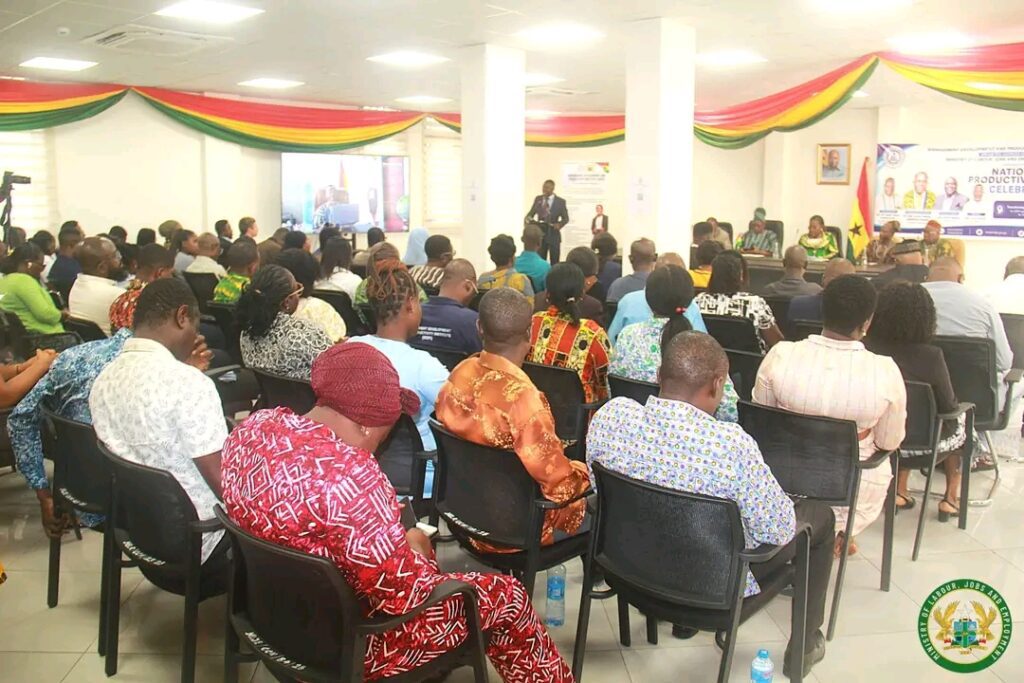
He further highlighted the strategic importance of the Management Development and Productivity Institute (MDPI), describing the institution as a key national asset capable of bridging the gap between human capital development and economic growth. The MDPI, established in 1967, operates under the Ministry of Labour and is mandated to promote productivity improvement strategies and management development across Ghana’s economy.
Government Pushes Productivity Reforms
Delivering the keynote address on behalf of the Chief of Staff, Deputy Chief of Staff Hon. Nana Oye Bampoe Addo underscored the urgent need for a renewed national work ethic to support Ghana’s economic recovery agenda.She charged Ghanaian workers, institutions, and public servants to embrace punctuality, transparency, discipline, and performance-based accountability.
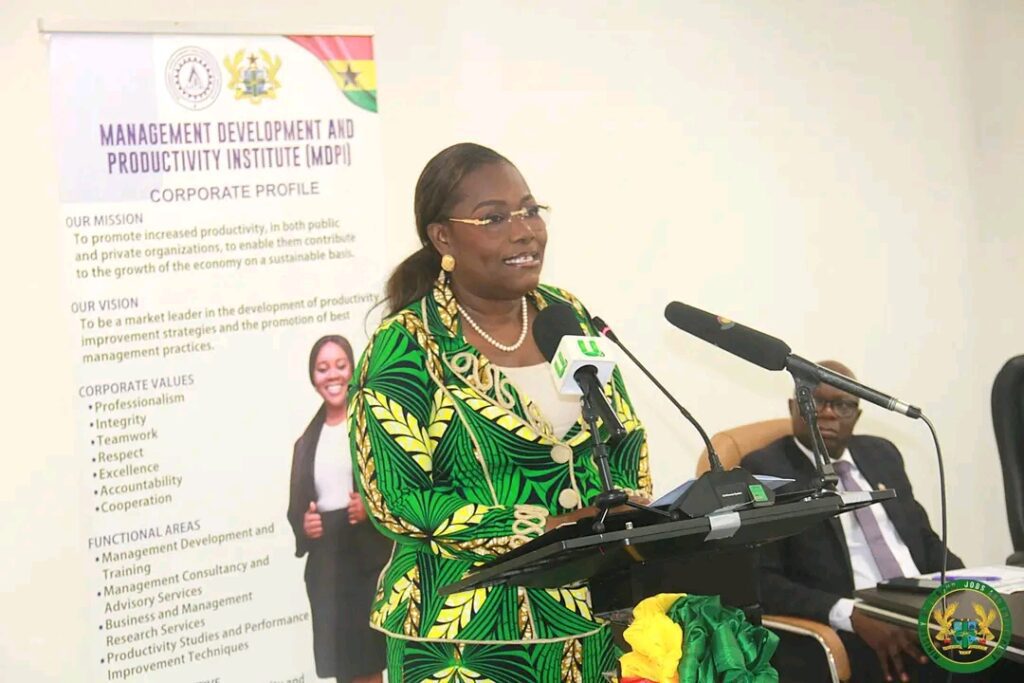
According to her, weak institutional culture and low productivity continue to slow national progress despite various policy interventions. She also emphasized the growing role of innovation and technology in modern governance and workforce development. The Deputy Chief of Staff advocated increased integration of Artificial Intelligence, monitoring and evaluation systems, and continuous professional training into Ghana’s national productivity agenda.
Her comments reflected a growing government emphasis on digital transformation and institutional modernization as tools for improving public service delivery and economic competitiveness. Meanwhile, the Minister for Labour, Jobs and Employment, Abdul-Rashid Hassan Pelpuo, reaffirmed government’s commitment to making productivity a central component of Ghana’s development strategy.
“Productivity is not simply about effort, it is about efficiency, innovation and creating greater value with the resources available to us.”
Hon. Abdul-Rashid Hassan Pelpuo, Minister for Labour, Jobs and Employment.
Dr Pelpuo disclosed that government has initiated a comprehensive review of the legal framework governing the MDPI in a bid to align the institution with modern labour and productivity demands. Recent reports indicate that the MDPI is seeking transformation into a National Productivity Authority with expanded powers and responsibilities.
MDPI Receives Infrastructure and Policy Support
In a major boost to the institute’s infrastructure agenda, Dr Pelpuo announced that the Ministry of Finance has allocated GHS 8 million toward Phase II of the MDPI infrastructure development project.The investment is expected to support the creation of a modern learning and working environment capable of strengthening productivity training and research.
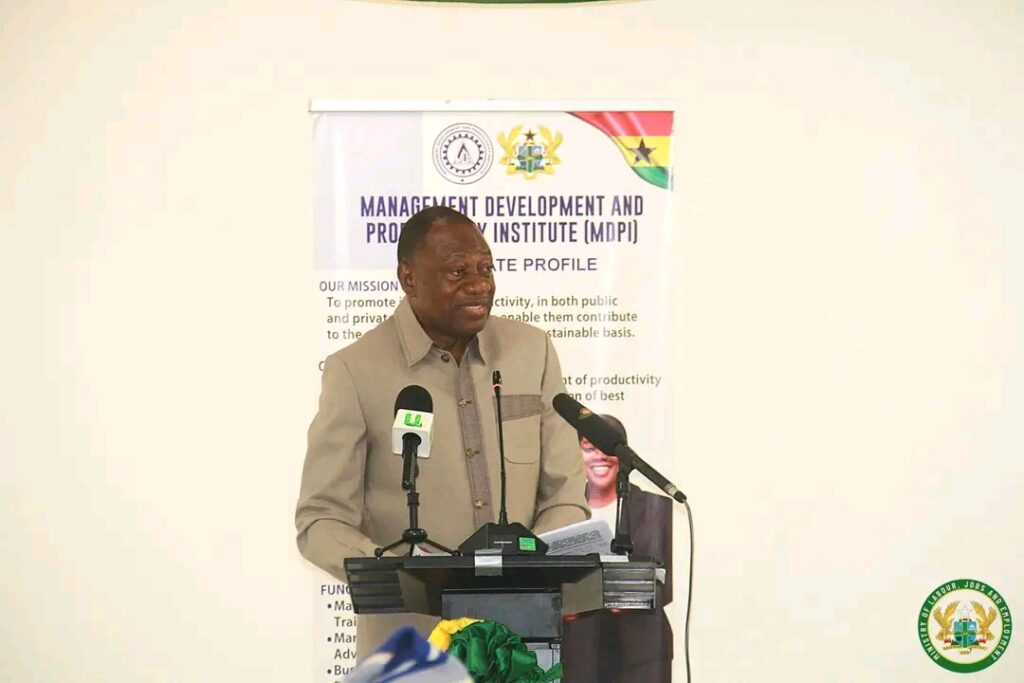
Earlier in his welcome address, the Director-General of MDPI, Prof. Elijah Yendaw, stressed the need for Ghana to develop a comprehensive national productivity framework capable of effectively measuring and tracking productivity performance across all sectors of the economy. Comparing Ghana’s systems with countries such as Botswana, Mauritius, and South Africa, Prof. Yendaw observed that Ghana still lacks an integrated national productivity measurement system to guide policy decisions and resource allocation.
The MDPI has recently intensified engagements with institutions including the National Development Planning Commission (NDPC) and the Fair Wages and Salaries Commission to develop a national productivity framework. According to Prof. Yendaw, the absence of reliable productivity indicators weakens evidence-based decision-making and limits the country’s ability to monitor national performance effectively.
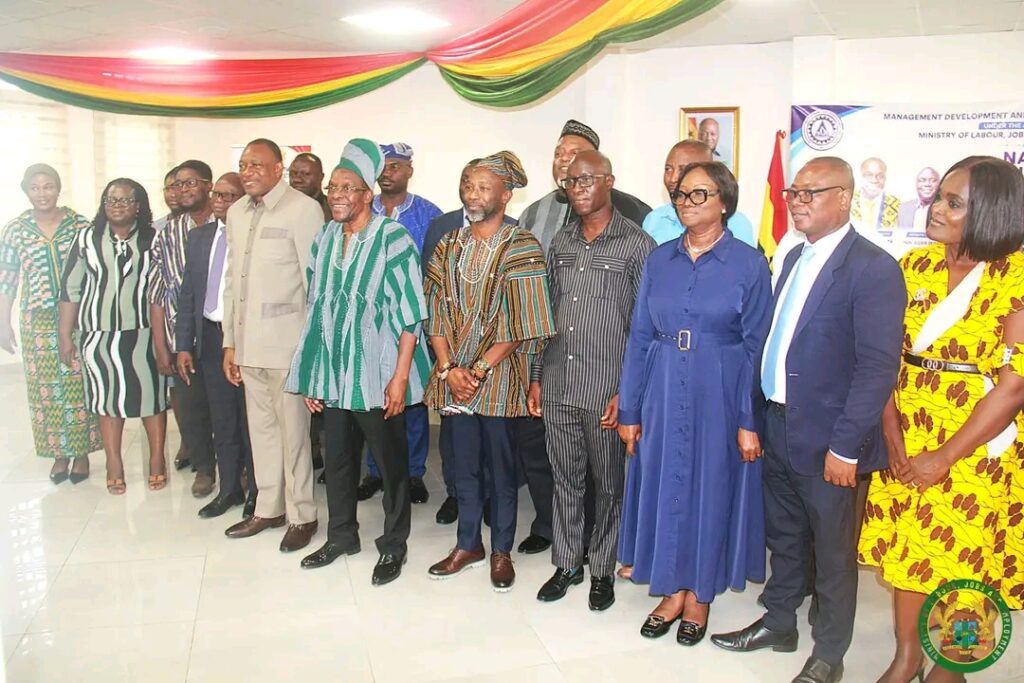
National Productivity Week 2026 will run from May 18 to May 22 and is expected to feature policy dialogues, exhibitions, public education campaigns, and capacity-building programmes aimed at promoting a stronger productivity culture across Ghana.Organisers believe the week-long celebration will help deepen national conversations around efficiency, institutional reforms, workforce discipline, and sustainable economic transformation.
READ MORE: Trump Calls For Incitement Charges Against Hakeem Jeffries