
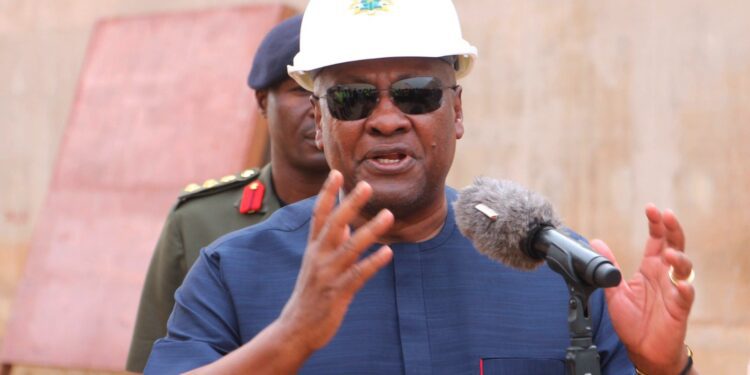
President John Dramani Mahama has announced the start of procurement processes for the construction of three new regional hospitals, marking the first phase of an ambitious national healthcare expansion plan aimed at delivering six regional hospitals across Ghana by 2028.
The announcement was made during the commissioning of a new PET Scan facility at the Swedish Ghana Medical Centre, where President Mahama used the occasion to outline what he described as a strategic investment in healthcare infrastructure designed to improve medical access, strengthen specialist treatment, and reduce long travel times for patients seeking critical care.
Addressing healthcare professionals, government officials, and invited guests, the President said the new hospital projects form part of government’s broader commitment to improving healthcare outcomes in the newly created regions, many of which continue to depend on older regional facilities outside their administrative boundaries.
“Government is investing in improving the quality of health care for our people. We have commenced the procurement processes for the construction of three new regional hospitals in three of the newly created regions to improve health care outcomes for the people who live there.”
President John Dramani Mahama
The announcement represents one of the most significant public healthcare infrastructure commitments made since the creation of Ghana’s six new regions, where residents have consistently demanded improved access to specialist and referral healthcare services.

First Phase Focuses on Newly Created Regions
The President explained that the first three regional hospitals will serve as the opening phase of a larger plan to ensure every newly created region has a fully operational referral facility equipped to handle growing healthcare demands.
Since the administrative restructuring that created the new regions, concerns have persisted over limited medical infrastructure, with many patients forced to travel several hours to access advanced treatment in established regional capitals.
President Mahama said government intends to address that imbalance through phased implementation. “By the end of 2028, we will provide three more regional hospitals for the remaining three new regions,” he announced.
The commitment effectively sets a four-year target for the completion of all six regional hospitals, a move that health sector players say could significantly transform access to healthcare, particularly in underserved areas.
Analysts note that regional hospitals often serve as critical referral points for district facilities, offering surgical care, diagnostic services, emergency interventions, and specialist consultations that lower level institutions may not be able to provide.
Government Expands Cardiac Care Nationwide
Beyond the regional hospital projects, President Mahama also announced major ongoing investments in specialized cardiovascular treatment facilities, an area of healthcare that continues to see rising demand across the country.
According to the President, government has recently procured three new catheterization laboratories, commonly referred to as cath labs, for three of Ghana’s major teaching hospitals.

The facilities are being installed at Korle Bu Teaching Hospital, Komfo Anokye Teaching Hospital, and Tamale Teaching Hospital. “These labs will improve the diagnosis and treatment of cardiovascular conditions in the south, center and northern parts of our country,” the President said.
Cath labs are essential for diagnosing and treating heart-related conditions, including blocked arteries, heart attacks, and other cardiovascular complications. Health experts have long argued that limited access to such facilities has placed immense pressure on a small number of specialized centers.
The addition of these laboratories is expected to improve emergency response times and reduce the burden on existing cardiac units.
Tamale Set for Major Specialist Upgrade
President Mahama also disclosed that government is constructing a dedicated cardiothoracic center at the Tamale Teaching Hospital as part of efforts to decentralize specialist heart care.
He explained that the project is intended to spare patients from northern Ghana the burden of traveling to Accra or Kumasi for complex heart procedures.
The proposed facility is expected to improve access to advanced cardiac surgery, postoperative care, and long-term treatment for patients in northern Ghana and neighboring regions. The move could significantly improve survival outcomes while reducing delays associated with referrals.
More Cardiac Centers Planned for Wa and Cape Coast
In addition to Tamale, President Mahama announced plans to establish new cardiac centers at the Wa Regional Hospital and the Cape Coast Teaching Hospital.
According to him, these facilities will expand specialist cardiovascular care to both Upper West and coastal parts of the country, helping patients receive timely treatment closer to home.
The expansion comes at a time when cardiovascular diseases are becoming an increasingly important public health challenge in Ghana, driven by changing lifestyles, urbanization, and rising cases of hypertension and related conditions.
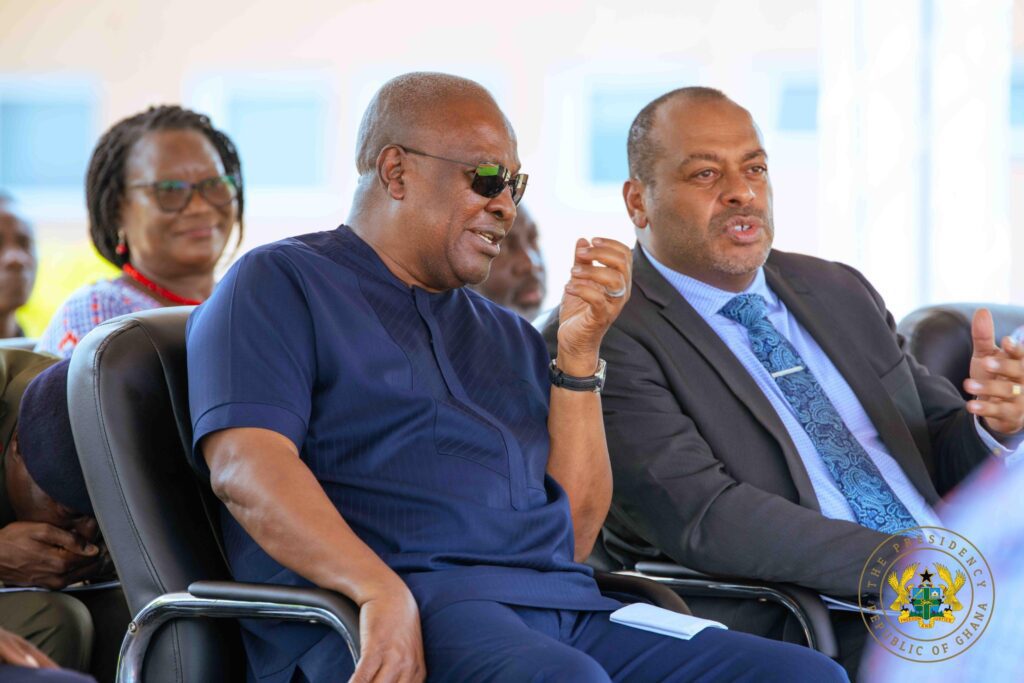
Healthcare analysts believe decentralizing cardiac services could reduce congestion at existing teaching hospitals while improving early diagnosis and treatment outcomes.
A Broader Vision for Health Sector Transformation
The President’s latest announcements underscore what appears to be a broader strategy to modernize Ghana’s healthcare system through infrastructure expansion, medical technology acquisition, and specialist service development.
The commissioning of the PET Scan facility at the Swedish Ghana Medical Centre provided a symbolic backdrop to that vision, highlighting the growing intersection between public policy, private healthcare investment, and advanced medical technology.
With procurement processes now underway for the first three regional hospitals and specialized treatment centers being rolled out across multiple regions, government appears determined to bridge longstanding healthcare inequalities and strengthen Ghana’s capacity to deliver modern, life saving care.
For regions and communities that have waited years for accessible referral services, the President’s pledge signals not just infrastructure development, but the promise of faster treatment, improved survival outcomes, and a healthcare system that is increasingly closer to the people.
READ ALSO: Ghanaian Professionals Have the Technical Expertise to Manage Tarkwa Mine—IEA