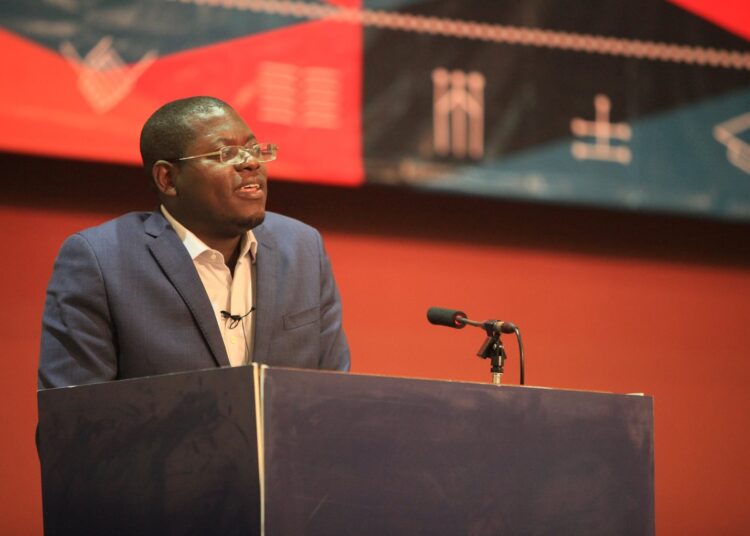
Bright Simons, Policy Analyst and IMANI Vice President, has argued that true collective ownership of Ghana’s mineral wealth depends fundamentally on structural policy design that secures tangible public benefits, rather than the mere local nationality of corporate lease holders.
He clarified that the current domestic push for resource control often focuses myopically on changing the skin color of asset owners while completely ignoring the institutional frameworks required to prevent domestic elites from transferring wealth abroad.
According to the policy analyst, local ownership remains a shallow concept if it replicates the extractive, unaccountable behavior traditionally blamed on foreign multinationals.
“Ownership matters but ‘collective ownership’ is not just about the nationality of a few individuals holding lease rights. It goes far beyond that. Because, for all you know, such individuals can send most of the profits overseas and leave the wreckage behind for us: bank loan defaults, employee impoverishment, lack of R&D, environmental damage, and failure to grow reserves through exploration.”
Bright Simons
While on this critical distinction, Bright Simons added that research demonstrates how a rising tide of economic nationalism across the globe is being misconstrued within the Ghanaian context.
While market-friendly nations like Chile seek to nationalize strategic assets like lithium under structured state frameworks, Ghana’s current approach risks degenerating into favoritism under the guise of indigenization.

This intellectual blindspot is particularly evident in the gold sector, where chattering elites focus entirely on highly visible, booming commodities while ignoring decades of structural failure in other mineral domains.
The systemic collapse of the local diamond sector over the last five decades under Ghanaian management highlights how local ownership, when divorced from robust accountability and capital investment, fails to deliver sustainable national transformation.
The Illusion of Indigenization and Policy Failure
The current political attempt to paint the hurried handover of strategic national mines to a few highly connected individuals as “resource nationalism” is an exercise in standard ‘katanomic’ shallowness.
Critics often forget that domestic actors already control half of the country’s gold production, given that small-scale mining is strictly reserved for Ghanaian citizens.

Therefore, if the nation has historically failed to translate its immense geological wealth into structural economic transformation, the root cause is not an absence of local faces in executive suites, but rather the persistence of poor policy architecture.
A thorough examination of global extraction paradigms reveals that mere nationalization of lease holders cannot cure the structural inefficiencies plaguing resource governance.
When states focus exclusively on the identity of the leaseholder, they inadvertently create an environment ripe for domestic elite capture and capital flight.
Local leaseholders can exploit weak regulatory environments to default on bank loans, underspend on research and development, impoverish local workforces, and neglect crucial greenfield exploration needed to grow national reserves.
Without stringent state oversight, the economic leakages associated with local tycoons mimic or exceed the damages caused by foreign capital, leaving behind a trail of environmental degradation and unfulfilled fiscal promises.
Global Benchmarks and Collective Benefit
A comparative analysis of the world’s most prosperous, mineral-rich jurisdictions demonstrates that domestic prosperity is generated through sophisticated value-capture systems rather than strict ownership bans.
Australia stands as the world’s most mineral-rich country per capita, closely trailed by resource giants like Russia, Canada, Saudi Arabia, and the United States.

An evaluation of major Australian mining infrastructure projects over a two-decade period indicates that approximately 85% to 90% of these ventures are executed by foreign investors.
Similarly, the regulatory architectures governing critical minerals in Europe’s most resource-dense economies, including Germany, Sweden, and Poland, reflect a heavy reliance on international capital and foreign operators.
Despite this dominant external corporate presence, these advanced jurisdictions consistently guarantee that resource extraction yields optimal socio-economic returns for their citizens.
Their institutional success confirms that collective ownership is functionally delivered through rigorous fiscal modeling, aggressive taxation, transparent local content integration, and robust environmental enforcement rather than populist asset seizures.
Extractive Blindspots and Elite Abetment
The focus of the Ghanaian public discourse remains dangerously narrow because elite commentary rarely bothers to look beneath the surface of immediate, visible commodity booms.
This selective amnesia explains why the general public completely overlooks the reality that the country possesses a diverse basket of industrial minerals beyond gold.
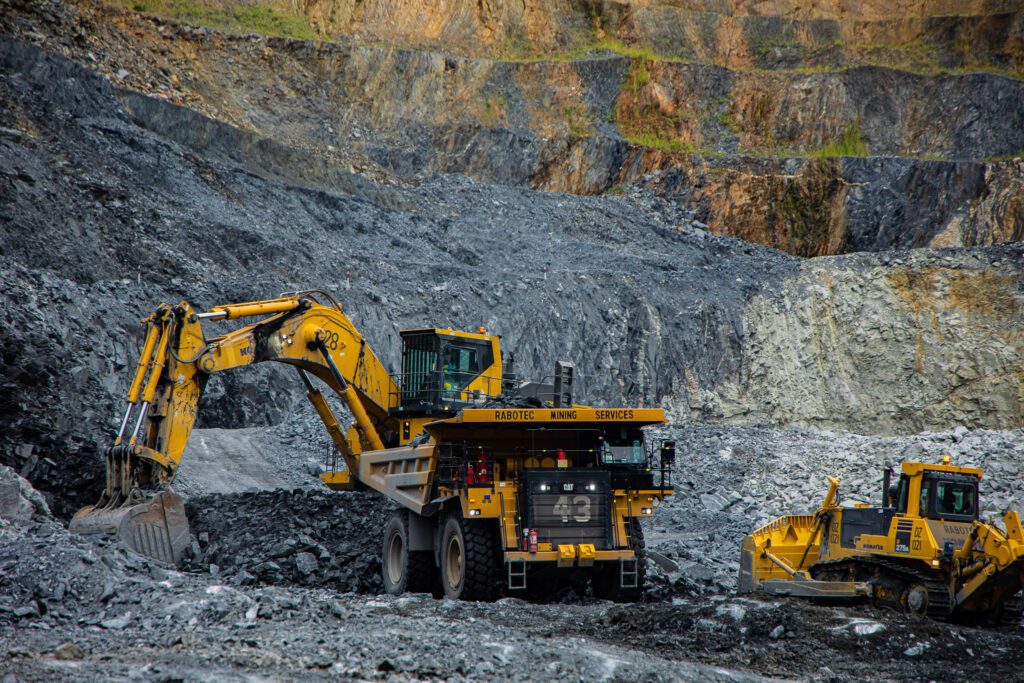
In the specific cases of manganese, lithium, and bauxite, decades of unchecked foreign control and a severe lack of operational accountability have occurred with the enthusiastic abetment of the domestic political elite.
Ghanaians have grown comfortable with foreign domination in vital sectors like banking and telecommunications due to the operational bruises and systemic failures of past state-led interventions.
The historical record of national execution remains highly compromised, as seen in the renewed, politically charged clamor for a national airline after two disastrous corporate liquidations and a subsequent decade-long restructuring process that yielded no tangible results.
READ ALSO: Salah Demands Liverpool Rediscover “Heavy Metal” Identity Ahead of Exit