
The Ministry of Fisheries and Aquaculture Development (MoFAD) has officially launched a three-year project to enforce structural compliance with the World Trade Organization (WTO) Agreement on Fisheries Subsidies and eliminate harmful state funding structures.
Unveiled by Sector Minister Hon. Emelia Arthur alongside the Fisheries Commission in Accra, the initiative utilizes immediate capital disbursements from the WTO Fish Fund and technical implementation backing from the Global Fisheries and Resilience Action (GFRA).
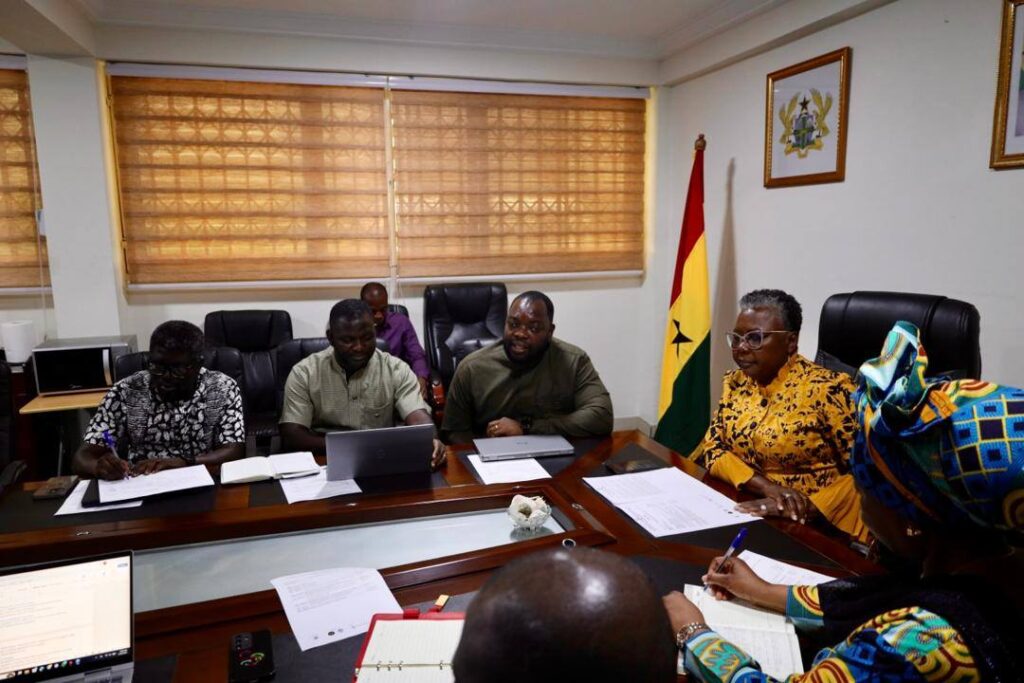
The sovereign intervention mandates the establishment of an 11-member steering committee tasked with auditing public fiscal flows, stabilizing artisanal household incomes, and executing regulatory overhauls to systematically dismantle capacity-enhancing subsidies that feed Illegal, Unreported, and Unregulated (IUU) fishing within Ghana’s exclusive economic zone.
“Speaking at the launch, the Minister for Fisheries and Aquaculture, Hon. Emelia Arthur, underscored the urgent need to build robust compliance systems. She emphasized that the project is critical not only for Ghana’s international obligations, but also for the long-term sustainability of the country’s fisheries sector and coastal economy”
Ministry of Fisheries and Aquaculture Development
The launch of this three-year initiative represents a calculated regulatory step to align Ghana’s maritime governance with international trade law. For decades, global fisheries have been distorted by open-ended state subsidies that artificially lower operational costs, thereby incentivizing commercial and artisanal fleets to expand fishing efforts beyond biologically sustainable thresholds.
Through formally implementing the WTO Agreement on Fisheries Subsidies, MoFAD is introducing a strict compliance regime that shifts state policy away from capacity-enhancing financial injections and toward targeted resource conservation and enforcement.
This structural overhaul is backed by direct international capitalization. The secured funding through the specialized WTO Fish Fund and coordinating with the GFRA are expected to insulate the project from domestic budgetary constraints, ensuring that compliance infrastructure can be deployed rapidly.
MoFAD noted that the multilateral partnership is explicitly tasked with designing transparent tracking frameworks to monitor how public funds enter the fisheries value chain. The ultimate objective is to establish an uncompromised fiscal audit trail that automatically flags and terminates state expenditures running contrary to global maritime sustainability treaties.
“Effective compliance is not just about meeting international obligations. It is about ensuring that our fisheries remain productive, equitable, and sustainable for generations to come,” the Fisheries Minister stated at the launch.
Five-Pillar Framework
To guarantee that the transition toward WTO compliance does not induce structural shocks within the domestic blue economy, MoFAD has anchored the project upon a comprehensive, Five-Pillar National Implementation Framework – specifically engineered to balance strict ecological conservation with the micro-economic realities of Ghana’s coastal dependencies.
According to the Ministry, the first pillar focuses entirely on Subsidies, establishing automated tracking mechanisms to ensure that public funds are completely decoupled from harmful or capacity-enhancing operations.
The second pillar addresses the Biological health of Ghana’s waters, deploying marine scientists to conduct continuous, data-driven assessments of fish stock status to prevent localized overexploitation and map out collapsing marine populations.
The third and fourth pillars focus on the human capital within the maritime ecosystem, specifically targeting Livelihoods and Distributional equity. Recognizing that vulnerable coastal communities rely heavily on artisanal fishing for daily survival, the framework integrates specialized economic safety nets to protect household incomes during the subsidy transition phase.
Also, the distributional track introduces aggressive gender-inclusion mandates, extending direct technical and credit support to women entrepreneurs who dominate the post-harvest processing and marketing sectors.
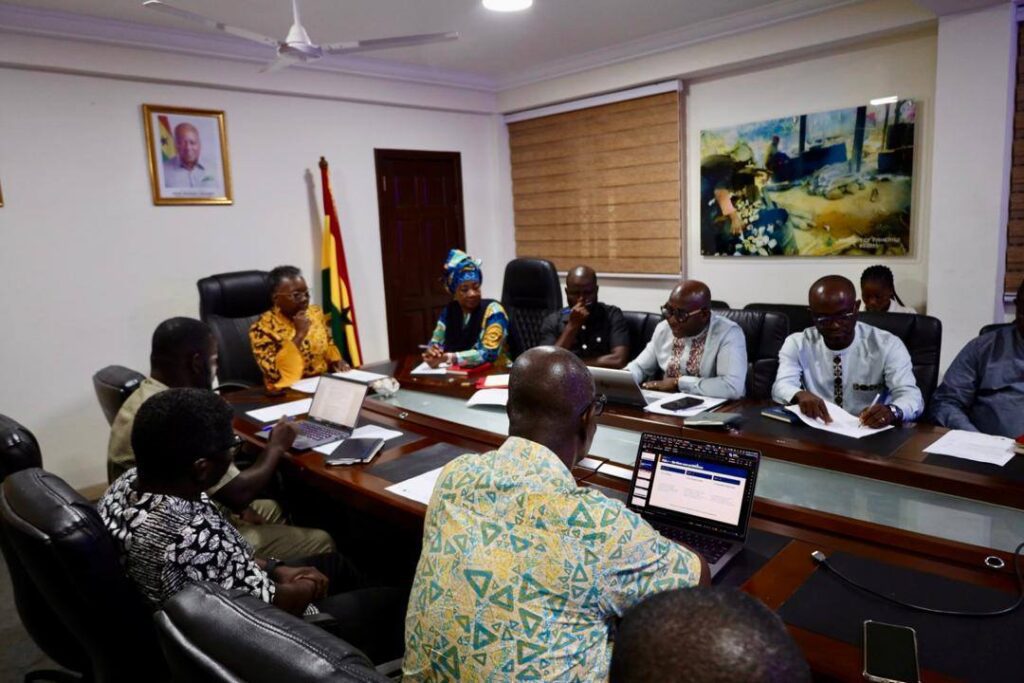
The entire matrix is governed by the fifth pillar – Governance – which enforces institutional transparency, strengthens statutory legal frameworks, and scales up regulatory oversight across all landing beaches and industrial ports.
Execution and Oversight
To prevent the administrative delays that frequently compromise long-term state projects, MoFAD has executed immediate operational rollouts at the port of Accra.
The first tranche of capital from the WTO Fish Fund has already been completely disbursed to state agencies, facilitating the immediate activation of compliance tracking mechanisms, maritime surveillance systems, and community-level data collection networks.
This swift capital deployment ensures that technical teams can begin auditing vessel registries and subsidy allocations without waiting for traditional ministerial budget cycles.
Sovereign oversight of these funds and the broader implementation timeline has been legally delegated to a newly inaugurated 11-member steering committee. The administrative body’s work is to eliminate institutional friction by unifying representatives from academic research institutions, state regulatory commissions, and enforcement agencies.
The committee is bound to a rigorous, non-negotiable compliance schedule, holding mandatory monthly coordination meetings to evaluate field data, managing continuous stakeholder engagements with fishing cooperatives, and conducting binding quarterly performance reviews to guarantee that Ghana remains fully aligned with its international WTO trade commitments.
The geopolitical and macroeconomic stakes of this project extend far beyond mere regulatory box-checking. Illegal, Unreported, and Unregulated (IUU) fishing operations have historically exploited weak subsidy frameworks across the West African sub-region, severely depleting fish stocks and depriving domestic economies of vital revenue.
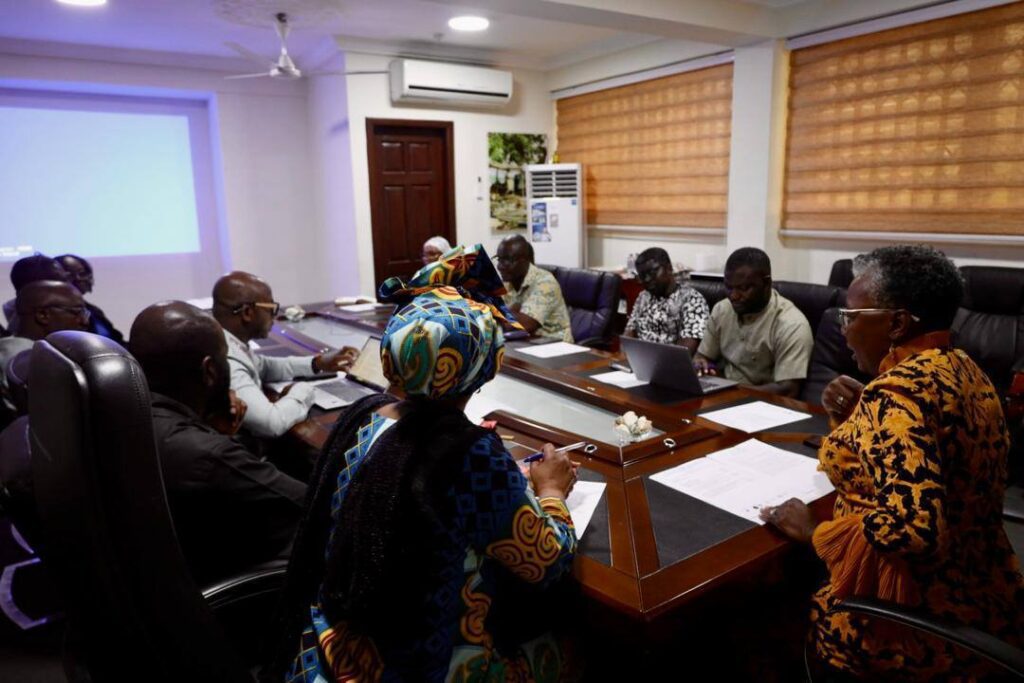
The Ministry highlighted how, by cutting off the financial lifelines that sustain capacity-enhancing fishing practices, Ghana is effectively establishing a hostile operational environment for IUU vessels within its territorial waters.
For MoFAD, this bold project transforms fisheries management from an unmonitored extractive industry into a highly disciplined, sustainable economic asset class – especially as integrating multilateral trade law directly with domestic maritime enforcement, successfully building a resilient framework capable of protecting sovereign marine resources for generations.
READ ALSO: E&P Delivers Second Dose of Damang Gold Mine Proceeds to GoldBod