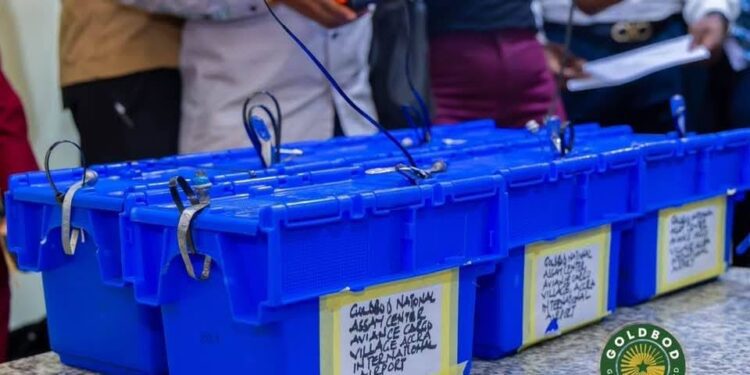
Damang Gold Mine, under the operational management of Engineers and Planners (E&P), has transferred its second successive batch of 100 percent domestic gold production to the Ghana Gold Board (GoldBod), cementing its strategic alignment with the state’s aggressive resource nationalist agenda.
Led by prominent Ghanaian businessman Ibrahim Mahama, the mining firm successfully offloaded its entire operational yield to the government’s centralized mineral buying institution rather than routing the precious metal to conventional international refineries.
This development marks a pivotal advancement in the state-directed macroeconomic framework designed to retain tangible mineral wealth within the country and recalibrate the balance of equity between domestic corporate players and national economic institutions.
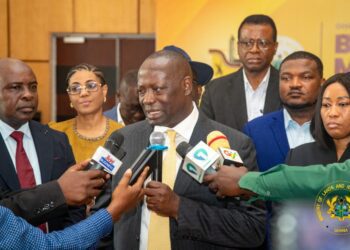
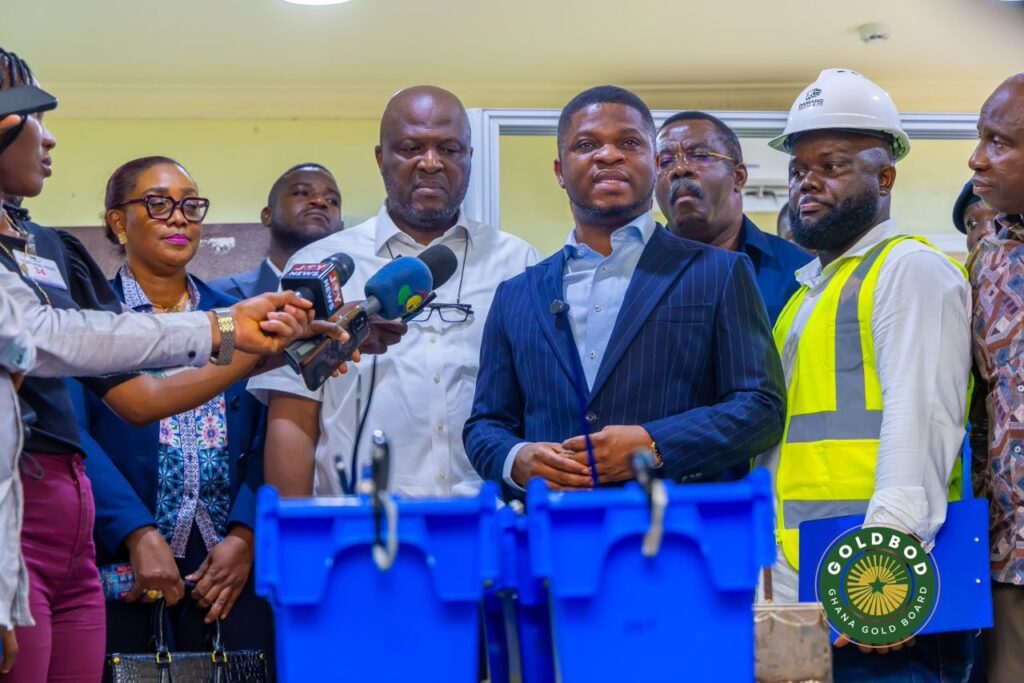
“Today marks a very significant and refreshing moment for us at Ghana GoldBod. This is the second time Damang Gold Mine is delivering 100 percent of its gold production to the Ghana GoldBod, and we highly commend the management for supporting the national policy.”
Technical Director of GoldBod, Michael Arko

The technical mechanics of this specific transaction indicate a significant scale-up in E&P’s productive capacity and logistical execution, with the latest consignment totaling exactly 121 kilograms of gold, which is structurally equivalent to approximately 3,400 troy ounces.
This transaction handily surpasses the mining entity’s premier foundational delivery, which saw 103 kilograms of gold successfully processed and absorbed into GoldBod’s secure pipeline during the initial pilot agreement.
By exceeding its previous benchmark, the wholly Ghanaian-owned operation has validated its capacity to sustain maximum supply lines, effectively outperforming the government’s baseline national policy mandate which only requires large-scale concessions to formally surrender between 20 and 30 percent of their aggregate mineral outputs to the state.
Corporate Patriotism Over Private Profits
Technical Director of GoldBod, Michael Arko, noted that the consistent operational compliance demonstrated by E&P serves as a definitive blueprint for the structural transformation of the local extractive sector.
Arko explicitly challenged competing multi-national large-scale mining corporations operating across the Western, Ashanti, and Eastern mineral belts to look past short-term offshore capital allocations and actively emulate the domestic-retention model pioneered at Damang.
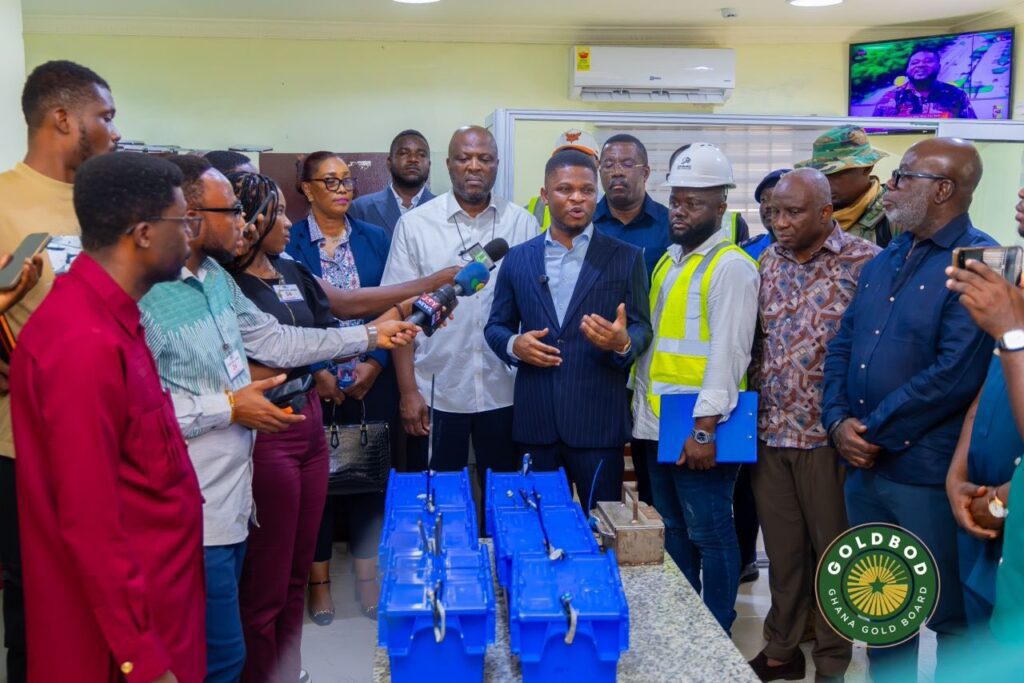
He observed that if the wider collective of international conglomerates chose to replicate this systemic template, the macroeconomic benefits cascading across the domestic marketplace would trigger a sustainable stabilization of the broader Ghanaian fiscal landscape.
Echoing these regulatory sentiments, the legal counsel for Damang Gold Mine, Bobby Banson, dismissed lingering market speculation which had previously characterized the mine’s introductory gold delivery as an isolated, short-lived public relations exercise.
Mr. Banson pointed out that the prompt execution of this second substantial transaction provides unassailable proof of a long-term, structurally sound pledge by indigenous capital to anchor the sovereign welfare of the state.
The legal representative firmly asserted that a collective industry-wide reorientation wherein corporate entities systematically place the long-term economic sovereignty of the Republic of Ghana ahead of immediate external profit maximization is the only viable mechanism capable of building an insulated, self-reliant economy where mineral windfalls directly translate into universal public utility.
Sovereign Protection Plan for the Cedi
Beyond the immediate corporate-state synergy, the choice made by E&P to extend a contractual right of first refusal to GoldBod introduces a critical macroeconomic buffer for the Bank of Ghana’s balance of payments.
Under traditional concessions, foreign mining firms immediately export unrefined doré bars to external hubs like Switzerland or South Africa, keeping the liquidity from those sales in offshore foreign currency accounts and leaving Ghana with nothing but minor royalty percentages and corporate tax receipts.
By routing 100 percent of the physical bullion through GoldBod, the country achieves immediate localized value retention, guaranteeing that the primary wealth generated by Ghanaian soil remains inside the national banking architecture.
This structured accumulation model alters the state’s monetary defense systems, especially considering that GoldBod operates in close tandem with central banking frameworks to back the national currency.
Historically, when global commodity shocks hit or external debt obligations mature, the local currency experiences severe depreciation due to a lack of immediate hard assets to back international transactions.
Retaining 100 percent of Damang’s production gives the state direct ownership of highly liquid, globally recognized collateral that acts as a physical bulwark for the Cedi, suppressing inflation and reducing reliance on volatile external financial markets.
Fortifying National Gold Reserves
The logistical success of E&P’s second supply run provides a steady stream of domestic bullion to support the Ghana Accelerated National Reserve Accumulation Policy (GANARAP).
By turning raw mineral outputs into verified national property before they cross international borders, the government can aggressively scale up its Gross International Reserves (GIR).
This structural growth in physical gold holdings provides a major upgrade to the country’s sovereign credit rating, signaling to international lenders, bondholders, and development partners that the state possesses the asset-backed depth necessary to cover its import demands and stabilize its fiscal trajectory.
Ultimately, the institutionalization of this total supply mechanism establishes a safe, legal domestic circuit that blocks the illicit outflow and smuggling of mineral wealth, which has frequently drained resource-rich African economies.
By matching E&P’s operational capacity with GoldBod’s financial ability to clear transactions, the country successfully moves away from the old, unhelpful colonial-era mining models.
This shift replaces the classic structure of pure raw material extraction with a modern system of strategic asset accumulation, ensuring that the country’s finite mineral wealth stays home to anchor long-term economic growth.
READ ALSO: BoG Opens High Stakes MPC Meeting Amid Mounting Economic Threats