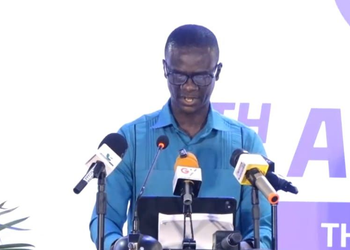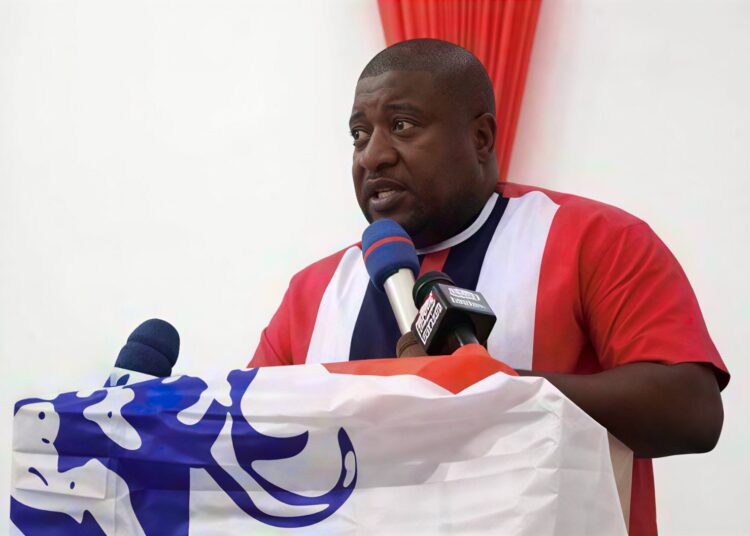
The National Organiser, Henry Nana Boakye has explained the party’s engagement with the diplomatic corps over recent legal and free speech related developments involving some members. He said the move is an effort to draw international attention to the emerging concerns about judicial conduct and democratic accountability in the country.
He stated that discussions with diplomatic representatives are aimed at ensuring that international partners clearly understand the party’s position on governance and rule of law issues. According to Boakye, the engagement also seeks to strengthen transparency in judicial processes and broaden stakeholder involvement in safeguarding democratic principles.

From his perspective, the diplomatic outreach is part of a wider democratic response to growing public concern about the handling of politically sensitive court matters. The politician explained that engaging international partners remains a legitimate avenue within democratic practice for raising governance concerns.
“They are part of it, and beyond that, it is a series of activities we are going to embark on. Not only the international community or the diplomatic corps, but we are also going to engage our religious leaders. In fact, we even have an appointment with the Ghana Journalists Association because they are major stakeholders in this particular matter. Freedom of speech is one of the things they seek to protect.”
Henry Nana Boakye
He also spoke about recent court proceedings involving Abronye DC, with questions raised about the legal basis for certain bail conditions imposed by the court. Boakye argued that aspects of the ruling appeared to assume future wrongdoing, which in his view contradicted the principle of presumption of innocence.
“The judge did not rely on any law. How can you say that somebody who is presumed, or an accused who is presumed innocent until proven guilty? How do you pronounce that person guilty even when the person has pleaded not guilty?”
Henry Nana Boakye

Building on that concern, Boakye suggested that the reasoning behind the ruling demonstrated a predetermined conclusion rather than strict reliance on established legal principles. He maintained that bail conditions should not be framed in a manner that assumes an accused person will reoffend before trial concludes.
Further comparisons were made between judicial reasoning and police handling of the same matter during arrest and initial processing. The politician explained that the suspect was invited, granted bail within hours, and not subjected to extended detention under the 48 hour provision, which in his view weakened justification for stricter bail restrictions.
Additionally, Boakye noted that the police did not exercise prolonged detention powers, a point he said raised questions about the foundation of subsequent judicial decisions. According to him, such inconsistencies required closer public scrutiny within the justice system.
He further expressed concern over delays in the release of court records, describing the situation as unusual for a digital court system. He explained that Court Nine operates in real time, where proceedings are typed and displayed instantly for prosecutors, defence lawyers, and the judge, making later delays in access to records questionable.
NPP Flags Concerns Over Free Expression And Governance Practices
The NPP National Organiser, Henry Nana Boakye said recent developments pointed to a pattern of enforcement practices that could influence democratic expression and public participation.
From Boakye’s view, rising tension between state institutions and sections of the public has made sustained engagement with stakeholders necessary. The politician stressed that protecting civil liberties and strengthening democratic governance require continuous dialogue across key national actors.
He referenced comments attributed to the President regarding the use of technology to monitor social media activity. Such remarks, from his perspective, have contributed to public anxiety about surveillance and the boundaries of online expression.

Boakye also raised concerns about how provisions under the Criminal Offences framework are being interpreted and enforced. He argued that certain applications of the law are affecting public commentary and freedom of expression.
Moreover, attention was drawn to past legal reforms, including the repeal of criminal libel laws, with the politician cautioning that those gains must not be undermined through indirect enforcement practices.
He emphasised the importance of sustained engagement between politicians, civil society, and other democratic stakeholders. From his perspective, such interaction is necessary to reinforce constitutional freedoms, improve institutional credibility, and strengthen public confidence in governance systems.
READ ALSO: CIMAF’s Industrial Milestone Highlights Ghana’s Manufacturing Strength