Attorney General and Minister for Justice Dominic Ayine has stated that the Mahama administration remains committed to protecting freedom of expression, while also enforcing constitutional limits designed to safeguard public order and national stability.
His remarks come amid accusations from the opposition New Patriotic Party and the Minority in Parliament that the government is suppressing free speech following recent arrests of some opposition figures, including the Bono East Regional Chairman known as Abronye DC.
Dr Ayine dismissed suggestions that the state is restricting democratic freedoms, arguing that such claims are exaggerated and do not reflect the constitutional framework governing free expression in Ghana.
Constitutional Framework for Free Expression
The Attorney General explained that Ghana’s 1992 Constitution guarantees fundamental human rights, including freedom of speech and the right to demonstrate under Article 21, but also clearly outlines conditions under which these rights may be limited.



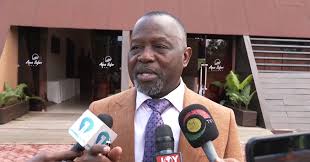
He noted that these limitations are necessary in cases where speech threatens public order, public morality, or national security. According to him, the Constitution does not grant unrestricted freedom of expression in all circumstances.
“There are limits. You can limit free speech if, for instance, it is something that can undermine public order or public morals, or for law enforcement reasons.”
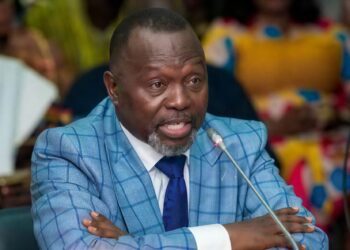
Attorney General and Minister for Justice, Dr. Dominic Akuritinga Ayine
Dr Ayine stressed that the state has a responsibility to intervene where speech risks inciting hatred or violence, arguing that failure to act in such situations could have severe consequences for national peace.
Warning Against Incitement and Historical Lessons
To illustrate his point, the Attorney General referenced historical examples of how unchecked inflammatory speech has contributed to violence in other countries, including the Rwandan genocide. He explained that the misuse of media platforms played a significant role in escalating tensions that led to mass violence.
“So if someone is inciting hatred in our society, we do not expect that the minority will say that we should sit down idle as a government and allow that person to go on because those are some of the things that led to wars in countries such as Rwanda”.
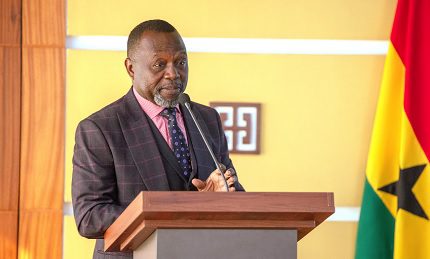
Attorney General and Minister for Justice, Dr. Dominic Akuritinga Ayine
He added that while Ghana is not experiencing such extreme conditions, the lesson from Rwanda underscores the importance of responsible communication and legal enforcement where necessary.
Mahama Government Described as Pro Free Speech
Dr Ayine also defended the administration’s broader democratic credentials, insisting that President Mahama is a strong supporter of free expression. He argued that the President’s background in communications gives him a deep appreciation for the role of free speech in democratic governance.
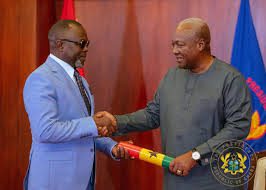
According to him, this understanding informs the government’s approach to balancing rights with responsibility. “I will say that the President of the Republic, His Excellency John Dramani Mahama, is one of the strongest supporters of free speech,” he stated.
The Attorney General further emphasized that, in his capacity as the country’s chief legal officer, he would not support any attempt to undermine citizens’ rights to express themselves.
While reaffirming the government’s commitment to constitutional freedoms, Dr Ayine declined to comment in detail on specific matters currently before the courts.
He explained that it would be inappropriate to discuss ongoing legal proceedings involving some opposition figures. However, he maintained that respect for free speech does not prevent the state from acting where individuals are alleged to have engaged in conduct that could threaten public peace or security.
He added that the government cannot remain passive when actions or statements are perceived to undermine public order.
Continued Debate on Democratic Space
The issue of free speech and political tolerance has become a growing subject of national debate, with opposition figures alleging that recent arrests signal a shrinking democratic space.
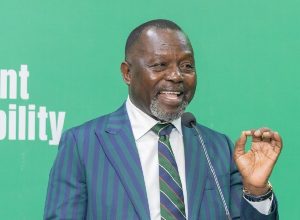
Government officials, however, maintain that law enforcement actions are based on legal considerations and not political motives. Dr Ayine’s remarks are expected to further fuel discussions on how to balance constitutional freedoms with the need to maintain order and prevent incitement.
Despite the differing views, he reiterated that the government’s position remains firmly rooted in the Constitution. Dr Ayine concluded by reaffirming that the Mahama administration is committed to upholding both freedom of expression and the rule of law.
He stressed that Ghana’s democratic stability depends on maintaining a careful balance between protecting individual rights and ensuring public safety. “I believe that this government would uphold the freedom of every Ghanaian to freely express themselves within the constitutional limits,” he said.
READ ALSO: Xi, Putin Bolster China-Russia Ties