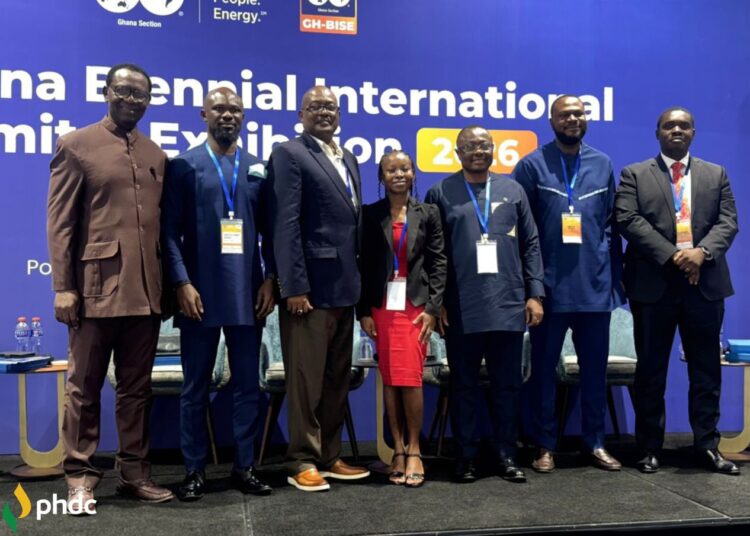
Deputy Chief Executive Officer in charge of Operations and Technical at the Petroleum Hub Development Corporation (PHDC), Onasis Kobby Rosely, has proposed that African governments must explore innovative financing mechanisms specifically the deployment of domestic pension assets to aggressively fund and accelerate the development of critical energy infrastructure across the continent.
Representing the Chief Executive Officer of the Corporation, Dr. Toni Aubynn, at the prestigious 2026 Ghana Biennial International Summit and Exhibition (GH-BISE) in Accra, Mr. Rosely highlighted that bridging the continent’s energy access gap demands a radical shift away from over-reliance on external funding.
Speaking during a high-level panel discussion curated around the central theme, “Unlocking Investment in Africa’s Energy Sector: Powering Growth, Innovation, and Inclusion,” he explained that local capital preservation is essential to driving sustainable industrialization.
“Onasis Kobby maintained that Africa’s development can largely be engineered by Africans themselves. He also proposed innovative funding mechanisms, such as channeling pension funds into the development of energy infrastructure.”
Petroleum Hub Development Corporation (PHDC),
Mr. Rosely insisted that African nations possess the underlying economic architecture necessary to spearhead their own transformation, provided they look inward to mobilize capital.
He challenged local policymakers and institutional asset managers to actively look into legal and regulatory adjustments that would allow long-term pension funds to be safely channeled into capital-intensive energy projects.
By utilizing these accumulated domestic savings, West African nations can build sovereign energy independence and insulate themselves from volatile foreign macroeconomic shocks.
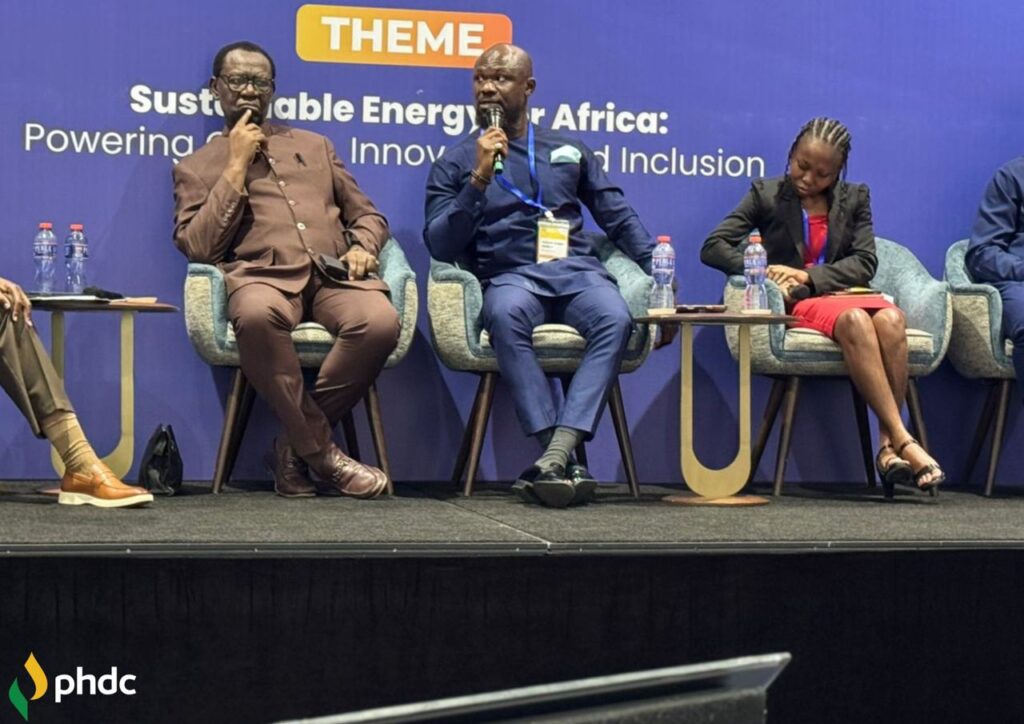
To convince the global investment community to back these sub-regional initiatives, the PHDC operational chief emphasized that Ghana has already established a highly competitive, de-risked business environment designed to protect external stakeholder interests.
Through transparent legal guarantees, fiscal incentives, and institutional structures, the nation ensures robust returns on investment, meaning that “investors should have no hesitation in investing in the country.”
De-Risking the Energy Landscape to Guarantee Investor Yields
Ghana’s operational policy framework has been meticulously optimized to eliminate traditional administrative bottlenecks and market entry barriers that historically discouraged large-scale energy capital inflow.
The establishment of specialized statutory bodies like the PHDC provides international financiers with a single-window institutional clearinghouse, minimizing bureaucratic delays and securing long-term asset protections.
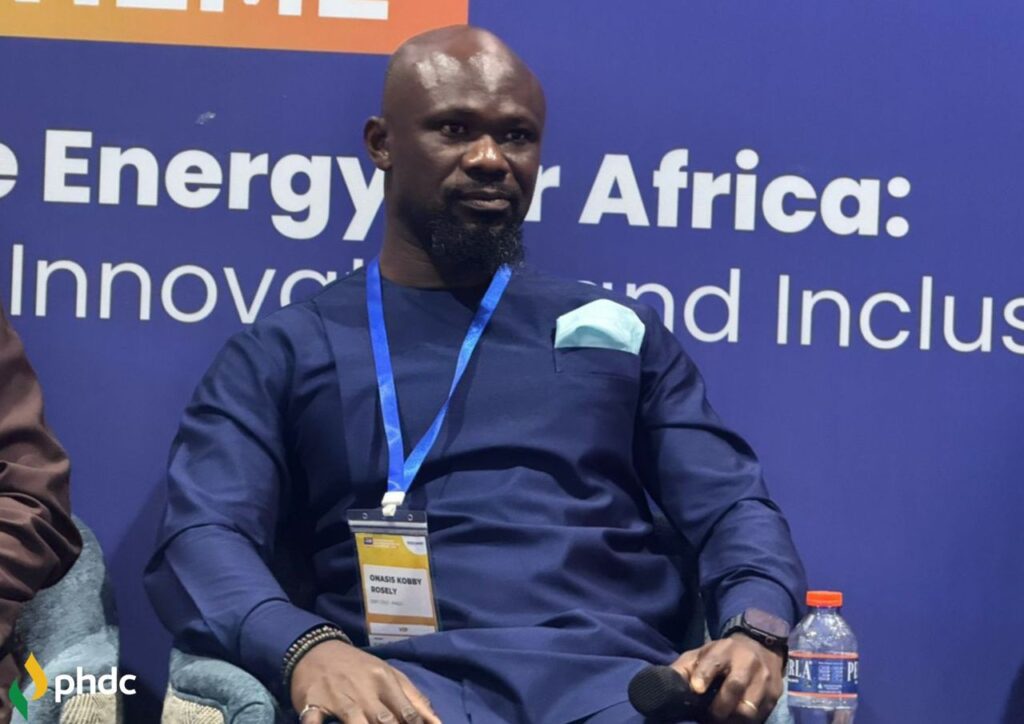
“We have created a conducive environment to reduce risks and guarantee returns for investors,” Mr. Rosely noted during the ministerial panel, assuring stakeholders that the legislative foundations governing public-private partnerships in the energy sector are legally airtight.
Furthermore, the country’s strategic positioning within the West African Sub-Region serves as a major commercial springboard for downstream and upstream distribution.
By mitigating currency risks through well-structured power purchase agreements and providing predictable fiscal regimes, Ghana offers an island of political and economic stability.
This deliberate de-risking strategy directly guarantees predictable yield margins, creating a mutual alignment of interest where both state infrastructure objectives and private equity profitability goals are satisfied simultaneously.
Mobilizing Long-Term Domestic Capital for Intergenerational Projects
Integrating pension assets into the broader energy financing matrix addresses one of the most persistent bottlenecks in African infrastructure development: the mismatch between short-term commercial bank loans and long-term asset lifecycles.
Energy systems, including gas processing plants, oil refineries, and regional transmission networks, require patient capital with extended repayment timelines that perfectly match the liability profiles of retirement funds.

By unlocking this domestic financial reservoir, Ghana can systematically reduce its national debt burden and escape the restrictive conditionalities often associated with Eurobonds or foreign bilateral loans.
This localized investment strategy keeps wealth within the domestic economy, generating a compounding economic multiplier effect.
As workers’ retirement savings are put to work building local deepwater ports, pipeline networks, and petrochemical hubs, the investments generate steady, inflation-hedged returns that expand the pension pool itself.
This closed-loop funding ecosystem ensures that the capital required to build public infrastructure serves a dual purpose: expanding industrial capacity while safeguarding the retirement security of ordinary citizens.
Accelerating the Jomoro Petroleum Hub and Regional Industrialization
The practical application of this pension fund model could significantly catalyze the physical realization of Ghana’s flagship US$60 billion Petroleum Hub Project in the Jomoro District of the Western Region.

This massive national project which captures three major oil refineries, five advanced petrochemical plants, and a ten-million-cubic-meter storage facility stands to benefit immensely from stable, locally sourced capital pools.
With a secure influx of domestic institutional funding, the PHDC can rapidly accelerate its phase-one civil works, port expansions, and layout designs without waiting for protracted international debt negotiations.
READ ALSO: U.S Raises Likelihood Of Military Intervention In Cuba