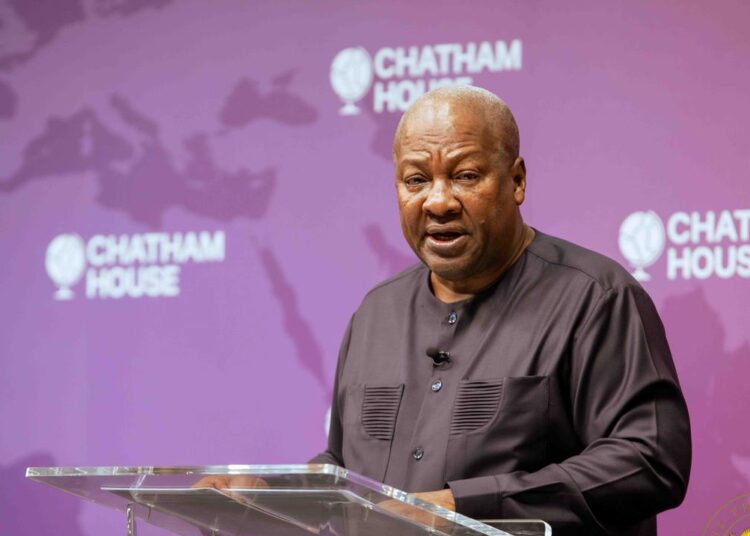
President John Dramani Mahama has renewed calls for comprehensive reform of global governance institutions, arguing that the current international system no longer reflects modern geopolitical realities and continues to marginalize large portions of the world’s population.
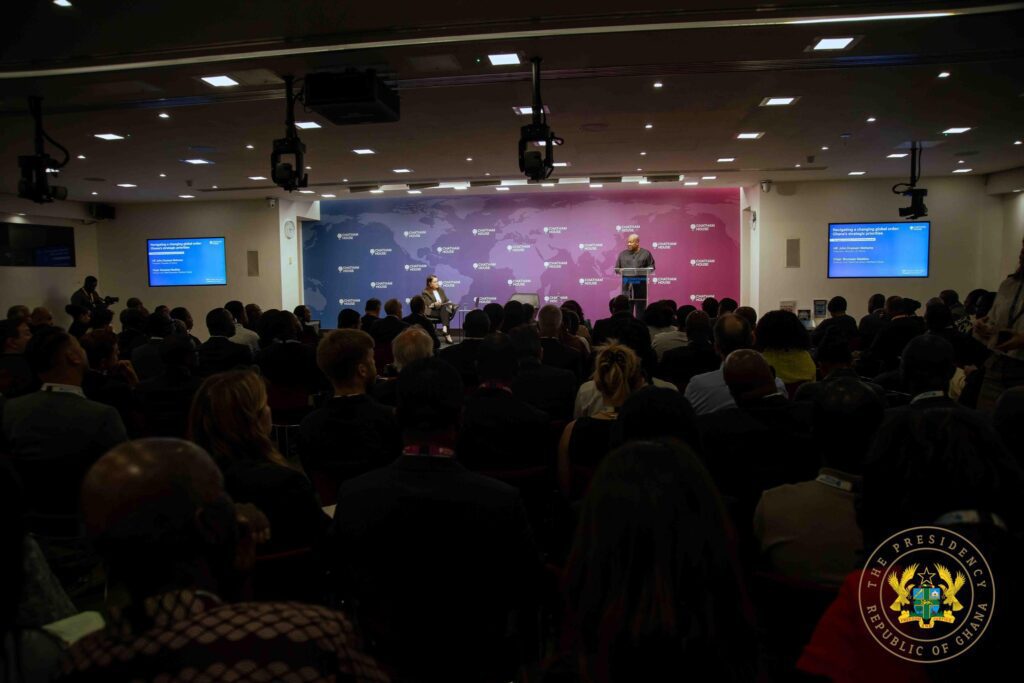
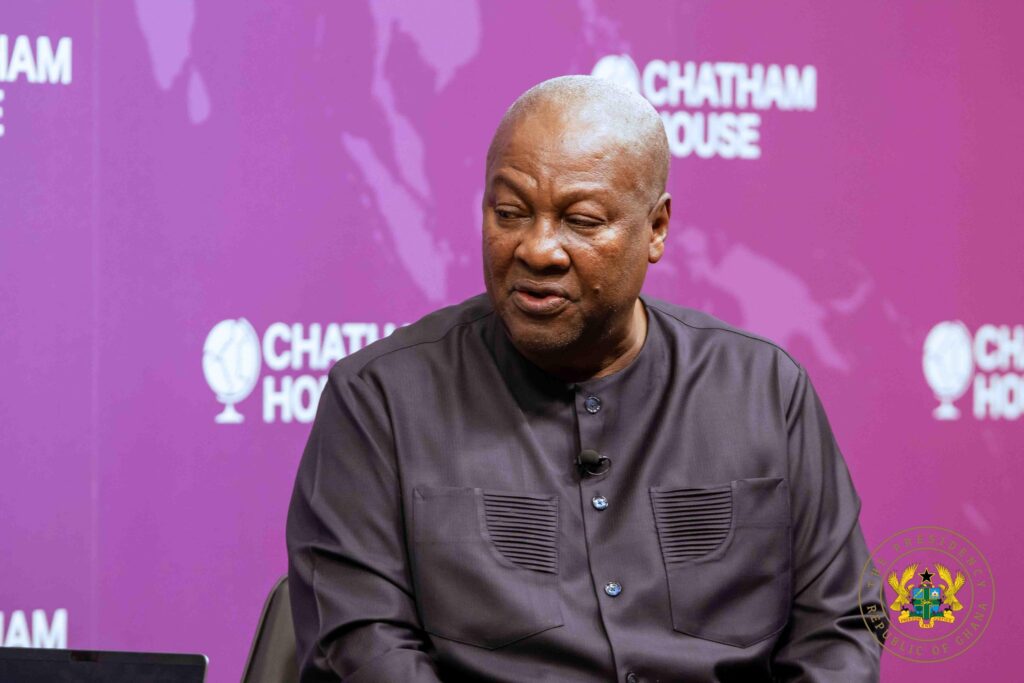
Speaking at Chatham House in London on the theme “Navigating a Changing Global Order: Ghana’s Strategic Priorities,” the President said international institutions must evolve beyond structures established after the Second World War if they are to maintain legitimacy and effectiveness.
According to him, the existing framework of global governance continues to reflect the balance of power that existed in 1945 rather than the realities of the twenty first century, creating significant gaps in representation and participation.
He argued that meaningful reforms are necessary to ensure that all regions of the world have a fair voice in international decision making and that multilateral institutions remain relevant in an increasingly interconnected global environment.
Africa’s Exclusion a Historical Injustice
A central focus of the President’s address was Africa’s continued absence from permanent representation on the United Nations Security Council.
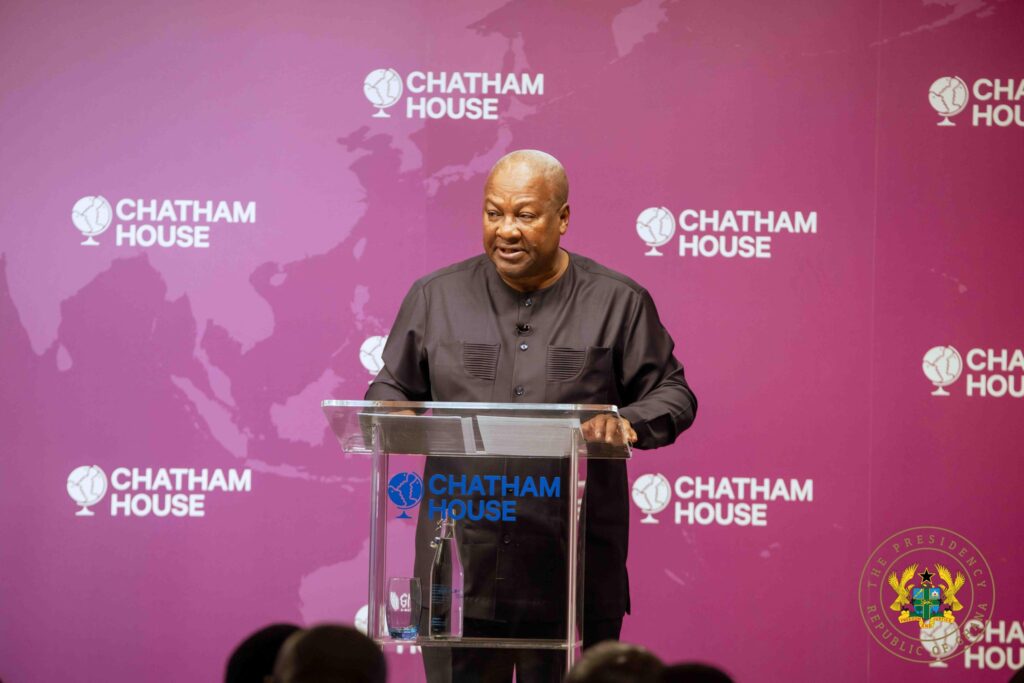
President Mahama noted that Africa comprises 54 member states of the United Nations and is expected to account for nearly a quarter of the world’s population by 2050. Despite this demographic and political significance, the continent remains excluded from permanent membership on the Security Council.
He described the situation as more than an administrative issue, arguing that it represents a longstanding inequity within the international system.
“The international system cannot sustainably preserve its legitimacy while significant portions of humanity remain structurally underrepresented in global decision making”.
President John Dramani Mahama
The President added that Africa’s exclusion from permanent representation is “not merely a procedural anomaly, it’s a historical injustice and a structural imbalance that undermines the credibility of the multilateral system itself.”
He said Ghana remains committed to advocating reforms that would provide equitable representation for Africa within the Security Council and strengthen the legitimacy of the United Nations.
Ghana Supports Comprehensive UN Reform
President Mahama reiterated Ghana’s longstanding support for reforms aimed at making the United Nations more representative and responsive to contemporary global challenges.
He argued that as geopolitical dynamics continue to shift, international institutions must adapt to ensure broader participation from regions that have historically been underrepresented in global decision making.
According to him, reforming the United Nations is essential not only for fairness but also for the effectiveness of the multilateral system in addressing complex global issues.

He maintained that a more inclusive Security Council would improve international cooperation, strengthen confidence in global institutions, and better reflect the realities of today’s world.
The President stressed that equitable representation for Africa remains a critical component of any meaningful reform agenda.
Concerns Over Global Debt Challenges
Beyond governance reform, President Mahama highlighted the challenges posed by the current international financial architecture, particularly for developing economies across the Global South.
He argued that debt vulnerabilities facing many developing countries should not be viewed solely as fiscal problems but as broader development constraints that hinder economic transformation and social progress.
According to him, high debt burdens limit governments’ ability to invest in essential sectors such as healthcare, education, infrastructure, climate adaptation, and industrial development.
“The debt vulnerabilities facing many countries in the global south are not merely fiscal challenges. They constitute development constraints,” he said. The President called for reforms that would make the international debt system more responsive to the realities confronting developing nations.
He advocated a framework that is fairer, more flexible, and better aligned with development objectives, enabling countries to pursue sustainable growth without being constrained by excessive debt pressures.
Call for Fairer Global Tax Systems
President Mahama also used the platform to advocate reforms to international taxation frameworks, arguing that developing countries should receive a more equitable share of value generated from economic activity within their jurisdictions.
He noted that existing arrangements often fail to ensure that developing economies fully benefit from the wealth created through investment and commercial activity.
According to him, reforming global tax rules is necessary to support inclusive economic development and reduce structural inequalities between advanced and developing economies.
The President stressed that international prosperity cannot be sustained if economic benefits continue to be distributed unevenly across regions.
“Equally important is the need to reform global taxation frameworks to ensure that developing economies derive equitable value from economic activity generated within their jurisdictions”.
President John Dramani Mahama
Building a More Balanced International Order
President Mahama concluded that reforms to global governance, debt management systems, and international taxation structures are essential to building a more balanced and sustainable international order.
He argued that institutions created in a different era must adapt to current realities if they are to retain credibility and effectively address emerging global challenges.
For Ghana, he said, the pursuit of a fairer multilateral system remains a key foreign policy priority, particularly as developing countries seek greater representation and influence in international affairs.
The President maintained that a stable global order depends on inclusiveness, fairness, and shared prosperity, warning that persistent inequalities in representation and economic opportunity could undermine confidence in the international system.
READ ALSO: US Proposes 25% Tariff on Brazil Over Trade Practices