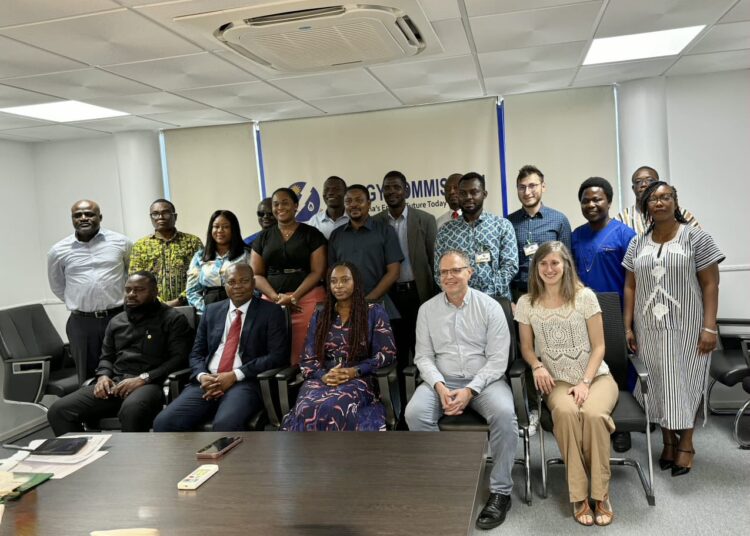
Energy Commission of Ghana, in partnership with the German Development Cooperation (GIZ), has officially introduced the Public Facility Sustainable Energy Action Plan (PF-SEAP) Programme.
This strategic national intervention aims to dramatically accelerate the adoption of renewable energy technologies, improve baseline energy utilization, and lower greenhouse gas emissions within the country’s public sector.
Positioned as a direct response to rising electricity bills across Ministries, Departments, and Agencies (MDAs), the joint layout serves to directly align public operations with Ghana’s domestic energy transition objectives and international climate obligations.
“The Energy Commission of Ghana, in partnership with GIZ, has launched the Public Facility Sustainable Energy Action Plan (PF-SEAP) Programme to promote the adoption of renewable energy, reduce waste, and cut carbon emissions across public institutions. Acting Executive Secretary Adwoa Serwaa Bondzie described the initiative as a strategic national effort aligned with Ghana’s energy transition goals and international climate commitments.”
Energy Commission of Ghana

As one of the state’s largest consumer bases, public buildings and installations traditionally draw heavily upon the national grid, making efficiency protocols a top priority for fiscal reforms.
By targeting public institutions for systemic retrofits, the PF-SEAP initiative directly facilitates structural changes designed to curb waste and manage utilities properly.
Acting Executive Secretary of the Energy Commission, Adwoa Serwaa Bondzie, emphasized the deliberate focus of the blueprint, noting that it represents a clear mechanism to optimize power usage.
The rollout includes a structured framework for data-driven monitoring, establishing a blueprint for public infrastructure that directly addresses operational inefficiencies while reinforcing nationwide climate resiliency.
Financial Dynamics and Operational Adjustments in Public Infrastructure
A crucial component driving the implementation of the PF-SEAP is the substantial economic return embedded in the technical design.
A targeted capital deployment of GH₵10 million into modern sustainable technologies comprising high-efficiency LED lighting setups, optimized building cooling networks, and decentralized rooftop solar photovoltaic panels is carefully projected to capture approximately GH₵29 million in cumulative benefits.

According to insights shared by Johanna Klotz, the Head of Cooperation at the German Embassy, these sweeping dividends will be realized through a combination of minimized electricity intake, heavily reduced structural maintenance costs, and prolonged operational lifespans for public machinery.
To enforce institutional accountability and secure these projected cost savings, the government has introduced rigid demand-side management tools alongside the physical infrastructure updates.
Board Chairman of the Energy Commission, Prof. John Gartchie Gatsi, characterized the structural shift as a true “game-changer” for embedding lasting energy efficiency within public infrastructure frameworks.
This infrastructure overhaul coincides with a direct ministerial policy shift, where utility providers have been authorized to rapidly migrate state facilities onto prepaid metering networks to halt the accumulation of legacy debt.
The operational oversight required to handle this complex multi-sector deployment will be managed by the newly inaugurated PF-SEAP Institutional Technical Committee.
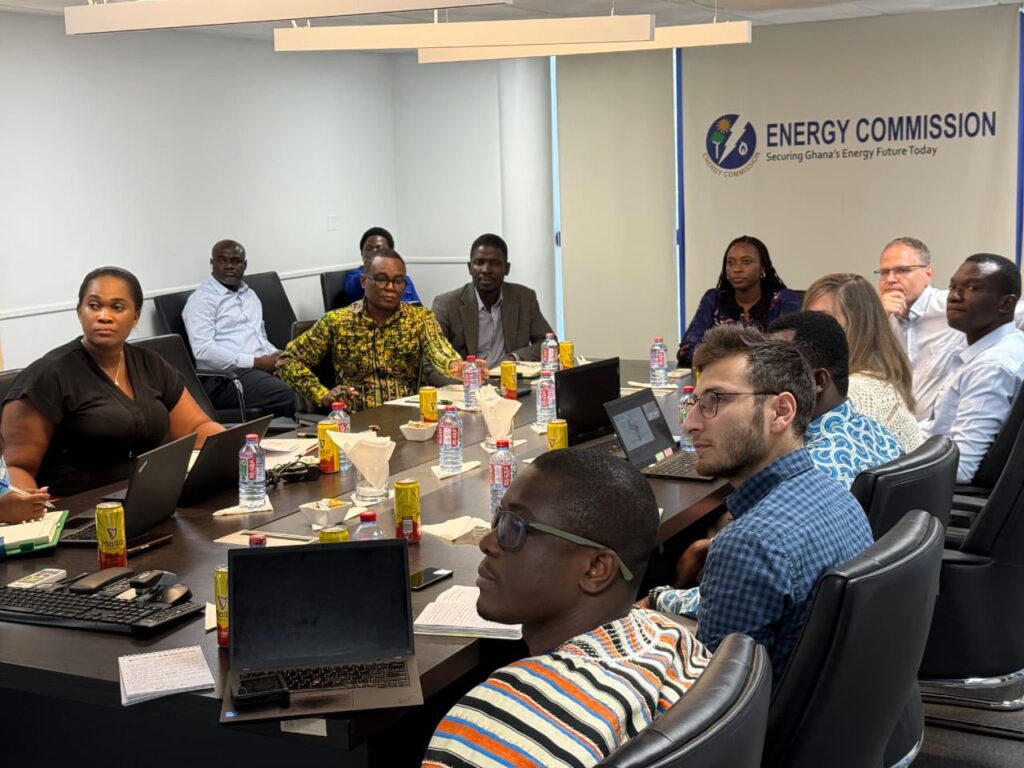
This governing body unites direct representatives from vital ministries, state technical institutions, and international development organizations to ensure rigorous compliance with sustainable energy guidelines.
By establishing clear oversight, the committee ensures that data collection drives transparent decision-making across all participating installations.
Catalyzing National Industrialization and Power Grid Stabilization
Deputy Minister for Energy, Richard Gyan-Mensah, strongly connected the successful integration of the PF-SEAP with the country’s larger industrialization goals and the ongoing execution of the national 24-hour economy policy.

He observed that a modernized, competitive industrial economy fundamentally depends on affordable, stable, and highly sustainable power distribution systems.
By shifting a significant portion of public institutional demand away from conventional generation sources toward localized renewable systems, the program relieves severe peak-load stress on the grid, enhancing commercial power availability.
The strategic reduction of state power consumption addresses a persistent macro-economic bottleneck within Ghana’s energy landscape: the collection of utility arrears.
Because state institutions have historically built-up large power debts, the financial stability of primary distribution utilities like the Electricity Company of Ghana (ECG) and the Northern Electricity Distribution Company (NEDCo) has been heavily strained.
Relieving these distributors of state-backed financial imbalances directly improves cash flows across the entire power value chain.

Ultimately, this structural liquidity gives distribution companies the financial capacity needed to maintain physical infrastructure, minimize transmission losses, and expand rural access.
By lowering the total cost of governance through green technology, public funds can be reallocated toward critical developmental sectors like public health and education.
This comprehensive approach turns public buildings into leading examples of sustainability, proving that green transitions can simultaneously drive economic growth and strengthen energy security.
READ ALSO: Tennis Star Serena Williams Set for Competitive Return After Four-Year Absence