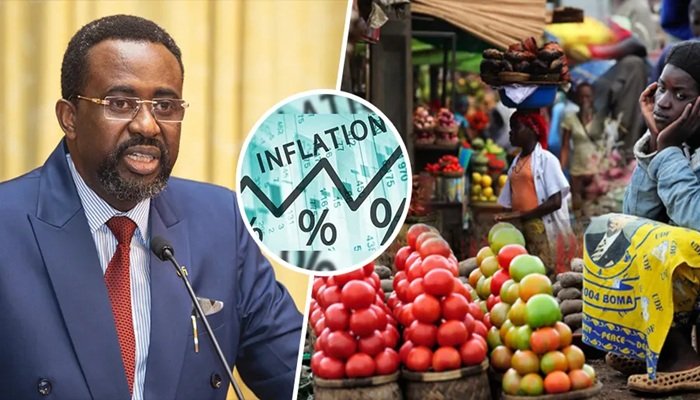
The Bank of Ghana (BoG) is facing a critical policy dilemma as fresh projections indicate that inflation could rise above 10 percent by the end of 2026 if global crude oil prices remain elevated.
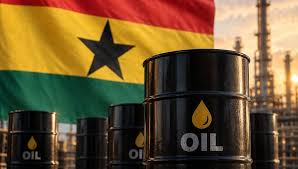
An internal forecasting model used by the central bank has highlighted the growing threat posed by sustained increases in international crude oil prices, particularly if prices remain above the 100-dollar mark throughout June. While the projection represents only one of several scenarios being considered by policymakers, it has intensified discussions about the risks confronting Ghana’s recent gains in macroeconomic stability.
The warning comes at a time when inflation has been gradually easing, offering relief to businesses and households after years of economic turbulence. However, developments in the global energy market and geopolitical tensions in the Middle East are threatening to reverse that progress.
Crude Oil Emerges as Key Inflation Risk
According to the Bank of Ghana’s projections, a prolonged surge in crude oil prices could trigger a chain reaction across the economy, pushing inflation beyond the central bank’s upper target band.
Higher crude prices typically translate into increased fuel costs at the pumps, which in turn affect transportation charges, production expenses, and the overall cost of doing business. These costs are often passed on to consumers through higher prices for goods and services.
Economists warn that such developments could significantly complicate efforts to maintain price stability. The concern is particularly pronounced because fuel prices influence nearly every sector of the economy, from agriculture and manufacturing to logistics and retail trade.
The latest scenario developed by the central bank suggests that if energy prices continue to rise, inflationary pressures could intensify in the second half of the year, threatening the country’s disinflation trajectory.
Pressure Mounts Ahead of MPC Meeting
The inflation outlook is expected to dominate discussions when the Monetary Policy Committee (MPC) meets from July 20 to July 22, 2026, to determine the direction of monetary policy.
Market watchers believe policymakers could face a difficult choice. On one hand, maintaining the current policy rate could support economic activity and investment. On the other hand, rising inflation risks may require a tighter monetary stance to prevent price expectations from becoming entrenched.
Should inflation projections worsen, some analysts believe the committee may opt to hold rates steady for longer than previously anticipated. Others argue that a policy rate increase cannot be ruled out if external shocks continue to threaten price stability.
The outcome of the July meeting is therefore expected to attract significant attention from investors, businesses, and financial markets.
Interest Rates Could Face Upward Pressure
Any decision by the central bank to raise the policy rate could have far-reaching implications for borrowing costs across the economy.
Higher policy rates generally lead to increased lending rates for businesses and consumers, making credit more expensive. This could affect investment decisions, business expansion plans, and consumer spending.
The concern is already evident in market indicators. The Ghana Reference Rate stood at 10.03 percent in May 2026, and analysts fear that persistent inflationary pressures could push lending benchmarks higher in the coming months.
For businesses that rely heavily on bank financing, a rise in interest rates could increase operational costs and reduce access to affordable credit. Small and medium-sized enterprises may be particularly vulnerable given their dependence on borrowing to fund growth and expansion.

Middle East Tensions Add to Uncertainty
The latest concerns also highlight the growing influence of global geopolitical developments on Ghana’s economic outlook.
Speaking during the Ghana-UK Investment Summit, Bank of Ghana Governor Dr. Johnson Asiama acknowledged that recent developments in the Middle East could affect future monetary policy decisions.
According to the Governor, the evolving situation may force the Monetary Policy Committee to temporarily pause any plans for policy rate reductions.
His comments reflected the uncertainty currently facing central banks around the world as conflicts and geopolitical tensions continue to influence global commodity markets, particularly crude oil prices.
However, Dr. Asiama also expressed optimism that if conditions normalize within a reasonable period, the committee could swiftly reassess its position and continue with its planned policy reviews.
Balancing Stability and Growth
While the inflation forecast has generated concern, the Bank of Ghana has emphasized that the scenario represents only one of several possible outcomes under consideration.
The central bank routinely develops multiple projections to guide policy decisions and assess potential risks to the economy. As such, the latest model should not be interpreted as a certainty but rather as an indication of the challenges that could emerge if global conditions deteriorate further.
With global oil markets remaining volatile and geopolitical tensions showing little sign of immediate resolution, the Bank of Ghana’s next policy decisions could prove pivotal in determining whether inflation remains under control or re-emerges as a major economic threat before the end of the year.
READ ALSO: GSE Defies Weak Turnover to Post Index Gains