Ukraine has launched a major drone strike on an oil export terminal in St. Petersburg just hours before President Vladimir Putin opened his annual economic forum, in what appears to be a calculated attempt to disrupt the Kremlin’s flagship investment event and expose vulnerabilities in Russia’s second-largest city.
The attack, which targeted the St. Petersburg Oil Terminal, sent plumes of smoke rising over the historic city and triggered multiple explosions.
Ukrainian President Volodymyr Zelenskiy confirmed that Ukrainian drones had struck the fuel terminal and stated that additional military-linked facilities near St. Petersburg were also targeted.
According to Alexander Beglov, the Governor of St. Petersburg, unspecified “infrastructure objects” had been hit across three districts of the city, while Leningrad Region Governor Alexander Drozdenko noted air defences had shot down 59 drones overnight.
The St. Petersburg Oil Terminal, located at the city’s Great Port on the Gulf of Finland, is one of Russia’s key fuel storage and export hubs, handling millions of tons of petroleum products annually via river, rail and sea routes. Eyewitness images and video circulated on social media showed thick black smoke and flames rising from the site following the strikes.
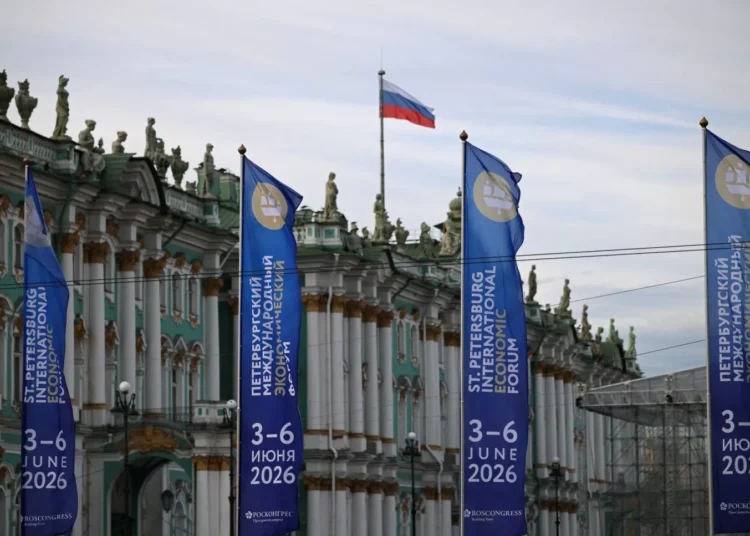
The strike’s timing, which coincides with the opening of the 2026 St. Petersburg International Economic Forum, often referred to as Russia’s “Davos-style” economic showcase, has given the operation more political weight. Putin is hosting the event with the goal of showcasing economic resiliency and drawing in international investors in spite of the ongoing sanctions from the West.
This year’s forum was set to bring together representatives from more than 130 countries, with even a member of the US administration expected to attend the first known American participation in several years.
The targeted terminal lies just 17 kilometres from the Expoforum convention centre, where the gathering is taking place, raising concerns over security in a city that has largely been shielded from the scale of destruction seen in eastern Ukraine.
Flight operations at St. Petersburg’s Pulkovo Airport were also disrupted as a result of the attack.
According to a Russian state media outlet, nearly 30 flights were delayed for more than two hours, while nine others were diverted to alternative airports.
War Enters New Phase as Both Sides Strike Deep Into Economic Heartlands
Meanwhile, Ukraine has previously targeted energy infrastructure in the Leningrad region, including attempted strikes on the same terminal and other strategic oil facilities. In earlier incidents, drone attacks have caused fires and temporary shutdowns at key export points along Russia’s Baltic coast.
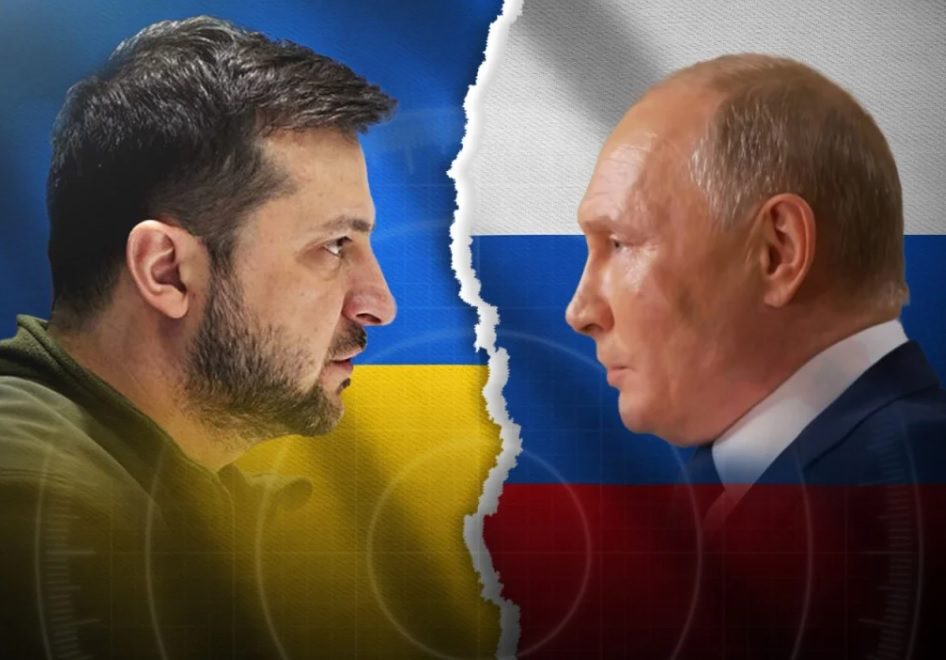
The latest strike follows a deadly escalation by Russia, which launched a large-scale missile and drone assault on Kyiv, Dnipro and other Ukrainian cities just one day earlier. That attack reportedly killed at least 23 people, including children, and injured more than 100 others, according to Ukrainian authorities.
In recent months, both sides have increasingly relied on long-range drone and missile systems to strike deep into each other’s territory, shifting the nature of the conflict beyond the front lines and into major urban and economic centres.
According to analysts, Ukraine’s expanding ability to hit infrastructure inside Russia has altered the strategic calculus of the war, bringing economic disruption and political pressure directly into Russian territory.
At the same time, Russia has continued its own large-scale aerial assaults on Ukrainian cities, with Ukrainian officials repeatedly warning of intensified bombardments and urging civilians to seek shelter during air raid alerts.
In St. Petersburg, residents reported waking to the sound of explosions and the sight of smoke rising over industrial zones near the port area. The scale of the drone barrage prompted emergency responses across multiple districts, though Russian authorities have not reported casualties from the attack.
The oil terminal itself is a critical component of Russia’s energy export system and plays a key role in shipping petroleum products through the Baltic Sea. Any disruption to its operations could have knock-on effects for fuel logistics and export revenues, particularly at a time when Russia is already facing sustained sanctions pressure.
Despite repeated attacks on energy infrastructure, Russian officials have continued to project confidence in the country’s ability to maintain exports and withstand economic pressure. Putin has used the St. Petersburg forum in previous years to present Russia as stable and open for international business, even as the war in Ukraine continues to reshape its global relationships.
Last year’s forum featured a defiant speech in which Putin declared that “all of Ukraine” belonged to Russia.
However, this year’s event began under somewhat different conditions, with smoke rising over a significant industrial site only a few kilometres from the venue and fresh concerns about the safety of Russia’s largest cities.
As the war moves into its fifth year, Russia’s ongoing aerial bombardment and Ukraine’s long-range attack capacity both point to an increasingly entrenched conflict in which strategic and symbolic targets distant from the front lines are becoming crucial to the struggle.
READ ALSO: Adongo Blasts Minority for ‘Manufacturing’ New E-Levy Claims Against Government