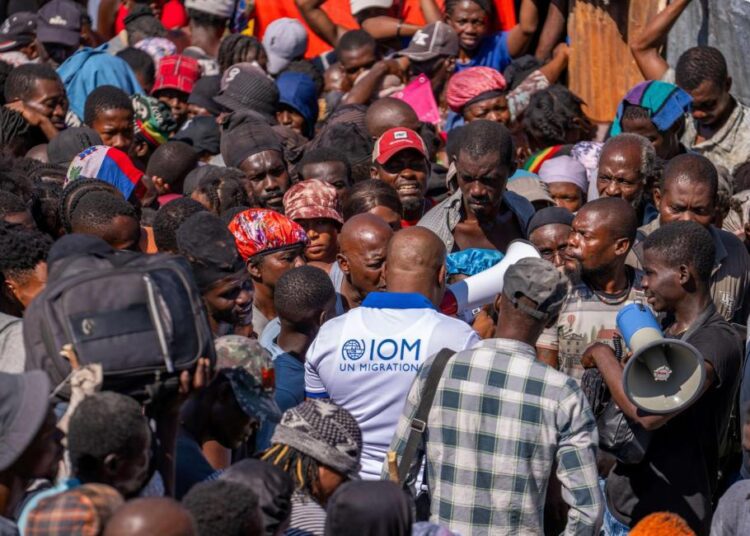
International Organization for Migration has reported that nearly 1.5 million people are currently displaced across Haiti, underscoring a rapidly deepening humanitarian emergency driven by escalating violence that continues to spread across both urban and rural parts of the country.
According to the IOM, more than half of those displaced are women and girls, indicating significant safety issues as families are compelled to migrate repeatedly in search of safety.
The most recent data indicates that the crisis is intensifying, with armed conflict now hitting neighbourhoods that were previously thought to be relatively stable. Humanitarian professionals fear that the growing geographic spread of instability is hastening relocation and putting significant strain on already frail humanitarian services.
IOM indicated that the situation has reached a more concerning stage, with civilians becoming more and more caught in cycles of repeated displacement as new violent breakouts occur around the nation. Many families who have previously fled previous attacks are now on the road once more, frequently with little money and few safe places to go.
According to Gregoire Goodstein, IOM Chief of Mission in Haiti, “Haiti’s displacement crisis is entering an even more alarming phase.”
“The crisis is no longer confined to specific neighborhoods or regions. As violence spreads into areas once considered safe, more and more people are being forced to flee repeatedly, often with nowhere left to turn.”
Gregoire Goodstein
Moreover, IOM data shows that the crisis has intensified sharply in recent months. In May alone, more than 18,000 people were forced to flee Cité Soleil within days after renewed violence swept through the densely populated area. The displacement pushed the number of internally displaced persons in Port-au-Prince beyond 300,000 for the first time on record, marking a significant escalation in the capital’s humanitarian burden.
A few weeks prior, the South-East Department of Haiti, which had previously been a haven for individuals fleeing insecurity in the capital and adjacent areas, had seen the displacement of over 5,000 people. Aid organisations are alarmed by the violence’s spread into these communities because they believe it portends a perilous reduction in safe locations throughout the nation.
This change is changing the character of displacement in Haiti, humanitarian workers warn. Families are increasingly being forced into protracted uncertainty, with frequent relocations and few opportunities for return, as opposed to brief relocations from one reasonably safe place to another.
Haiti’s Crisis Worsens as Forced Returnees Add to Displacement Pressure
Meanwhile, an increasing number of forced returns is further exacerbating the crisis. More than 110,000 Haitians, including women, children, and other vulnerable people, have been repatriated since the start of 2026. Many people don’t have access to support systems or money when they first arrive, and they frequently can’t obtain basic services or a permanent place to live.
Returnees are often placed in communities that are already under humanitarian strain or assimilated into already overcrowded displacement shelters. According to aid organisations, this is making already impacted populations more vulnerable and putting further stress on local resources.
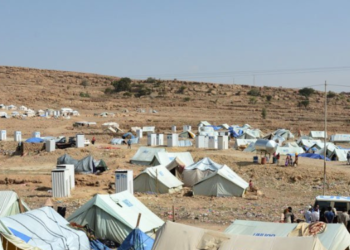
Conditions are getting worse in both host communities and displacement locations. There are severe shortages of food, clean water, shelter, medical care, and psychosocial assistance, according to humanitarian agencies. In addition to generating issues with public health and sanitation, overcrowding in temporary camps raises the possibility of abuse and exploitation.
Particularly impacted are women and girls, who comprise almost half of all displaced individuals. In many displacement sites, inadequate sanitary facilities, poor lighting, and a lack of privacy are contributing to increased protection concerns, particularly for adolescents and households led by women. As displacement continues to increase, humanitarian workers claim that these circumstances are making vulnerable communities more vulnerable.
Children, elderly people and persons with disabilities are also among those most at risk, with limited access to essential services and increasing exposure to unsafe living conditions. Aid agencies warn that the scale of needs is outpacing available resources, raising concerns about the sustainability of ongoing relief operations.
The situation is expected to worsen further with the onset of the Atlantic hurricane season. Humanitarian officials have warned that flooding and extreme weather events could have devastating consequences for displaced populations living in temporary shelters, many of which lack adequate infrastructure or protection from environmental hazards.
Despite the worsening conditions,IOM continues to provide humanitarian assistance in some of the most affected areas. Working alongside national authorities and international partners, the agency is delivering emergency shelter, healthcare services, psychosocial support, water and sanitation assistance, and relief items to displaced communities.
However, aid organisations notes that their ability to respond is increasingly constrained by insecurity and limited funding.
With nearly 1.5 million people now displaced and violence continuing to spread into new areas, aid agencies warn that Haiti’s humanitarian crisis risks deepening further unless urgent action is taken to restore stability and expand life-saving support across the country.
READ ALSO: Prestea Sankofa Gold LTD Secures New Investment to Avert Operational Setbacks