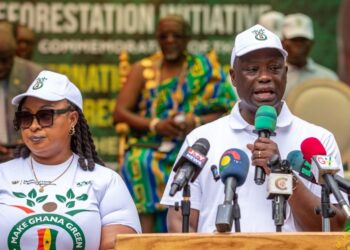
The Minister of Local Government, Chieftaincy and Religious Affairs, Honourable Ahmed Ibrahim has called for a national conversation on whether Ghana should ban plastic waste as part of efforts to address growing environmental challenges. He said the country must take decisive steps to strengthen waste management systems and protect communities from pollution.
Speaking at the 2026 World Environment Day commemoration at Takoradi Technical University, Honourable Ibrahim indicated that government is committed to improving environmental governance. The Minister of Local Government explained that effective service delivery requires active collaboration between government, the private sector and civil society organisations.
The Member of Parliament for Banda Ahenkro further disclosed that government has renewed its commitment to supporting waste recycling initiatives across the country. He noted that investments in the sector is critical to preserving gains made in environmental management.
Honourable Ibrahim revealed that Ghana currently has 17 integrated recycling and compost plants operating under the Refocus initiative. He added that the facilities have attracted attention from several African countries seeking to replicate Ghana’s waste management model.



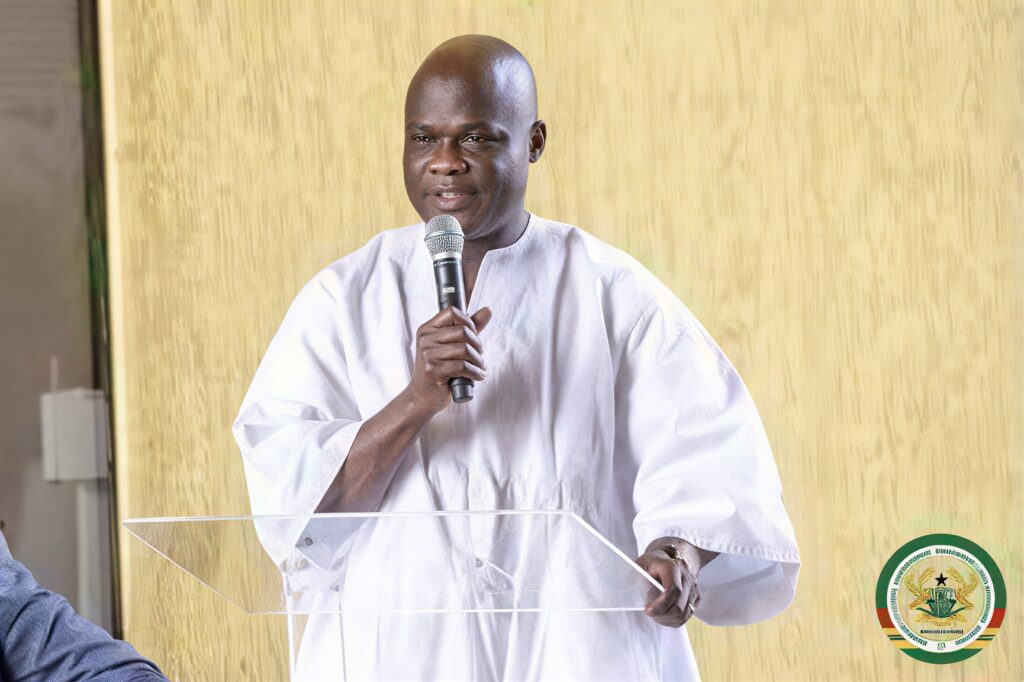
“About 25 countries in Africa have come to copy what we have in Ghana. We cannot allow the 17 companies to go to waste and that is why government continues to support the sector.”
Honourable Ahmed Ibrahim
The Minister of Local Government stated that the government paid more than GH¢440 million to Zoomlion Group of Companies last month to sustain recycling activities. He explained that the support formed part of efforts to prevent waste from ending up in drains, rivers and the sea.
Meanwhile, Honourable Ibrahim observed that one company alone could not manage the entire waste burden generated across the country. The Banda Ahenkro MP therefore encouraged greater investment in recycling infrastructure to complement existing facilities.
He also focused on the increasing public calls for restrictions on plastic waste. The Minister indicated that discussions on banning plastic bags have gained momentum due to their contributions to environmental degradation.
He recounted a recent conversation with a visitor who encouraged Ghana to study Rwanda’s approach to plastic management. The visitor, he said, pointed to the success of policies that have helped maintain cleaner urban spaces and greener communities.
“To ban or not to ban is the question. By the time we finish this conversation, the people of Ghana must help us decide the way forward.”
Honourable Ahmed Ibrahim

The Member of Parliament stressed that policymakers require public participation before implementing major environmental reforms. He explained that national consensus would strengthen the legitimacy of any future policy direction.
National Sanitation DriveSeeks Public Backing For Environmental Action
The Minister of Local Government, Chieftaincy and Religious Affairs, Honourable Ahmed Ibrahim urged Ghanaians to support efforts aimed at tackling the country’s growing plastic waste challenge. He said sustained public engagement would be essential in influencing future environmental policies.
Honourable Ibrahim traced the evolution of packaging materials over the years. He explained that societies have moved from glass to paper before embracing plastic as a convenient alternative.
The Minister observed that plastic products eventually become widespread because of their affordability and durability. However, he noted that the environmental consequences have become increasingly difficult to ignore.
Honourable Ibrahim remarked that plastic pollution is affecting communities and threatening agricultural lands. He explained that discarded plastic materials remain in the soil for long periods and reduce land productivity in some areas.
The Member of Parliament emphasised that policymakers are looking to scholars and environmental experts for practical recommendations. He stated that evidence-based proposals would guide future decisions on the issue.
“We know the challenge. If experts and citizens tell us to ban plastic and provide workable alternatives we will have the courage to act.”
Honourable Ahmed Ibrahim
The Minister of Local Government cited Rwanda as an example of an African country that has pursued strict measures against plastic bags. He said reports of cleaner cities and improved environmental conditions have intensified discussions on whether Ghana should adopt a similar path.
Honourable Ibrahim also highlighted the importance of community participation in sanitation activities. He noted that environmental cleanliness could not be achieved through government intervention alone.
The Banda Ahenkro MP pointed to National Sanitation Day as an important platform for collective action. He explained that the initiative encouraged residents across districts to take responsibility for the condition of their surroundings.
Furthermore, Honourable Ibrahim announced plans for sanitation exercises involving local authorities, churches and community groups. He encouraged residents of Sekondi, Takoradi and neighbouring communities to support the campaign.
The Minister also acknowledged the role of religious organisations in mobilising volunteers for environmental activities. He said stronger partnerships between public institutions and community groups would enhance sanitation outcomes.
READ ALSO: Government Plants 31m Trees in 2025, Prioritises Maintenance Drive in 2026