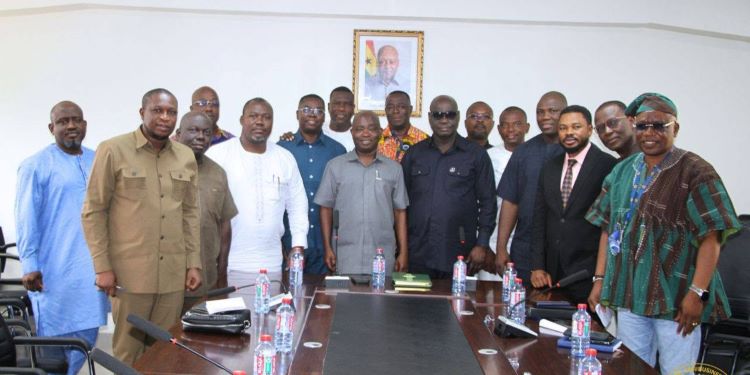
The Parliamentary Select Committee on Trade, Industry, and Tourism has officially reaffirmed its legislative backing for the Ministry of Trade, Agribusiness, and Industry (MoTAI), pledging closer oversight alignment and structured collaboration to accelerate the state’s primary industrial programs.
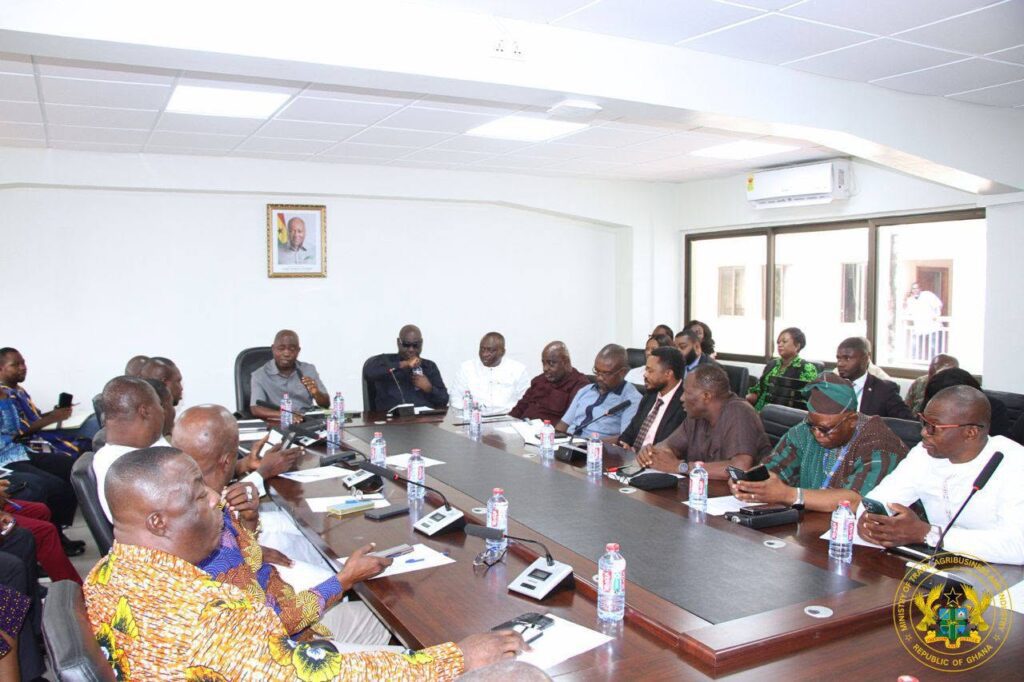
During a high-profile working visit to the Ministry’s headquarters, the 17-member parliamentary delegation met with senior sector managers to evaluate the execution framework of ongoing national initiatives designed to transition Ghana into a highly competitive, production-led economy.
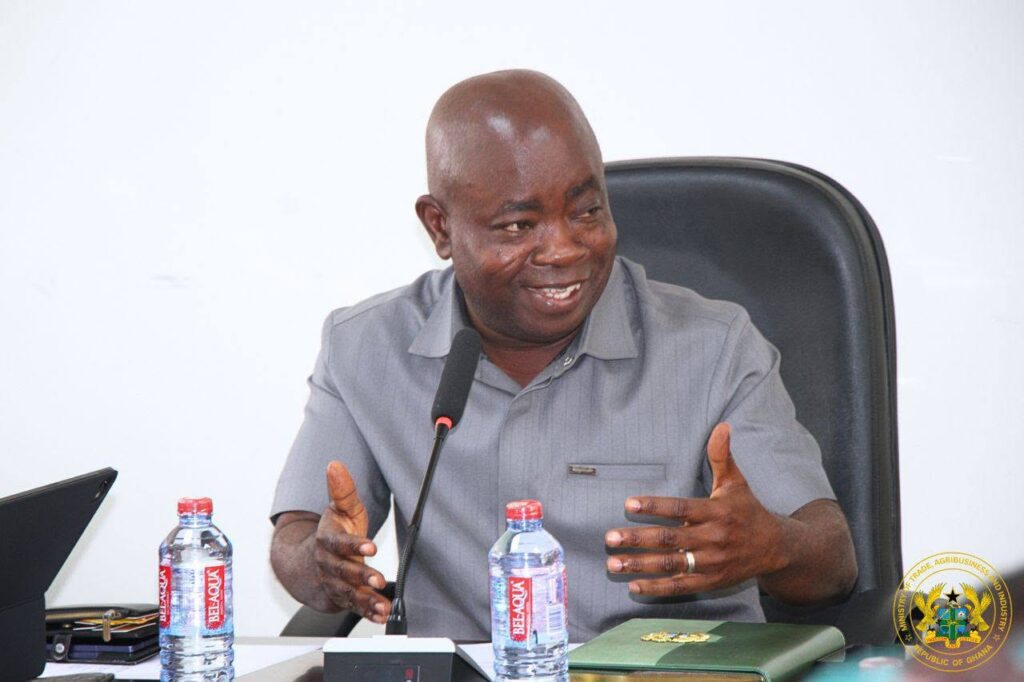
“The Committee was welcomed on behalf of the Hon. Minister by the Deputy Minister Hon. Sampson Ahi. He led the Ministry in presenting ongoing programs, including the revitalization of selected defunct state-owned enterprises, the Feed the Industry Program, and the Accelerated Export Development Program among others”
Ministry of Trade, Agribusiness, and Industry
The Ministry’s technical team presented an updated operational roadmap of active state interventions. The comprehensive briefing focused on expanding domestic manufacturing capacity, protecting national supply chains from external shocks, and removing long-standing structural bottlenecks within the country’s export corridors.
A primary theme of the high-level engagement was the critical importance of policy harmony between the executive branch, which designs industrial frameworks, and the legislature, which commands statutory oversight and budget allocations.
In a developing economy, industrial progress can frequently be stalled by bureaucratic friction or a misalignment between legislative priorities and ministry goals. The working session served to eliminate these barriers, establishing a clear line of communication between lawmakers and sector regulators.
The parliamentary committee emphasized that their role extends far beyond standard compliance monitoring; they are actively committed to championing MoTAI’s legislative instruments and budgetary requests on the floor of Parliament through a tight institutional alliance.
Both entities aim to ensure that vital economic policies receive the necessary statutory backing and long-term funding security required to withstand shifting market cycles.
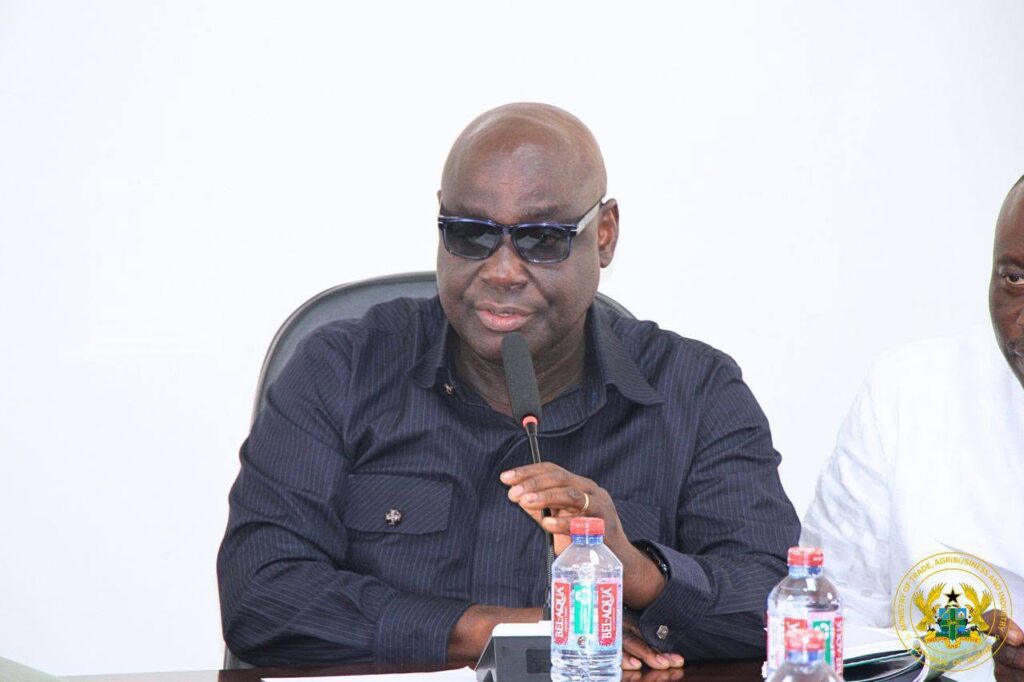
“The Committee Chairman Hon. Alexander Roosevelt Hottordze, said the 17-member team will continue to provide oversight support, and stressed their shared goal of working with the Ministry to drive the country’s industrial & economic growth”
Ministry of Trade, Agribusiness, and Industry
Reviving Dormant Manufacturing Assets
At the core of the Ministry’s presentation was an in-depth review of its strategic asset-recovery program, which focuses specifically on the revitalization of selected defunct State-Owned Enterprises (SOEs).
MoTAI explained that various strategic manufacturing facilities across Ghana have fallen into operational dormancy due to outdated technology, inadequate working capital, and structural management challenges, leaving the nation heavily reliant on imported consumer goods and industrial inputs, creating a perpetual trade deficit.
To reverse this trend, Hon. Sampson Ahi detailed the Ministry’s ongoing efforts to retool these dormant industrial installations. The revitalization strategy is built around deploying modern manufacturing technologies, restructuring corporate governance models, and introducing private sector efficiencies through targeted management concessions.
MoTAI intends to create localized industrial hubs that can substitute costly imports with high-quality, locally produced alternatives while creating thousands of stable jobs within rural and urban communities:
To ensure that newly revived factories and existing private processing plants can operate continuously at peak capacity – since a major constraint facing Ghanaian agro-processors and manufacturers has been the unpredictable supply of raw materials – MoTAI highlighted the operational framework of its flagship Feed the Industry Program.
Hon. Ahi explained that local agricultural output is frequently fragmented, highly seasonal, and vulnerable to post-harvest losses, forcing many domestic factories to operate far below their installed technical capacity or rely on expensive imported agricultural inputs.
The Feed the Industry Program directly addresses this systemic vulnerability by establishing formal, contract-farming linkages between large-scale commercial agricultural blocks, smallholder cooperative networks, and industrial processing plants.
This coordinated supply chain model guarantees a reliable, year-round flow of high-grade raw inputs to domestic factories, stabilizing production costs for manufacturers while providing a guaranteed, predictable market for local farmers. The program forms a critical bridge connecting the country’s vast agricultural potential directly with its expanding manufacturing base.
The final component of the Ministry’s presentation focused on the Accelerated Export Development Program, an ambitious trade intervention designed to position Made-in-Ghana products competitively across international and regional markets.
With Accra serving as the host city for the African Continental Free Trade Area (AfCFTA) Secretariat, the Ministry is under intense pressure to ensure that domestic industries are equipped to capitalize on duty-free, quota-free continental trade pathways.
The program is expected to deliver targeted assistance to local firms, helping them upgrade their manufacturing processes, obtain international product certifications, and navigate complex cross-border customs regulations.
The working visit concluded with a strong consensus between the Ministry’s executive leadership and the 17-member legislative oversight team to advance these core industrial programs and make Ghana a premier manufacturing powerhouse across the African continent.
READ ALSO: GRNMA Demands Stronger Protection After Midwife Assault